Category Archives: 2 2 and 2 (writers + new books)

2, 2 and 2: Michelle Johnston talks about The Revisionists

The use of any content on this blog to train AI is prohibited.

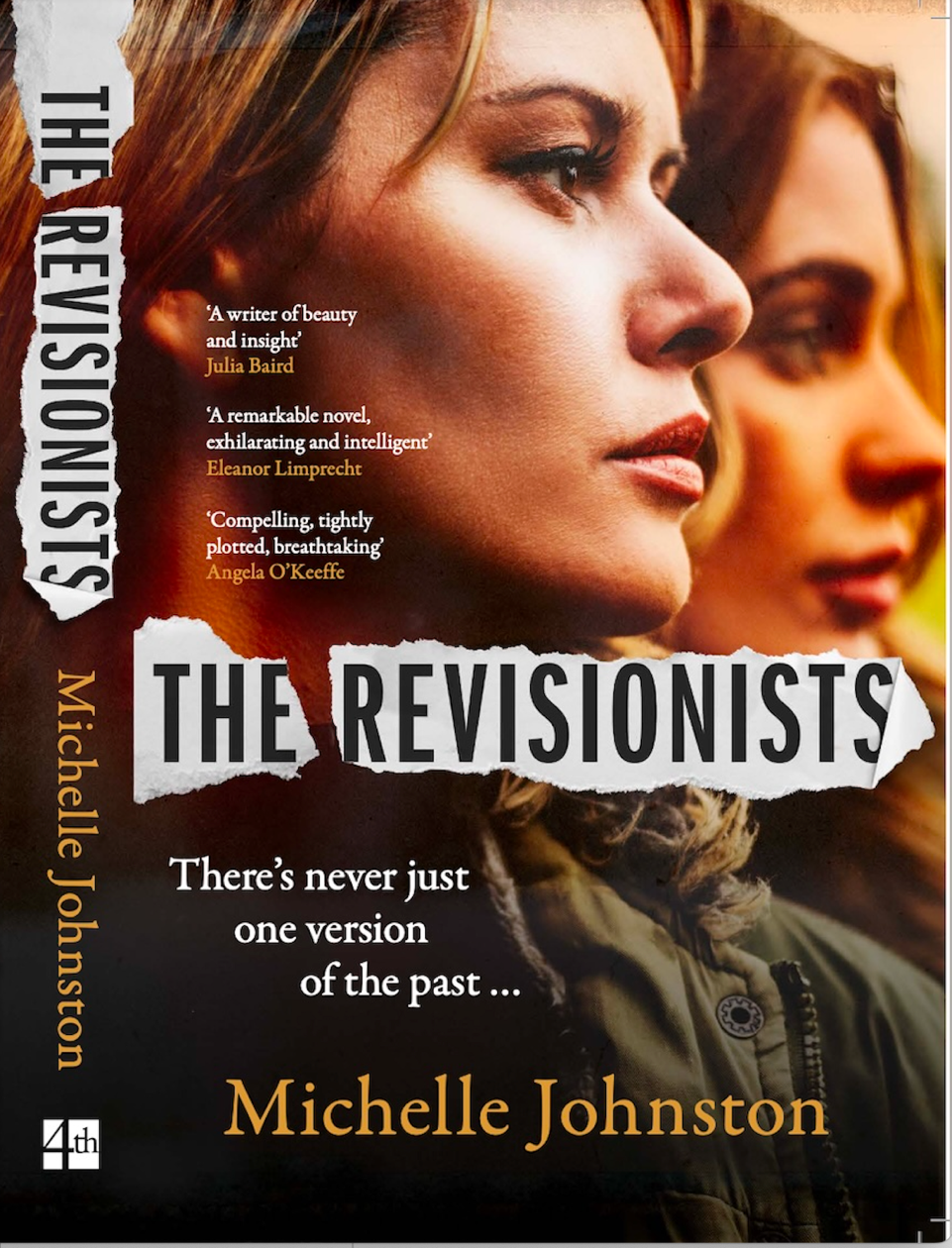
I happened to see the film Words of War while reading Michelle Johnston’s novel The Revisionists—an amazing coincidence, given both are about the North Caucasus area, a part of the world I (possibly like many in the West) know little about, and that The Revisionists is dedicated to Russian journalist and human rights activist Anna Politkovskaya, the subject of Words of War. I am grateful to both of these works for bringing these places so wonderfully alive in my imagination, and in the process filling in some yawning gaps in my knowledge.
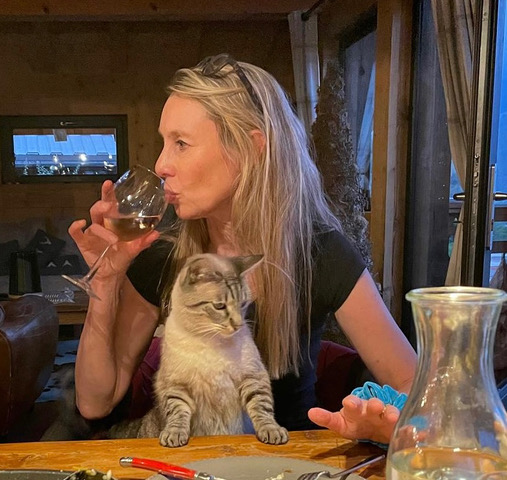
Michelle Johnston manages to excel in two demanding professions: author and emergency physician. If only she’d write a book about how; it would be a bestseller. She is a Staff Specialist at the Royal Perth Hospital Emergency Department, a busy inner-city trauma centre where she works as both clinician and teacher. The Revisionists is Michelle’s third novel, following Dustfall (2019, shortlisted for the MUD Literary Prize for a debut novel) and Tiny Uncertain Miracles (2022). Michelle says her days are mostly spent searching for the beauty and awe in a frequently brutal reality.

Here is the blurb for The Revisionists:

Upper East Side, Manhattan, 2023: Christine Campbell, former journalist, turns on the television to watch a documentary paying homage to her Pulitzer Prize-shortlisted coverage of the unrest in 1999 in the North Caucasus. She is newly widowed, wealthy and attempting to write a memoir celebrating her bold life and significant achievements in writing about the silencing of women during conflict. 

But truth has a way of resurfacing, even when buried deep beneath money, memory and reinvention. When Dr Frankie Pearson, Christine’s oldest—and estranged—friend, knocks on her door, the pair must reconcile their memories and come to terms with the far-reaching and disastrous decisions they both made over twenty years ago. What really happened in that small mountain village in Dagestan in the dying days of the millennium, while Christine was hellbent on getting the scoop of a lifetime?

Over to Michelle…
2 things that inspired the book

The might and courage of female conflict correspondents. The Revisionists is dedicated to Anna Politkovskaya and Marie Colvin, both heroic foreign correspondents who were assassinated in the course of reporting on war. The concept of truth in journalism was a powerful driver for me when writing this book: who owns the truth (reflected in our current Kafkaesque nightmare of a media landscape controlled by billionaires and tyrants buying a version of the world they spray out for their own benefit), how our memories distort our own personal versions of truth, and how language is used and misused for propaganda and political purpose.

Human flaws and folly. I had in my mind a character, a woman, with warring personality traits—great principle, but also the desire for validation and acclaim. Essentially, I let those two characteristics go into battle inside my poor protagonist, Christine Campbell (‘conflict correspondent with a feminist bent’), launching her into a tinderbox of a setting (a war-torn republic in the North Caucasus on the precipice of further descent into conflict and invasion), and seeing how those variables would play out. How much would she sacrifice to make a name for herself? How would she honour the women whose voices she was hoping to showcase?
    2 places connected with the book

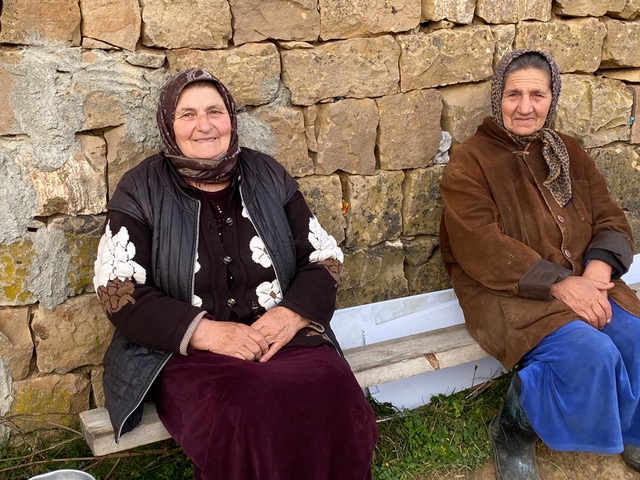
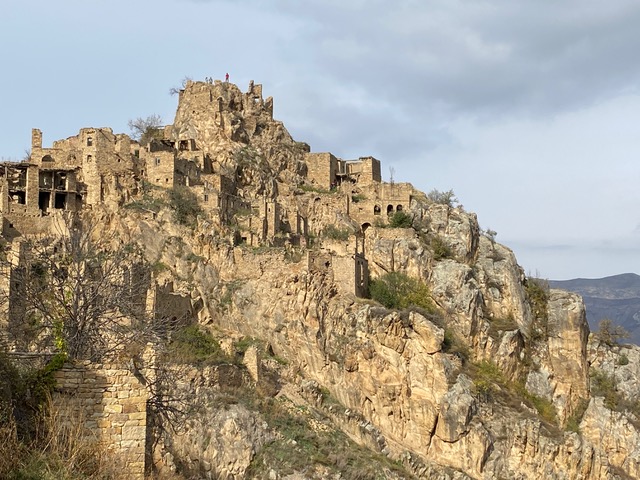
    Dagestan. One of seven Russian republics making up the North Caucasus, Dagestan is a place of immense contradictions: towering, mountainous beauty and desperate poverty; bounteous generosity and hospitality and a republic known for its fighters. It is deeply Islamic and is the nidus of a volatile, far-reaching history, a place subject to constant invasion, reinvasion and reinvention. Few westerners have heard of this incredible republic nestled on the Caspian Sea, and the moment I did, I became obsessed with knowing more. A tiny slice of time got its hooks into me—the invasion of Dagestan in 1999, during which Chechen warlords made a bid for a united Islamic State but instead found themselves facing the fury of a then unknown and newly appointed prime minister, Vladimir Putin, who put into motion the horrific slaughter and devastation of the second Chechen War. This laid the ground for Christine Campbell to search for her story and, by default, herself.
    New York. Having spent a good deal of time as a wanderer in that human storm of a city, a flâneur, a small-town girl in the epicentre of man-made energy, I sent Christine there to live out her days of false memory and justification and misery despite her money. I had been influenced by all the places that make an appearance in the book. A graffiti strewn apartment on Orchard Street, the white quiet of Poets House, dinners at Gramercy Tavern, the subway, the Strand bookstore, the cafes. And there, in Manhattan, Christine would have grown old, taking her retrospective falsification and excuses to her grave, had it not been for her childhood friend Frankie, with whom she spent time in Dagestan, turning up on her doorstep to challenge her on those explosive events of time past.

      2 things that confuse readers

      Angela Hollis’s poetry. For reasons that become quite clear by the end of The Revisionists, Angela, the extraordinary and highly regarded conflict correspondent who takes Christine under her wing, has a number of poems scattered throughout the book. In fact, one of her pieces opens the book: Time rumbles. It’s a low growl between the shoulder blades, in the bones, deep in the chest. Time rumbles like ocean currents, like drowning stars. It’s the sound of a rough wind at dawn, of the trudge of the displaced through the dark. People commonly tell me that they googled ‘Angela Hollis. Poetry’ and are perturbed when they find no results. ‘Where did the poetry come from?’ they ask. ‘I wrote it,’ I reply, which doesn’t seem to satisfy them but makes me oddly happy.

      Is Khumsutl a real place? Because I (author as god) was going to do terrible things to the town where Christine and Frankie worked, alongside the beloved siblings Patimat and Murtuz, I needed to make up a place that would not complain if I let loose a bomb or two on it. Strangely, I had written several drafts of The Revisionists by the time it became clear that I had to travel there. I would never have been able to stand up and look readers in the eye (metaphorically or literally), I would have had no authenticity or authority to write the book if I hadn’t travelled there. (Reader, this is not recommended: the North Caucasus is on the DFAT ‘do not travel under any circumstances’ advice.) However, go I had to. And it was magnificent. The strange part is that I had made up a village based on my research which provided the setting in the drafts I’d written prior to travelling there, and on one cold night in the mountains we found ourselves in an utterly uncanny likeness of Khumsutl, with a small abandoned medical clinic, a schoolhouse, a jumble of architecture, a hundred-year-old widow at the top of a tower. It was one of those exquisite moments where the universe says to you: yes, this is the book you must write, I give you this magic.
      The Revisionists is in bookshops and available in online stores now
      Find out more at HarperCollins
      Follow Michelle via her website
      Read a review: ANZ LitLovers; ArtsHub

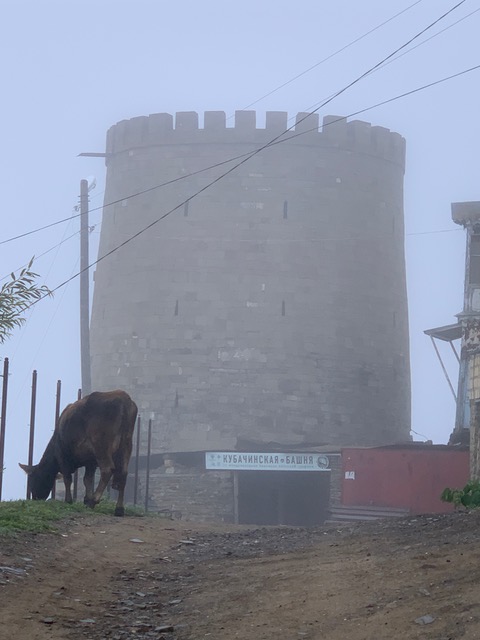
      Photo credits: Photos of Dagestan by the author—women of the village of Shitli; the ghost village of Gamsutl; the silversmithing village of Kubachi

      1 Comment

      Filed under 2 2 and 2 (writers + new books), New books

      2, 2 and 2: David Whish-Wilson talks about O’Keefe

      The use of any content on this blog to train AI is prohibited.

      It’s been five years since I last posted in my ‘2, 2 and 2’ series featuring writers talking about specific aspects of their new books. I love hearing about those kernels of inspiration that lead a writer into a new work, and also about how their works connect with particular places. The third ‘2’ is different for each writer, and either the writer chooses something important to their work or I choose something I’m curious about.

      Up to late 2020, I had featured 56 books. A chance reference to one of these posts recently made me think it’s time to revive the series.

      David Whish-Wilson was my last guest, so it is entirely fitting that he should be the first now, and I’m delighted that he agreed!

      David is an impressively prolific writer, having published eleven novels and three creative non-fiction titles while somehow also managing to teach creative writing at Curtin University in Perth and to create stunning-looking knives—this last possibly very handy for a crime writer! His crime novels have received two Ned Kelly Award shortlistings, and his last, Cutler, was shortlisted for the Danger Awards and the Western Australian Premier’s Book Awards.

      David’s new release, O’Keefe, is the second in his Undercover series (following on from Cutler). Here is the blurb:

      Fresh from his exploits on the high seas, undercover operative Paul Cutler assumes a new identity to become Paul O’Keefe.

      Paul is tasked with stepping into the shadows to reveal the mysteries surrounding a surge of Mexican cartel meth flooding Australian streets. Assigned to infiltrate a newly appointed security company at Fremantle Port, he discovers a clandestine world of off-the-books operations, and a business front that goes far beyond mere security. There’s a dangerous game afoot over who gets control of the port’s smuggling operations, and O’Keefe is caught in the crossfire.

      A pulse-pounding thriller that takes a hard look at the Australian ‘cocaine gold rush’, where maritime crime meets the ruthless currents of the underworld.

      Over to David…

      2 things that inspired the novel

      The first thing is that I wanted to follow on from the maritime theme of Cutler, which was set on the high seas amid the depredations of a modern industrial fishing vessel and all that entails. I greatly enjoyed writing Cutler, but because my protagonist was the only English speaker on board the vessel, it limited my enjoyment in terms of writing dialogue in the Australian vernacular, something I remedied by setting O’Keefe largely in Fremantle port, amid a mixed bunch of smugglers, local characters and policing officials.

      What really inspired O’Keefe was coincidentally seeing an old friend from the Netherlands in a news bulletin following the murder of Holland’s best known journalist, Peter de Vries, in 2021. I was watching a late-night YouTube video about the murder and there was my friend, who I hadn’t seen for 30 years, distraught and grieving, a member of the public who’d gathered outside the journalist’s home. I became interested as a result in the pernicious influence cocaine money is having on Dutch and Belgian civil society, with the murders of lawyers and threats against politicians and judges, to the point that some have begun to label these two countries ‘narco-states’ (in the same vein as Mexico, Columbia, Ecuador, etc.). Given the high price of cocaine in Australia (the most expensive country in the world, bar two Middle East countries where drug possession carries the death penalty) and the fact that we’re per capita some of the largest users of cocaine in the world, I began to follow local events more closely, seeing some of the early warning signs of what has happened in countries like Holland, Belgium and parts of Spain and the Balkan states (where cocaine money brings violence, but also mass political corruption and the erosion of trust in civic institutions). I wrote O’Keefe as a way of situating that research in a local context, using examples of things that are on the public record as happening here already, and indicating the potential for some of the more serious things that have happened elsewhere.

      2 places connected with the novel

      This is probably my most Fremantle-centric book, despite the frequency of settings here in earlier Frank Swann and Lee Southern novels (and in some of my non-fiction). O’Keefe is a work of fiction, and there’s no suggestion that what I write about is actually happening now in the port (where I write, looking across at it), but I loved revisiting some of my favourite haunts in a contemporary context, when my earlier novels were all historical in some sense.

      Even though what guided the setting of the story here was the port itself, the emotional momentum behind it was the awareness of the consequences that the so-called ‘war on drugs’ has meant for similar places, especially due to the extraordinary amounts of money generated by cocaine smuggling specifically, when large bribes can be offered without affecting the bottom line, when large amounts of money can be used to buy political influence without affecting the bottom line, and when well-funded violence is ruthlessly used to silence those who threaten business interests.

      2 sobering thoughts

      One quote contained in the book that really describes the way this particular branch of organised crime works is the terrible choice that people in positions of influence are forced to make between accepting either ‘the bribe or the bullet’. O’Keefe is written as a crime thriller, an entertainment for those who enjoy the genre, and designed to be enjoyed by anyone whether they’re interested in drug policy or not, but behind the thrills and spills is the reality of this quote for the characters in the story, but also sadly for many people caught up in the business reality of the world’s most lucrative recreational drug.

      I highly recommend anyone interested in the failures of the war on drugs to read British journalist Johann Hari’s book Chasing the Scream. Treating drug addiction as a medical issue and decriminalising drug possession (such as in Portugal) will inevitably result in some degree of social harm; however, given the destabilisation of nation states caused by drug cartels and traffickers, the horrific violence associated with the international drug business, the overdose deaths and the incarceration of drug users and small-time dealers worldwide, the wastage of police resources and the fact that wherever there is prohibition there is organised crime, and wherever there is organised crime there is political and police corruption, it’s incredible to read in Hari’s text that the near universal prohibition on recreational drug use is the result of a single, troubled, moralistic, hypocritical and highly motivated American public servant, and that things could have so easily been so different.

      O’Keefe is in stores now
      Find out more at Fremantle Press
      Follow David via his website or on Instagram

      Leave a comment

      Filed under 2 2 and 2 (writers + new books), New books, Western Australian writers

      ARA Historical Novel Prize shortlist

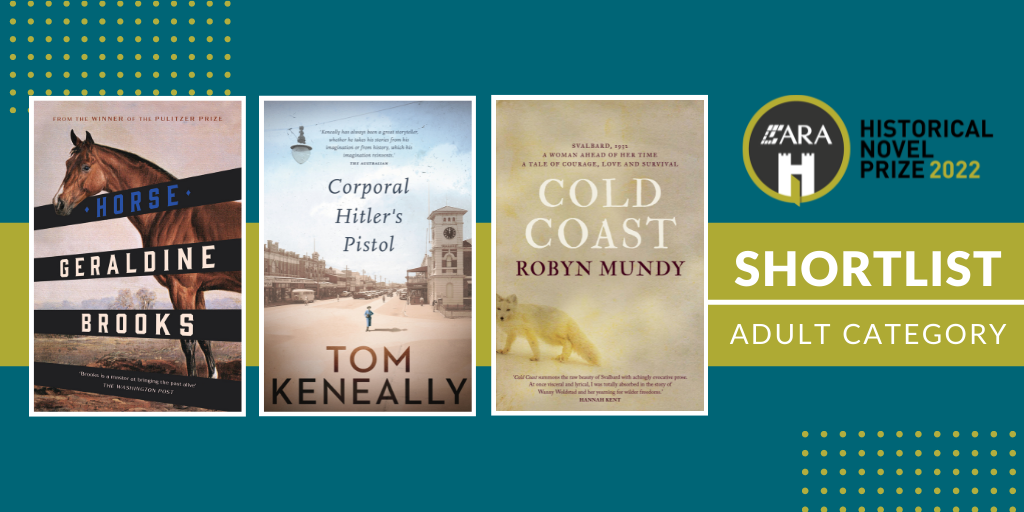
      I’m thrilled to see that Robyn Mundy’s brilliant novel Cold Coast has made the shortlist of the prestigious ARA Historical Novel Prize. Congratulations to Robyn and to the two other shortlistees, Geraldine Brooks and Tom Keneally.

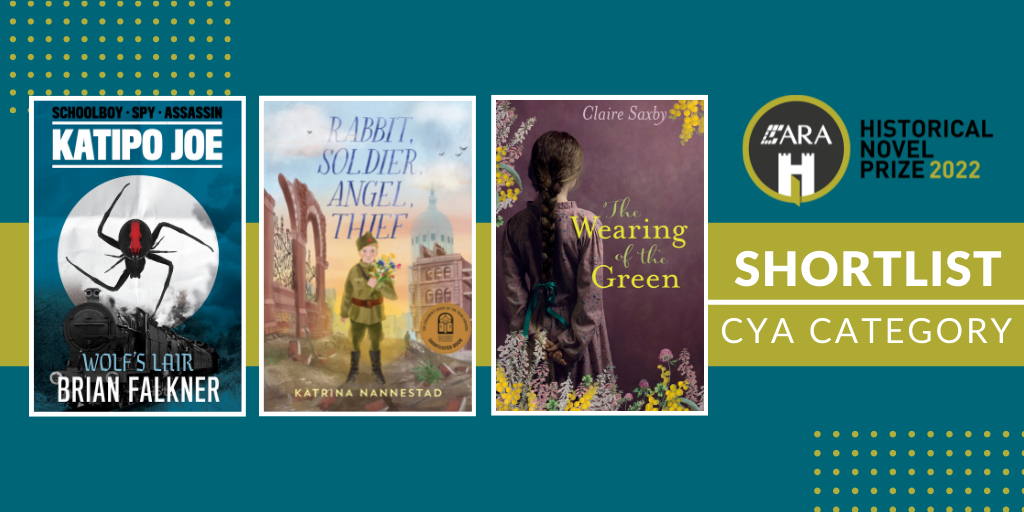
      Also announced, the shortlist for the Children’s/Young Adult category. Congratulations to Brian Falkner, Katrina Nannestad and Claire Saxby.

      The winners will be announced on 20 October. More information on the Historical Novel Society Australasia site.

      8 Comments

      Filed under 2 2 and 2 (writers + new books), Favourite books

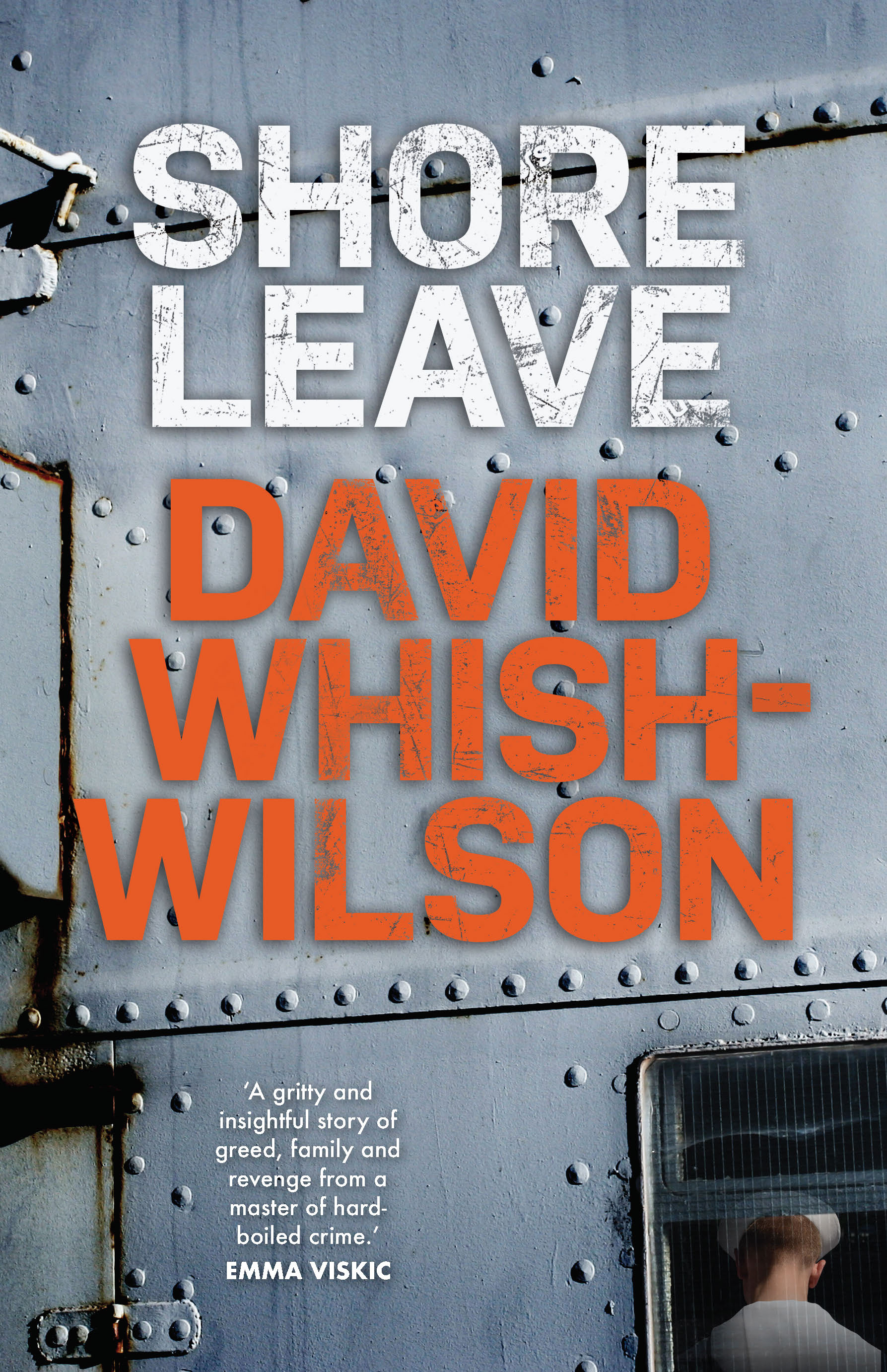
      2, 2 and 2: David Whish-Wilson talks about Shore Leave

      David Whish-Wilson
      Shore Leave
      (Fremantle Press)
      Crime fiction

      David Whish-Wilson somehow manages to juggle a demanding day job (as creative writing teacher at Curtin University) with a prolific writing career—excelling at both. He has published six crime fiction novels, the brilliant historical novel The Coves (which he talks about here), and three creative non-fiction titles, including the (recently updated) Perth, a lyrical and idiosyncratic portrait of the capital city of the state we both live in.

      David has travelled widely, and I love his author blurb, which tells us he has worked in Europe, Africa and Asia as a barman, actor, street seller, petty criminal, labourer, exterminator, factory worker, gardener, clerk, travel agent, teacher and drug trial guinea pig. It strikes me that you couldn’t orchestrate a better CV for a crime writer!

      Three of David’s crime fiction novels have been published in Germany, and he has been shortlisted for the WA Premier’s Book Awards and twice for the Ned Kelly Awards—most recently for his last title, True West.

      I’m delighted that he’s agreed to talk about his newly released novel, Shore Leave.

      Here is the blurb:

      It is Fremantle in 1989 and Frank Swann is at home, suffering from an undiagnosed and debilitating illness. When Frank is called in to investigate an incident at a local brothel, it soon appears there is a link between the death of two women and the arrival of the US nuclear-powered aircraft carrier Carl Vinson in the port city. Shore Leave is the fourth book in the Frank Swann series and also features Lee Southern, the main character from True West.

      Over to David…

      2 things that inspired the novel

      Shore Leave is the fourth novel in my Frank Swann crime series, although like the other novels it can be read as a standalone. The novel also has a cameo from the protagonist of my most recent novel, Lee Southern of True West (2019), who Frank Swann is training up in the craft of citizen investigations. The novel is set largely in Fremantle during the visit of the USS aircraft carrier Carl Vinson to port, part of the American fleet out patrolling the Indian Ocean at the behest of Presidents Reagan and Bush Snr. It was inspired by a couple of stories I’d heard over the years.

      The first was when I was in my late teens, living in Mombasa, Kenya. At that time many of my friends were working prostitutes, whose main clients were the merchant sailors of different nations who berthed there. It was always interesting listening to the women break down the national traits of men from places like Bulgaria, Korea and Australia based upon their behaviour when drunk and in the privacy of the short-time rooms of the hotels that dotted the port. Some of these stories were funny, and others were disturbing, but most disturbing of all was the trepidation many felt when the American navy were due in port. It was a trepidation mixed with excitement, because apart from the Japanese, Americans were considered the most generous of clients. The rumours were strong, however, that on previous occasions when the Americans were in port there had been serious assaults, and alleged murders that were never investigated because of the inference that the money spent was important to the local economy, and because the Americans left as quickly as they’d come. I was present when one such visit occurred, and I remember the fear among my friends that they might be targeted, even though they were used to danger. I remember thinking then that for a certain type of man, being part of a navy that went from port to port, and was defensive about its reputation, would in fact be the perfect cover for a sex offender or even murderer.

      A few years later I was working as a bartender in Tokyo, where much of the custom was US sailors and marines. I got to know some of them quite well, and one of them very well when we worked together in a different bar. He told me stories of life on board an aircraft carrier, both the racial politics and the black-market scams, and I took some of the things he told me, together with the atmosphere of fear and anxiety (contrary to my experiences of the navy being in Fremantle when I was younger) I’d witnessed in Mombasa, and worked these aspects into the plot of Shore Leave.

      2 places connected with the novel

      The two places connected to the novel are the port of Fremantle, and what might be termed, for the purposes of the law, the US territory aboard the aircraft carrier USS Carl Vinson. At the commencement of Shore Leave, Frank Swann is still suffering the ill-effects of his mistreatment and injury incurred toward the conclusion of Old Scores. As a result, he’s trying to live a quiet life, and tends to stick pretty close to his South Fremantle home. He’s put aside his usual source of income, retrieving money for those ripped off in stock-market scams. When the USS Carl Vinson arrives, however, he agrees to do a favour for an old friend, the US navy shore patrol officer whose responsibility it is to find AWOL sailors. A sailor was last seen upstairs at the Seaview Hotel (now the Local Hotel) and across the street at the Ada Rose brothel (which is still in operation.) Looking for this AWOL sailor means Swann spends a fair bit of time around Fremantle, then in the throes of the beginning of the restoration boom sparked by the America’s Cup and its status as a centre of Sannyasin life in WA.

      The other place that defines Shore Leave is the sovereign territory aboard the aircraft carrier itself. Like all of my previous Frank Swann novels, Shore Leave proceeds by way of three separate narrative strands that become more and more intertwined as the story develops. One of these three characters is a US Navy midshipman with right-wing sympathies, who has a sideline smuggling black-market weapons ashore. Part of the novel involves exploring his life aboard the ship, which was quite entertaining to write.

      2 soundtracks for the novel

      If this novel had a soundtrack, it’d be ‘Shore Leave’ by Tom Waits. The song doesn’t relate directly to the narrative, but it does capture some of the strangeness and loneliness of being in a new place, all alone, that I remember from my early travels.
      https://www.youtube.com/watch?v=Lh7JZUpaVPg

      The other song I found myself thinking about when writing Shore Leave was Nina Simone’s version of Kurt Weill’s ‘Pirate Jenny’. It’s a song I’ve always loved, but its darkness and power were what I thought about while writing.
      https://www.youtube.com/watch?v=V7awW5nrDHk

      Shore Leave is available now
      Find out more at Fremantle Press
      Follow David on his website and on Twitter

      1 Comment

      Filed under 2 2 and 2 (writers + new books)

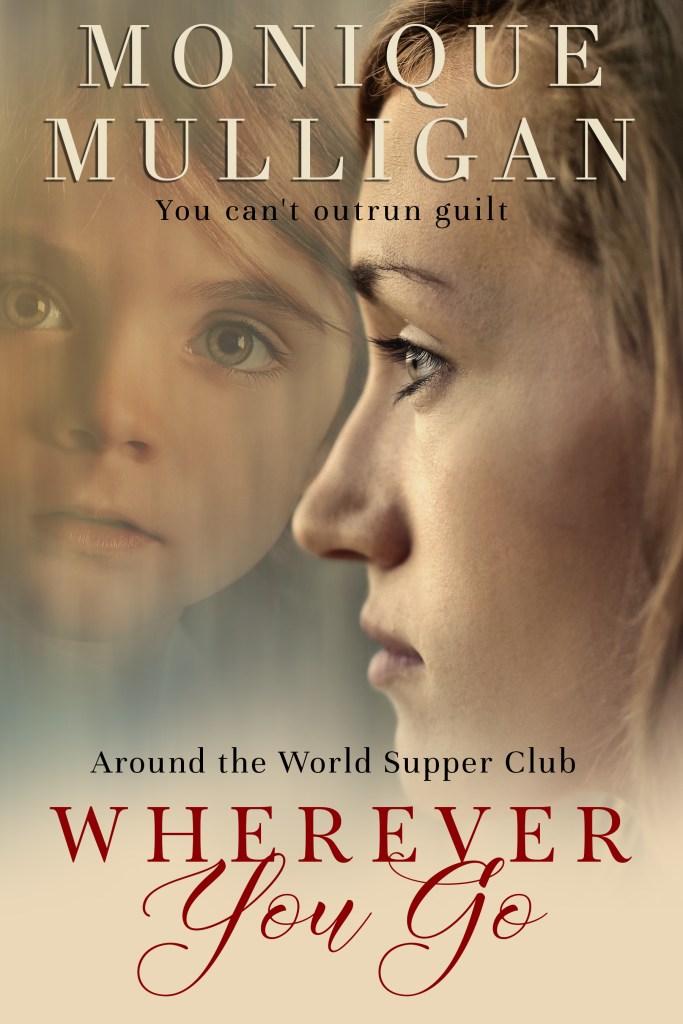
      2, 2 and 2: Monique Mulligan talks about Wherever You Go

      Monique Mulligan
      Wherever You Go
      (
      Pilyara Press)
      Contemporary fiction

      I first met Perth writer Monique Mulligan through her role as presenter (and founder) of the successful Stories on Stage program, a series of author conversations that has run for some years at the Koorliny Arts Centre in Kwinana, Western Australia. Since then, she has become involved in the local writing community in many other ways, not least as an author.

      Following on from a career incorporating journalism, editing and publishing, she now combines part-time work at the arts centre with writing. Several of her short stories have been published, and her third children’s picture book, Alexandra Rose and her Icy-Cold Toes, was released in May.

      Monique is an amazing cook—I’ve sampled some of her baked treats at Koorliny—and so it’s no surprise to me to hear that her debut contemporary novel, Wherever You Go, features food and explores the connection between emotional states and the art of cooking.

      She’s also a talented photographer, as you’ll see below.

      Here is the blurb for Wherever You Go:

      A life-shattering tragedy threatens to tear apart chef Amy Bennet’s marriage. Desperate to save it, she moves with her husband Matt to Blackwood, a country town where no-one knows who they are.

      Forced to deal with her crumbling marriage and the crippling grief that follows her wherever she goes, Amy turns to what she knows best: cooking. She opens a cafe showcasing regional seasonal produce, and forms the Around the World Supper Club, serving mouth-watering feasts to new friends. As her passion for food returns, she finds a place for herself in Blackwood. But when a Pandora’s Box of shame and blame is unlocked, Matt gives Amy an ultimatum that takes their marriage to the edge.

      Rich with unexpected characters and extraordinary insight, Wherever You Go is a powerful and ultimately uplifting tale of heartbreaking loss, recovery and redemption.

      Over now to Monique…

      2 things that inspired the book

      The first time I heard the quote ‘Wherever you go, there you are’ by Jon Kabat-Zinn, it resonated strongly on a personal level. The instinctual desire to run away from one’s self saddened, fascinated, frustrated, even infuriated me, because it perfectly summarised the behaviour of someone I cared about.

      When I decided to write a novel, I knew I wanted this quote to be part of it, directly as in the title, but also thematically in my characters’ inner and outer worlds. I wanted to explore how people try to get away from themselves, how they try to outrun guilt and grief and pain and shame. To explore the truth that who you are follows you wherever you go. I asked: What happens when you deny this part of you? How long can you do it before the cracks show? How long can you watch someone hide behind a mask, when you know what lies beneath?

      Late in the novel, there’s a scene between Amy and her elderly neighbour Irene that directly explores this quote. Interestingly, this was one of the easiest scenes to write, perhaps because it reflected what I wanted to say all those years ago. Perhaps it was a form of catharsis.

      The second inspiration was a newspaper article about an Australian family whose children were killed in a tragic accident overseas. At the time our four children were still living at home, and the tragedy shocked and saddened me. I remember my husband and I discussing it, wanting to hold our teenage children tighter than ever. What if something like that happened to us? What would that do to our marriage? Later, when it came to starting Wherever You Go, I was compelled to unpack that second question, to examine the complex nature of grief and the consequences of incomplete grief.

      2 places connected with the book

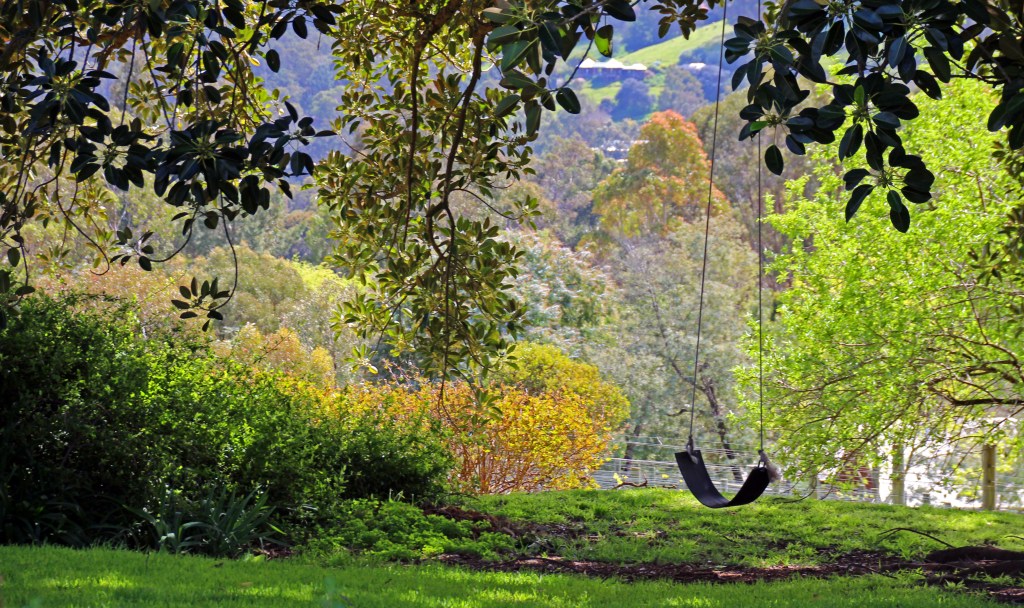
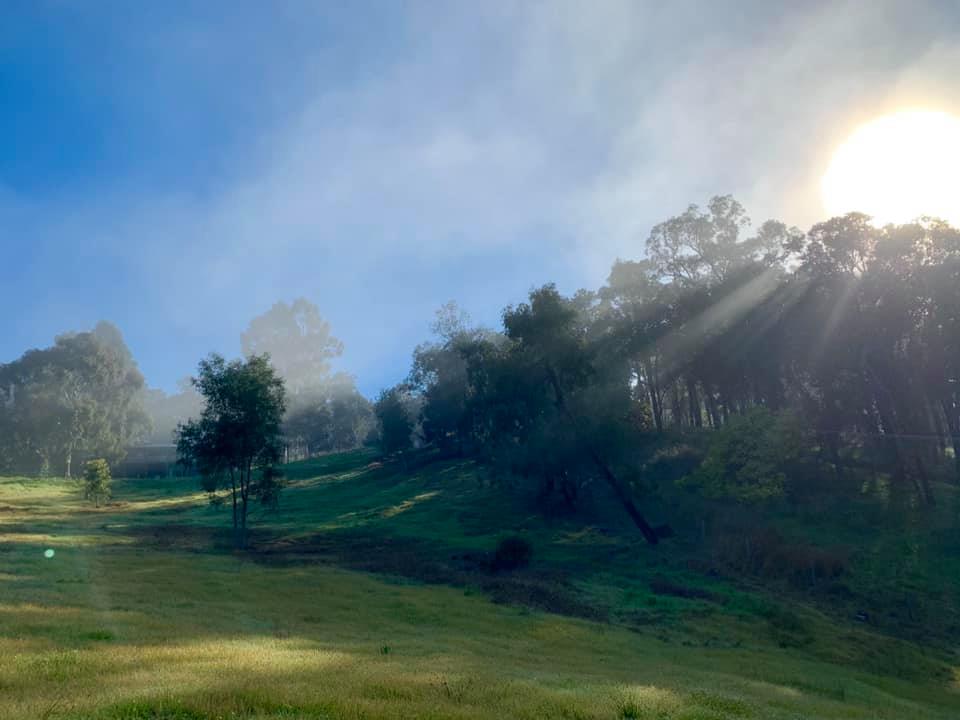
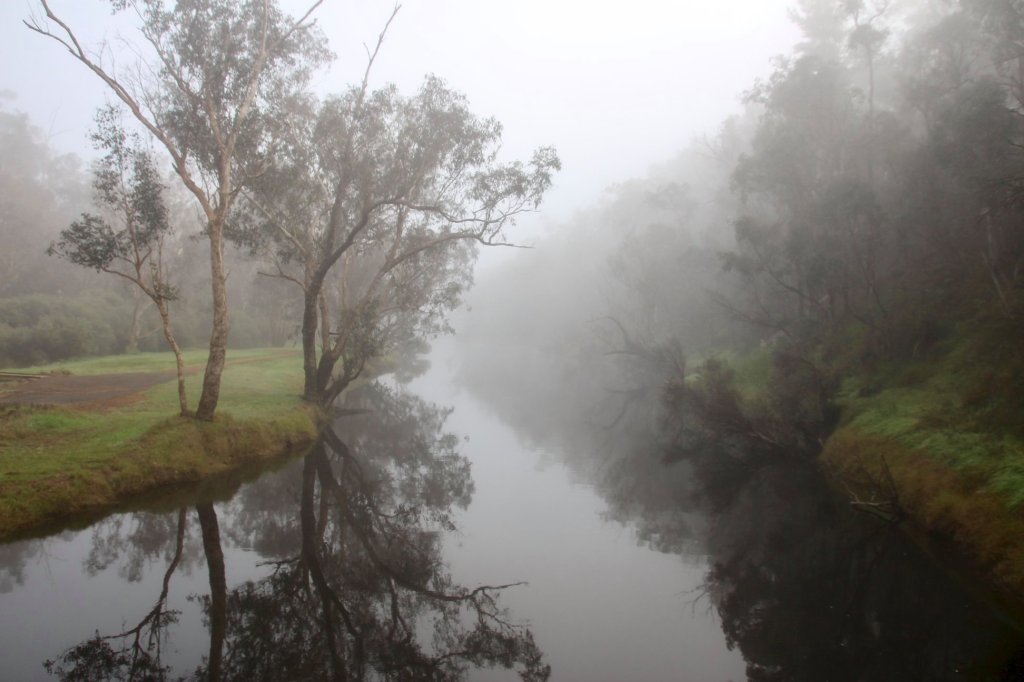
      Most of Wherever You Go is set in Blackwood, a fictional town in Western Australia inspired by Bridgetown, about three hours south of Perth. I’ve taken elements of the real town—the soupy winter fog that rises from the valleys, the steep up-and-down hills, the old fibro homes, the locals’ friendly curiosity (and sometimes suspicion) towards newcomers, the region’s wonderful fresh produce and food; I’ve reimagined the town’s bakery as an artisanal bakery and I’ve added Amy’s cafe, Brewed to Taste, which is an amalgamation of many cafes I’ve visited but is bigger than any of the cafes in the real-life town. Early in the writing process, I visited Bridgetown in different seasons, and walked around the streets, taking photos of houses, streetscapes, and birds, flowers and plants. For months, a mood board sat on my desk and I’d refer to my photos whenever I needed to work on creating a sense of place.

      A small but significant part of the book is set in Germany. I haven’t actually been to Germany, so my focus here was less on place and more on conflicted relationships and resolution. I chose Germany because that’s where my family (on both sides) comes from and, until the Covid-19 pandemic exploded, it’s where I planned to travel to next year.

      2 favourites from the book

      It’s no secret that I love good food and wine, and I often daydream of sharing a long-table feast with loved ones as the sun sets over golden hills. In this fantasy, we’re in Tuscany, or maybe the south of France. There are candles in jars and fairy lights strung up in trees, white tablecloths, potted herbs; there is an abundance of simple but good food and wine, laughter and conversation. This is the kind of atmosphere Amy tries to re-create with her Around the World Supper Club feasts—the setting is different, but the spirit of food and human connection is the same. In Wherever You Go, the characters travel vicariously to Italy, France, Morocco, Vietnam and Greece courtesy of Amy’s feasts—and many of the meals they share were tried and tested on my family.

      One of my favourite characters is Henry, who has a small part overall but plays a pivotal role in helping to mend a friendship. Henry is ‘naughty’, unexpected, and of all the characters, most strongly drawn from a real-life experience. I can’t say more without a spoiler.

      Wherever You Go is now available
      Find out more at Pilyara Press
      Follow Monique on Facebook, Instagram or Twitter
      Contact her via her website

      Photo credits: author photo courtesy Neil Mulligan; photographs of Bridgetown by Monique Mulligan

      Leave a comment

      Filed under 2 2 and 2 (writers + new books)

      2, 2 and 2: Kirsten Krauth talks about Almost a Mirror

      Kirsten Krauth
      Almost a Mirror
      (Transit Lounge)
      Novel

      For authors releasing new books this year—the culmination of years of persistence and determination, of intense creative work in imagining, drafting, rewriting and editing (repeat, repeat, repeat)—the crisis the world has been plunged into has had, and will continue to have, depressing repercussions. With book launches cancelled, festivals postponed, library talks and presentations of all kinds unable to go ahead, authors are losing out on opportunities to raise awareness of new work among the reading public and to earn much-needed income (it’s a fact that most of us earn more from events than from royalties for the books we spend years in creating).

      The same applies to those with books released in the second half of 2019, many of whom were booked for festivals and events this year.

      All of which is a preamble not only to the exciting new novel I’m introducing today but to all guest posts in the 2, 2 and 2 series. Please support these writers, whenever you’re able to, by buying books, talking about them to friends, libraries and book clubs, engaging with the authors’ social media channels and participating in online events. Many online book launches, talks and even festivals are just beginning to emerge—creative responses to crisis!

      K_Krauth_AlmostAMirror

      I admired and was fascinated by Kirsten Krauth’s first novel, the startlingly original just_a_girl, and so I am looking forward to reading her new release, Almost a Mirror.

      Kirsten is an author and arts journalist who lives in Castlemaine. Her writing has been published in the Guardian, Saturday Paper, Monthly, Age/SMH and Overland. She’s inspired by photography, pop and punk, film, other writers and growing up in the 80s. Almost a Mirror was shortlisted for the Penguin Literary Prize.

      Kirsten is creating some innovative ways of promoting Almost a Mirror (see below), so do watch out for online events and links.

      Here is the book’s blurb:

      What we make of memories and what they make of us.

      Like fireflies to the light, Mona, Benny and Jimmy are drawn into the elegantly wasted orbit of the Crystal Ballroom and the post-punk scene of 80s Melbourne, a world that includes Nick Cave and Dodge, a photographer pushing his art to the edge.

      With precision and richness Kirsten Krauth hauntingly evokes the power of music to infuse our lives, while diving deep into loss, beauty, innocence and agency. Filled with unforgettable characters, the novel is above all about the shapes that love can take and the many ways we express tenderness throughout a lifetime.

      As it moves between the Blue Mountains and Melbourne, Sydney and Castlemaine, Almost a Mirror reflects on the healing power of creativity and the everyday sacredness of family and friendship in the face of unexpected tragedy.

      Over, now, to Kirsten…

      Almost a Mirror cover - web

      2 things that inspired the book

      I was looking at a photograph by Sally Mann of a girl—her daughter—holding a flower, a night-blooming cereus, or queen of the night, and I began thinking about an artist, a photographer, who takes photos of her children and that tricky artist–mother dynamic. In the opening chapter of Almost a Mirror, the central character, Mona, is being photographed by a famous photographer in his studio. She steps out of the frame. Later in the book, she becomes a photographer, taking polaroids of her son. I was interested in looking at innocence and agency.

      I was sitting on the stairs that lead up to the Crystal Ballroom, a notorious music venue in St Kilda in the late 70s and 80s that launched the careers of the Birthday Party—Nick Cave, Rowland S. Howard, Mick Harvey, Phill Calvert and Tracey Pew—and became an underground hub of musicians, artists, filmmakers, fashion designers and many who just felt they didn’t belong in suburban Melbourne. I had to write about the place.

      NickTheStripper

      2 places connected with the book

      The Ballroom has such a rich atmosphere of decay and decadence, and when I was there I could feel the ghosts of Nick and Rowland in the bar downstairs. It was originally a palatial room in the late 1800s with a chandelier, ornate mirrors and a sprung floor for waltzes. By the post-punk era, the floor was great for pogo-ing and people were pinching crystals from the chandelier.

      I’ve always been drawn to the Blue Mountains—I once lived in Springwood—and both my books have been partly set there. Here one of my characters, Jimmy, heads to Katoomba, the soft-headed Orphan Rock, on a day where people walk adrift in the aftermath of fire (it was written before the fires this year), and he stands at Echo Point and waits to see the horizon.

      2 favourite songs that inspired chapters

      As the book is set up as a mixtape of 80s songs, each song title a chapter (44 in total), I’m working on a compilation of readings/songs with musicians around the country. My original book launches/festival appearances (postponed now) were going to be gigs with music.

      I’ve been in the studio and we’ve been working on doing covers of two of my favourite songs, ‘Barbados’ (The Models) and ‘Wide Open Road’ (The Triffids). Peter Fenton has reinterpreted the songs and they are exquisitely beautiful, very moving. They give me shivers, and the words are so poignant for these times, too: ‘Now you can go any place that you want to go…’ The songs have been mixed and produced by Richard Andrew. It’s a wonderful thing to be part of right now, especially as each chapter was inspired originally by the songs.

      KirstenKrauth_Records

      Almost a Mirror is now available
      Find out more at Transit Lounge
      Follow Kirsten on Facebook, Twitter and Instagram
      Watch the book trailer

      Photo credits: author photos by Penny Ryan; Nick Cave photo by Wayne O’Farrell

      Leave a comment

      Filed under 2 2 and 2 (writers + new books)

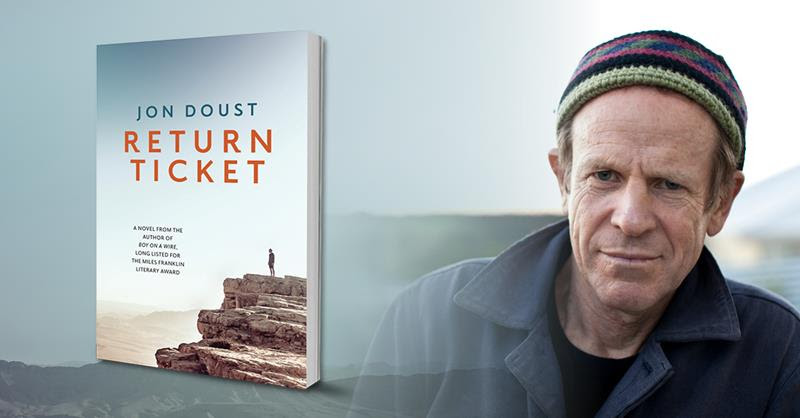
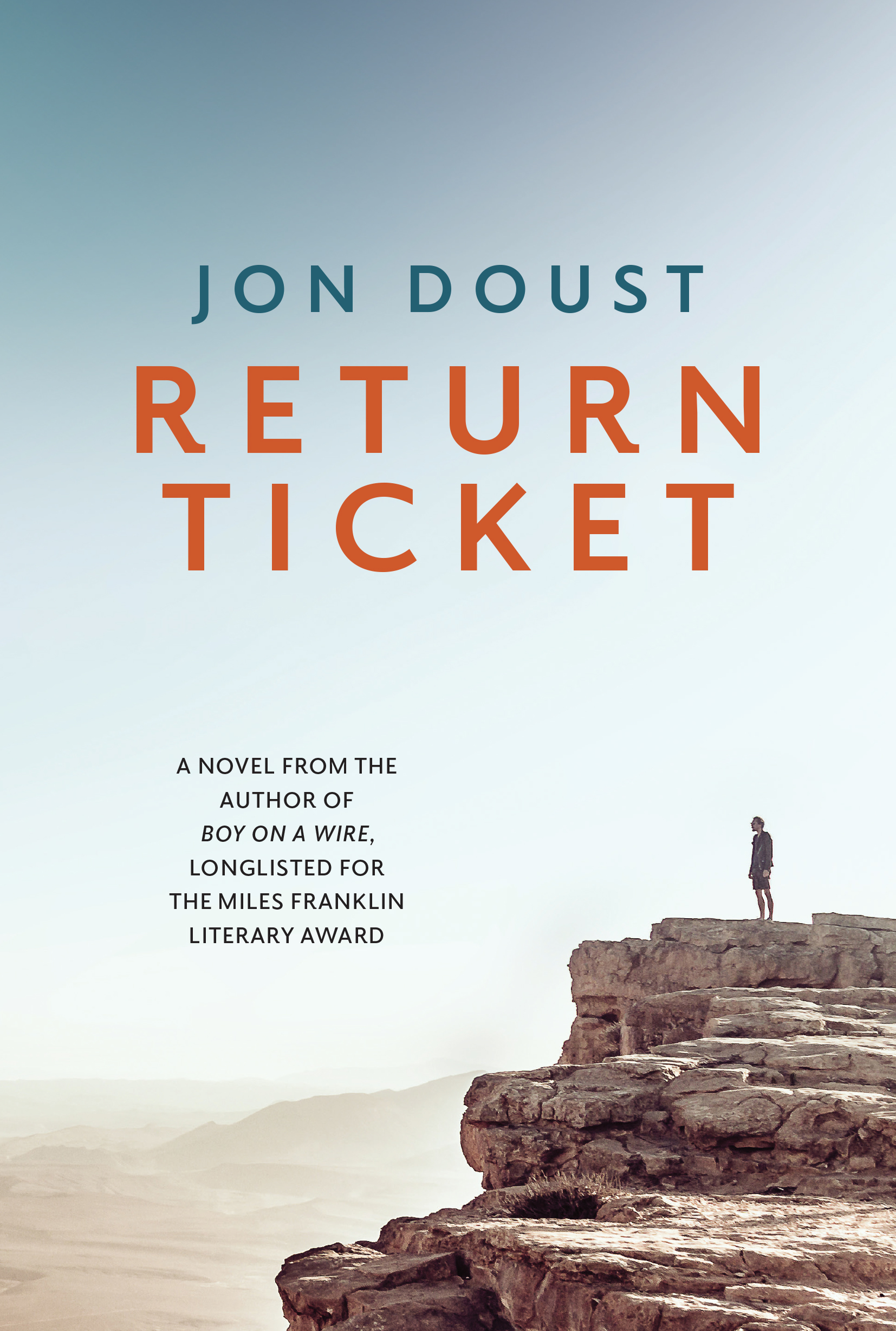
      2, 2 and 2: Jon Doust talks about Return Ticket

      Jon Doust
      Return Ticket
      (Fremantle Press)
      Novel

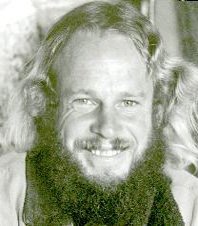
      Jon_DoustIt’s impossible to be in a room with Jon Doust and not end up laughing at something—often yourself! I also credit him with teaching me a few things about the proper way to breathe while speaking to an audience, after he noticed that I wasn’t really breathing at all! Which is a roundabout way of saying he’s a generous man as well as a funny one.
      Jon is a Western Australian author based in Albany, and it’s a pleasure to feature him here, with his new book, Return Ticket.

      Jon’s first novel, Boy on a Wire, was longlisted for the 2010 Miles Franklin Award, and his second, To the Highlands, was released to critical acclaim. Return Ticket completes the Jack Muir trilogy. He is also the co-author of three children’s books and has had short stories published in several anthologies.

      If Jon’s face looks familiar to you, it might be because his varied professional life has included comedy and acting, as well as farming, retail, banking, journalism and professional speaking. He has appeared as a scientist in ABC-TV series Itch, a priest in horror film Needle, a hard-core AC/DC fan in Thunderstruck, a badly beaten and dead dero in courtroom drama Justice, a mad environmental polluter in TV series Bush Patrol, and a one-armed gambler in the documentary The Edge of the World.

      An active member of his local community and beyond, Jon has been a driving force behind various original projects and has undertaken roles in organisations such as the Wilderness Society of WA, Greenpeace and Creative Albany.

      Here is the blurb for Return Ticket

      Sometimes the best place to see yourself is from another place.

      It’s 1972. When hot-headed, impetuous Jack Muir gets off the ship in Durban, he fails to get back on. Instead, he sails into misadventure, fleeing the stifling town of Genoralup to try to lose himself in South Africa at the height of apartheid. But the past has a way of catching up with you, and soon Jack is running again, this time to a kibbutz in Israel.

      In the course of a lifetime, Jack will travel far, always caught between fleeing from and seeking those things he needs: a mother’s precious gift, a lover in a time of war, a kind and steady woman.

      And, across time and across continents, old Jack Muir will remember those who helped him become a decent man, a better father and a friend.

      Over now to Jon…

      9781925816396_RGB

      2 things that inspired the book

      The two things that inspired Return Ticket were the two books before it. Let me explain.

      Return Ticket is the last in the Jack Muir trilogy, One Boy’s Journey to Man. I always had it in mind to write two—one based on my five years in boarding school (Boy on a Wire) and one set on a kibbutz, Israel’s unique socialist experiment (Return Ticket). The book in the middle, To the Highlands, I had no intention of writing, but it blew in my face and stayed there. Each of them was inspired by a lack.

      Nothing like Boy on a Wire had been written, exposing the bullying, the religious hypocrisy, the suffering of those unable to stand up for themselves and the mothers who went along with a system they could barely cope with.

      Nearly all books I had read about Papua New Guinea, apart from a book of short stories by Trevor Shearston, Something in the Blood, had been twee and sweet and with patronising threads denying the truth of Australia’s colonial occupation. And so I wrote To the Highlands.

      The last of the three was inspired by the first two, completing Jack Muir’s journey to man. I had to bring him as close as I could to a whole man—all his issues revealed, some sorted; his relationships mature and healthy; and his final place, both internal and external, arrived at, all circles closed. Many of mine probably never will be, but I wanted Jack to get there, to achieve something akin to what Carl Jung might call individuation. And helping Jack get there has helped me get closer.

      2 places connected with the book

      There are so many places—the home town, Bridgetown, where I learned to shoot guns, climb trees, love koolbardi/magpies, drive tractors and grow fruit and vegetables; Manjimup, where I learned how to belong and thrive in a community; Kincannup, Kinjarling, Albany, where my soul lay in wait. And then there’s the other places that filled me.

      Two, in particular, both much loved and loathed at the same time.

      Israel, Palestine, where I learned to love, to understand, to believe, and where I found my lifelong partner.

      Then there is Iran, Persia, where I learned, again, how love, compassion, understanding, generosity, high culture and tolerance can exist alongside their opposites.

      Unknown-1

      Jon on an Israeli kibbutz, 1973

      2 major influences

      I acknowledge the men and women who nurtured me.

      First, my grandfather—storyteller, journalist, bushman, Noongar speaker, hunter, fisher, a green before it was a colour. Roy Doust once edited the Blackwood Times, then the Warren Times, both papers named after once-great rivers that flow through the South West. He was also an orchardist and he married a lady with a shop, so we grew up on a farm and in a shop.

      Unknown-2

      Roy Doust

      Nothing more enjoyable in the years before radio and television than sitting in a circle around Pop and listening to him regale us with tales of days gone by. Before he died he came to me with a pile of paper in his hands and said: ‘Here are all my stories, I want you to have them.’ Then he turned, picked up his typewriter and passed it on, and I would have wept in front of him but I saved the tears for later, when I could weep the deep weep of a boy who felt honoured.

      Pop had a son, my father, who had four sons. One he wrestled with most of his life but eventually learned to understand and love for who he was.

      Return Ticket is dedicated to three women—my mother, the mother of my first Israeli love and a Holocaust survivor, and my wife. Without them I would not have amounted to much, and even with them, I sometimes wonder if I did.

      Unknown

      Return Ticket is available now
      Find out more at Fremantle Press
      Follow Jon on Facebook, Twitter, Instagram; see also his website

      6 Comments

      Filed under 2 2 and 2 (writers + new books)

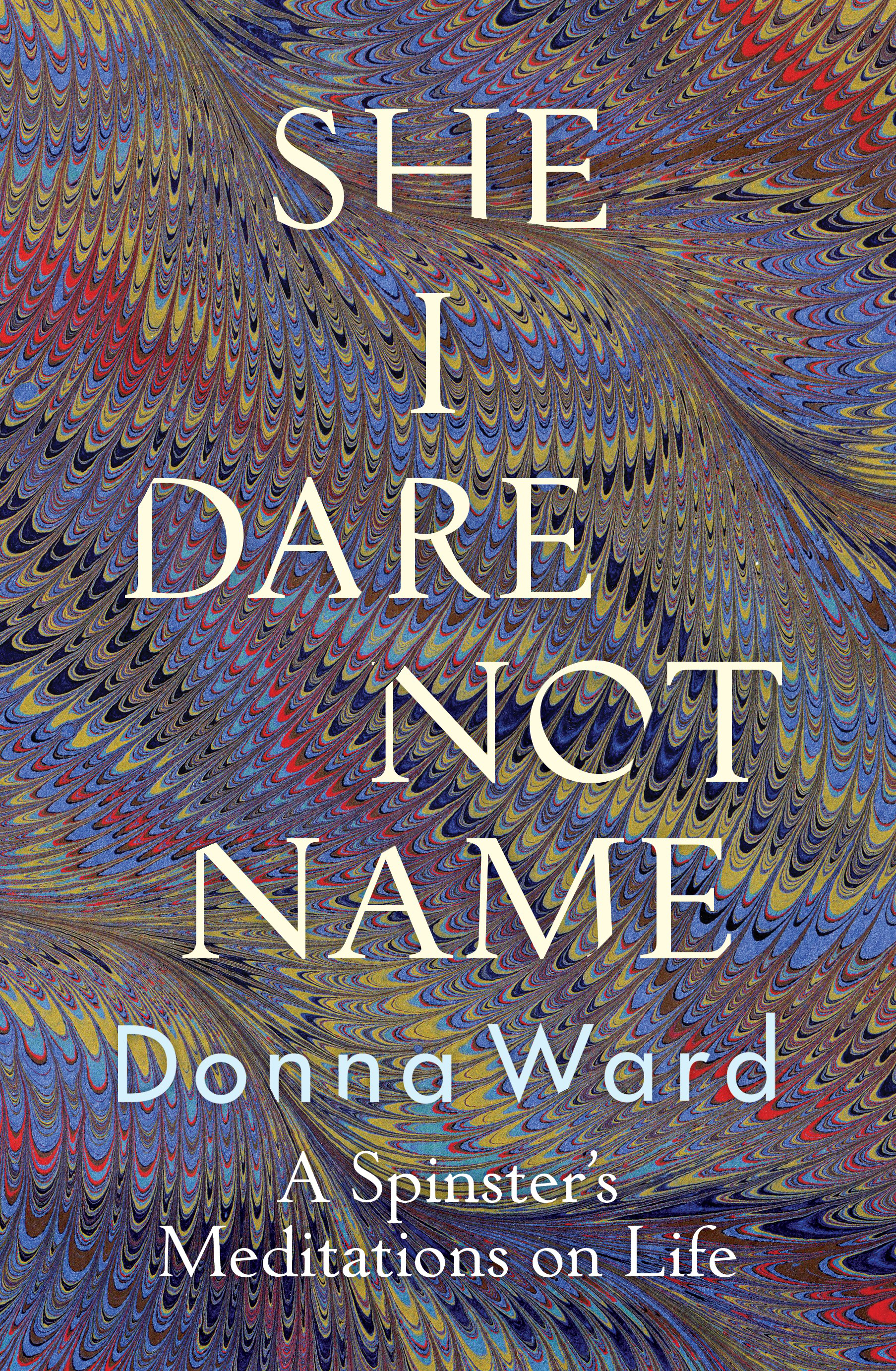
      2, 2 and 2: Donna Ward talks about She I Dare Not Name

      Donna Ward
      She I Dare Not Name: A Spinster’s Meditations on Life
      (Allen & Unwin)
      Memoir

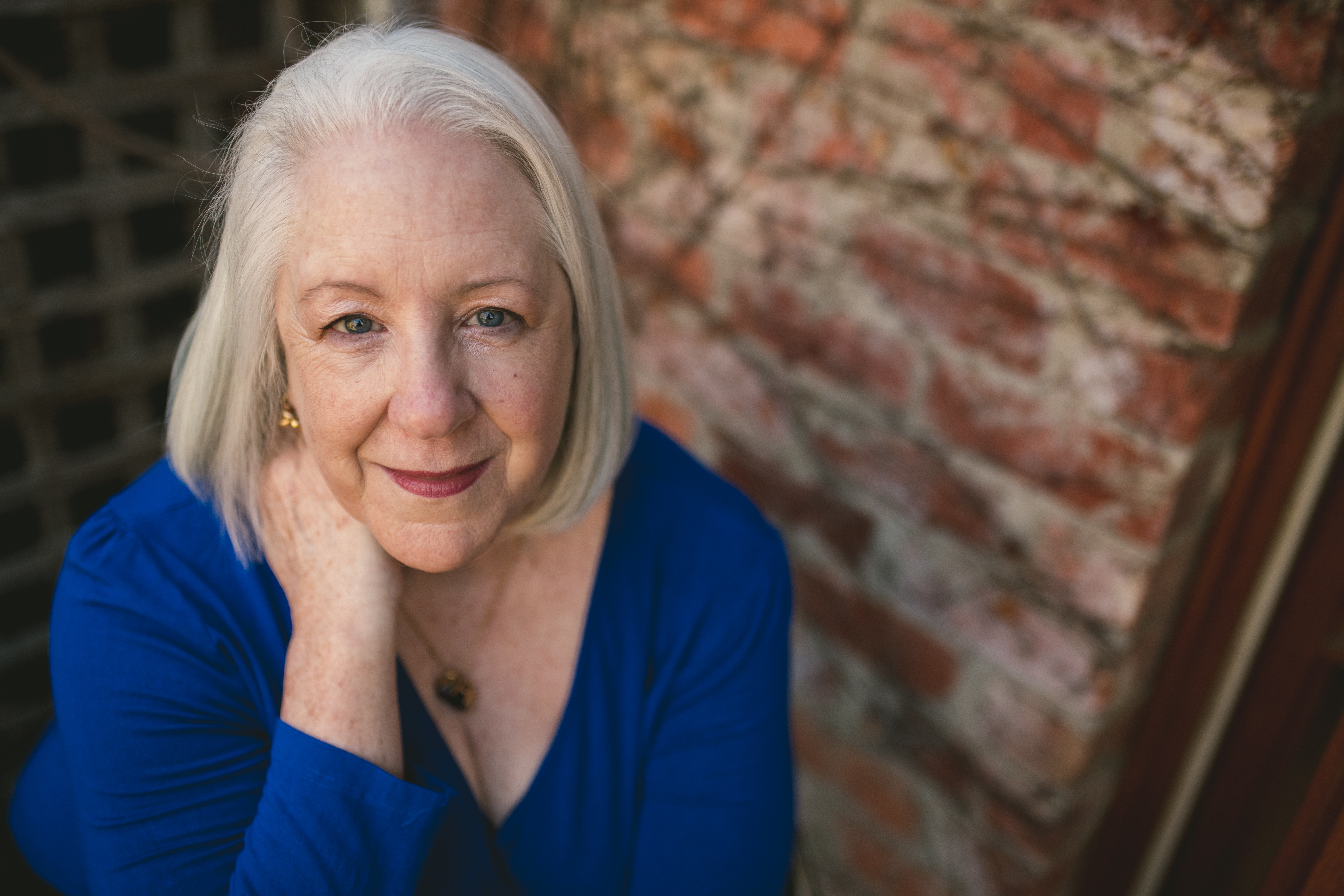
      The Perth writing and publishing community has always been supportive, vibrant and innovative—you have to be when you’re a long way from anywhere else—and even if you leave, you’re still considered part of it. It’s why we (or at least I) still claim Robyn Mundy and Gail Jones (among many others) as WA writers. And it’s why Donna Ward is thought of with so much respect and affection, even though she’s lived in Melbourne for many years now.

      DONNA WARD - SEPTEMBER 2019-3 credit Manda Ford

      As founder and publisher of Indigo: journal of Western Australian creative writing (2007–2010), Donna was a poster girl for ‘supportive, vibrant and innovative’, providing a new publication outlet for Western Australian writers of fiction, poetry and creative non-fiction. Many are grateful to Indigo for their first publication credit, made even more special by the fact that Indigo’s policy was to read all submissions ‘blind’. And Donna’s formidable marketing skills ensured that the journal had a strong profile nationally as well as locally. One of my earliest published stories appeared in volume 1, and I was thrilled to be part of it.

      After moving to Melbourne, Donna founded publishing company Inkerman & Blunt, which has published Angela Meyers, Nick Earls, Lynnette Lounsbury and several anthologies. As noted on the website, Inkerman & Blunt has taken ‘creative leave’, for now, to allow Donna time and energy for her own writing.

      Her publication credits include pieces in national, international and online journals and anthologies, and She I Dare Not Name is her first book.

      Here is the back-cover blurb…

      She I Dare Not Name is a compelling collection of fiercely intelligent, deeply intimate, lyrical reflections on the life of a woman who stands on the threshold between two millennia. Both manifesto and confession, this moving memoir explores the meaning and purpose Donna Ward discovered in a life lived entirely without a partner and children.

      The book describes what it is like to live on the edge of a world built in the shape of couples and families. Rippling through these pages is the way a spinster—or a bachelor, or any of us for that matter—contends with the prejudice and stigma of being different.

      With courage and astounding honesty Donna uncovers the challenge of living with more solitude than anticipated and what it is like to walk the road through midlife and beyond alone. And she reveals how she found home and discovered herself within it.

      Funny, sharp, wise and wry, She I Dare Not Name shows how reading saved this spinster’s life, and how friends and writing and walking brought a contentment and sense of achievement she never thought possible.

      Over now to Donna…

      9781760876296

      2 moments that inspired the book

      Many sparks inspired this book; these are two of them.

      In the middle the nineties I was in the middle of my forties and consumed with the feeling that all my friends and family were wrapped in a magnetic flow which carried them away from me. They floated in the energy of love and coupling and family-making while I stood in a stark room at the end of a dark hallway.

      One day, when caught in this feeling, I was walking down a winter street in Fitzroy, Melbourne, where I was living at the time. The air was sharp, the light slant. I didn’t see the collie dog on the footpath by the table of sale books. I tripped. The collie dog yelped. My knee stung in a serious way, and a pop-sociology book about a group of single women fell into my lap.

      It felt like a curse. I threw the book back on the table, limped home and read another of my many books on forming a relationship. Psychological books that suggested successful relationships are a balance between intimacy and solitude, between honesty and compromise. Books that implied the sine qua non of the fully integrated person is a committed relationship and parenthood, and the lack of such events are the hallmark of a damaged, deviant or perhaps defiant individual—perhaps a feminist. And though I was, and am, profoundly influenced by feminism, I still wanted to meet someone and settle down.

      Sitting there in the stark room at the end of the hall, I read in anticipation of my release into the universal energy of love and coupling and children. But, when I could deny the starkness no longer, I returned to the collie dog and sale book table and bought that book.

      It was a disappointment. The women were single, but not single like me. They were not-yet-married singles, single parents, divorcees and widows. There were no spinsters in that book. The women were American singles which, I discovered, is different to being an Australian single. And shimmering through the book was the insinuation that all single women are misguidedly in thrall to the notion that marriage and family is their only calling—as if they should be so lucky they aren’t married, as if their desire for a partner is evidence that feminism has passed them by. Feminism did not pass me by. In fact, it gave me the power to decide to partner well, and my commitment to partner well left me in a stark room at the end of a dark hall.

      And so that book, as disappointing as it might have been, inspired me to write a similar pop-sociology book from the perspective of an Australian spinster who, like many of her coupled and familied sisters, would have preferred her life to be otherwise.

      In the mid-two thousands, when I was in the middle of my fifties, I attended a production of Joan Didion’s memoir, The Year of Magical Thinking. The performance, given by Helen Morse, was in the Albany Town Hall. That night, more than ten years after tripping over the collie dog, and only a few years after re-settling in Perth where I grew up, I was wonderstruck by the way Didion used her tragedy to confront uncomfortable truths. In the middle of the monologue, possibly in a flash of light, the thought arrived that I could write my book not as a mind-numbing pop-sociology tome, but as a memoir.

      2 places connected with the book

      All the places in my book—Peru, where I was born, Perth, where I grew up, Melbourne, where I live now—their orogeny and their faultlines—are my song. And so my book is geological.

      I am a geologist’s daughter and my father introduced me to deep time. Being present to the geology of a place is to be present to eternity; it is to know the unhurried pace of evolution, the tardy drift of transformation. Being present to geology is to feel the shell that a grain of sand once was, to smell the fluid rock that is now red dust, it is to remember that eons before me this oh so solid land beneath my feet was different. Thinking geologically is to remember that we are here for the briefest moment.

      And my book is river. Growing up by the Swan River taught me what the Vedic people knew, what Herman Hesse writes about in Siddhartha. It taught me that when we sit by the river, when we listen to the river, we become the river’s creature. Even though I live in inner-city Melbourne, the Swan River is within me, and I am in the river, and the river of my childhood is the river of my life, and the river of my life is the river that wraps me in its flow.

      2 quotes pivotal to the book

      My stake is always, of course, the
      unmentioned girl in the plaid silk dress.

      Remember what it was to be me:
      that is always the point.

      —Joan Didion, On Keeping a Notebook, Slouching
      Towards
      Bethlehem (Farrar, Strauss & Giroux, 1968)

      I began my first degree at the University of Western Australia in the summer of ’73. That year, when I read Yeats’ poem ‘The Second Coming’, it felt to me like the slouching beast had been headed off at the pass. It felt like the poem had resumed its metaphorical reading and was now a memory bank of wisdom for some dark and distant future. There had been a revolution and the centre held, after all. The air was clean, the vision clear, the sky as blue as it could be the day I read Didion’s lines, over which I had stumbled when researching for an essay on Yeats’ poem.

      Didion’s lines were not relevant to the poem as much as the poem was relevant to Didion’s ambition to remember her life in order to make sense of existence itself. Didion’s words found their home in me before I fully understood them. But settle they did, and over the years they have risen to the surface on occasion to remind me of their mystery.

      Remember what it is to be me. Remember what it is to be the unmentioned girl in the plaid silk dress.

      My dress was not plaid, but it was often silk, since silk was increasingly accessible in the seventies and eighties, especially to a young woman in boomtown Perth. In those days I was an ordinary young woman with an ordinary ambition, albeit an ambition to be a working woman with a family. As each promise of achieving that ambition disintegrated into dust, Didion’s sentences rose to my surface and reminded me to remember what that was like, even though I didn’t exactly know why I should.

      The Personal is Political
      —Carol Hanisch, in Notes from the Second Year:
      Women’s Liberation,
      eds Shulamith Firestone
      & Anne Koedt (1970)

      These words ricocheted around and through me like a bullet. They are only the title of Carol Hanisch’s paper which was included in Shulamith Firestone and Anne Koedt’s 1970 anthology. Hanisch has no problem with the title, but it was not she who gave her paper its name. Firestone and Koedt came up with the title because it reflects the sentiment of the paper. And that is: what is private concerns the whole of society, what is personal informs how we develop policies that affect people’s daily lives—in this instance, women’s lives.

      I read Hanisch’s paper in the early eighties, when studying for my Bachelor of Social Work in the Reid Library at UWA. The title and the paper recalled Didion’s lines, which were written only two years before Firestone and Koedt named Hanisch’s paper. It was a decade before I came across them. But that is how it is, isn’t it? We write our thoughts so they will travel through eternity, so they would say to another unmentioned girl in a silk plaid skirt, or whatever might be the fashion of the time: this is what it was like to be me.

      Remembering what it is like to be me is to connect to what it is like to be others. To remember a life, to reflect on the ordinary events of it, to note them down and perhaps spin them into some kind of meaning, some kind of wisdom, then share it. This. This is a political act. A political act I aim to do whenever I write.

      She I Dare Not Name is available now
      Find out more at Allen & Unwin
      See Donna’s website for upcoming events
      An excerpt has been published in the Sydney Morning Herald

      Photo credit: author photo Manda Ford

      7 Comments

      Filed under 2 2 and 2 (writers + new books)

      2, 2 and 2 x 51

      IMG_0168

      Every time I prepare a post in the 2, 2 and 2 series, which features writers with new books, I feel deeply privileged to be able to have this conversation with a writer I admire and respect. I love reading what they have to say about the inspiration behind their work, and the connections they have with place (not necessarily geographical). I leave the third pair up to each writer, which often results in the most fascinating insights of all.

      I began the series in mid-2014, and I’ve been a bit erratic in the frequency of posting—notably, a record low in 2017, as I worked intensively on Kathleen O’Connor of Paris (I regret how many wonderful books I missed that year). But since the inception of the series, I’ve featured 51 books—77% by women writers and 82% by Western Australian writers (although I’m a little idiosyncratic on how I define ‘Western Australian’; I claim a couple who no longer live here!). Many fall into the very broad ‘literary fiction’ genre.

      Annabel Smith’s dystopian novel The Ark is notable as the only digital work; Maureen Eppen’s Every Family Is Different as the one children’s picture book; Richard Rossiter’s Thicker than Water as the only novella; Tineke Van der Eecken’s Traverse as the sole memoir (although that will change with a post coming up soon) and Chigozie Obioma’s brilliant Man Booker Prize shortlisted The Fishermen as the only work from an author outside Australia.

      I’ve listed (with links) all the posts alphabetically below, so browse away. Some of my favourite books, and many of my favourite writers, are on this list.

      Jenny Ackland, Little Gods

      Jenny Ackland, The Secret Son

      Louise Allan, The Sisters’ Song

      Dawn Barker, Let Her Go

      Meg Caddy, Devil’s Ballast (YA)

      Robyn Cadwallader, Book of Colours

      Alan Carter, Heaven Sent

      Stephen Daisley, Coming Rain

      Brooke Davis, Lost and Found

      Sarah Drummond, The Sound

      Maureen Eppen, Every Family Is Different (picture book)

      Tracy Farr, The Hope Fault

      Nigel Featherstone, Bodies of Men

      Deb Fitzpatrick, The Break

      Sara Foster, All That Is Lost between Us

      Michelle Johnston, Dustfall

      S.A. Jones, Isabelle of the Moon and Stars

      S.A. Jones, The Fortress

      Julia Lawrinson, Before You Forget (YA)

      Lynne Leonhardt, Step Up, Mrs Dugdale

      Natasha Lester, A Kiss from Mr Fitzgerald

      Isabelle Li, A Chinese Affair (short fiction)

      Rebecca Lim, Afterlight (YA)

      Robert Lukins, The Everlasting Sunday

      Donna Mazza, Fauna

      Meg McKinlay, A Single Stone (YA)

      Michelle Michau-Crawford, Leaving Elvis and Other Stories (short fiction)

      Susan Midalia, Feet to the Stars (short fiction)

      Susan Midalia, The Art of Persuasion

      Robyn Mundy, Wildlight

      Rashida Murphy, The Historian’s Daughter

      Alice Nelson, The Children’s House

      Catherine Noske, The Salt Madonna

      Chigozie Obioma, The Fishermen

      Shirley Patton, The Secrets We Keep

      Emily Paull, Well-Behaved Women (short fiction)

      Marcella Polain, Driving into the Sun

      Ian Reid, A Thousand Tongues

      Ian Reid, The Mind’s Own Place

      Richard Rossiter, Refuge

      Richard Rossiter, Thicker than Water (novella)

      Angela Savage, Mother of Pearl

      Holden Sheppard, Invisible Boys (YA)

      Nicole Sinclair, Bloodlines

      Annabel Smith, The Ark (digital)

      Laurie Steed, You Belong Here

      Dianne Touchell, A Small Madness (YA)

      Dianne Touchell, Forgetting Foster (YA)

      Tineke Van der Eecken, Traverse (memoir)

      David Whish-Wilson, The Coves

      Felicity Young, The Insanity of Murder

      I look forward to featuring many more in the months and years to come, and a big thanks to you for reading!

      IMG_9998

      11 Comments

      Filed under 2 2 and 2 (writers + new books)

      2, 2 and 2: Catherine Noske talks about The Salt Madonna

      Catherine Noske
      The Salt Madonna
      (Picador)
      Literary fiction (novel)

      0W0A3949 (favourite)

      Here’s a book I’ve just started reading, and I’m already absolutely intrigued with the story and enchanted by the writing. The Salt Madonna is the debut novel of Catherine (Kate) Noske—well known in the Western Australian writing and publishing community, and far beyond that, as editor of the literary journal Westerly. Kate is also a lecturer in Creative Writing at the University of Western Australia and sits on the board of Writing WA. She has been a judge of the WA Premier’s Book Awards, the TAG Hungerford Award and the ALS Gold Medal.

      Kate’s undergraduate academic work won her the A.D. Hope Prize, while her creative writing achievements include shortlisting for the 2015 Dorothy Hewett Award, a Varuna fellowship and the Elyne Mitchell Prize for Rural Women Writers (which she has won twice).

      The back-cover blurb of The Salt Madonna reads…

      This is the story of a crime.
      This is the story of a miracle.
      There are two stories here.

      Hannah Mulvey left her island home as a teenager. But her stubborn, defiant mother is dying, and now Hannah has returned to Chesil, taking up a teaching post at the tiny schoolhouse, doing what she can in the long days of this final year.

      But though Hannah cannot pinpoint exactly when it begins, something threatens her small community. A girl disappears entirely from class. Odd reports and rumours reach her through her young charges. People mutter on street corners, the church bell tolls through the night and the island’s women gather at strange hours…And then the miracles begin.

      A page-turning, thought-provoking portrayal of a remote community caught up in a collective moment of madness, of good intentions turned terribly awry. A blistering examination of truth and power, and how we might tell one from the other.

      Over now to Kate…

      Cover (FINAL)

      2 things that inspired the book

      The Salt Madonna has taken me more than ten years to write, so narrowing down the list of things that have inspired the writing in that time is difficult…

      Perhaps the first one should be the moment that started it all. I spent most of 2009 travelling and working around France. In that time, I saw Lourdes and saw playing out there still the story of Bernadette of Lourdes, well over a hundred years later. Small places have long memories—that has been important in my writing. And anyone who has read the story will see the effect Bernadette has had on my writing of Mary as a character! But the most important moment of that trip was quite random—I started writing sitting on a clifftop near Arromanches. I had been watching a girl running across a field of yellow grass, and this image of Mary as a character came to me, almost completely fully formed. The passage I wrote in my diary that day is still in the final version of the book.

      The second thing which has more consistently inspired me is being with my horses. They feature in the book, and riding is as important to Hannah as it is to me. The black horse is one of my favourite characters, and he is influenced by two horses I know and love. But they also became a symbol for me of everything that is complicated in white Australian being-in-place—riding a horse in the bush comes with such a legacy of colonial exploration and exploitation of the land. The image of the stockman is part of that colonial identity. But horses are also much more sensitive to the bush than we are, and riding through that space is a way of being connected to it—they listen to the bush more carefully than we do, and encourage us to notice things we might not otherwise. So there is always a lot going on in the simple act of riding… (Plus I just love my horses.)

      Narrawong State Forest[2]

      2 places connected with the book

      My book is in a way caught between two places. When I was first writing it, I was imagining my home, Narrawong, a little place near Portland in south-west Victoria. But it was very difficult to write fiction layered over that space. It felt as though I was too close to it, and it was too important to me. I also didn’t want people to think that this was based on real life in any way. It is very definitely fiction. So I started to transplant the story to an imagined place. I actually began writing it as set in Western Australia, off the coast of Albany. That wasn’t a random choice: Albany and Portland have a lot in common in terms of geographic and geological form, latitude, size, industry. They are both, most importantly for my purposes, facing the Southern Ocean. Even before I had moved over here to Western Australia, and before I had visited Albany, I was writing over that space. There is a disturbing politics in my having done that. At the heart of it, I think my home as a place has the strongest influence over my work. But I needed some distance from it to be able to write about it, and imagining it mapped across the country around Albany gave me that space.

      The setting in the book is an island. That was something I was firm on very early. I love small towns, and the dual power of isolation bringing people together and creating tension in proximity. Lady Julia Percy Island is off the coast of Narrawong, and I used to be able to see it from my home as a child—it was a powerful imaginative space for me too. Chesil is grounded in these memories. In the end, I am not sure where it is, what piece of coast it is connected to. Perhaps both Victoria and Western Australia, as I am. When I did eventually travel to Albany, it felt in a way already familiar—an illusion, I’m sure, but a strange and powerful one!

      Chesil drawing

      2 favourite names

      I’m not so good at names, but there are two in the book which feel particularly right. The first is almost not a name—the black horse. It seems lazy on my part not to name him, I know. It was something my editor questioned! It also seems cold of Laura as a character not to have a name for him. But it isn’t just laziness; it has a basis. There is an old superstition that it is unlucky to change a horse’s name. The black horse in the book is a present to Laura, a high-bred horse with a fancy stud name. It seemed antithetical to my idea of Laura that she would like that—she is very down-to-earth, and I couldn’t imagine her using it. But I also wanted to hint at a little vein of superstition in her character, alongside some stubbornness, that she wouldn’t change it, either, and would refer to him simply by his colour. Her superstition becomes important in the story, and this was a subtle way for me to set it up. So subtle probably that very few readers will notice it. But it was still very satisfying for me—it helped me write her.

      The other name I am proud of is the name of the island, Chesil. This has a few threads coming together. First is probably the most obvious connection—Ian McEwan’s On Chesil Beach, which is a novel of hidden trauma and violence, and was a big influence on those same themes in my work. The second connection is to my home. Portland was settled by whalers and a family of squatters, the Henty family. They named the bay after Lord William John Cavendish-Scott-Bentinck, Marquess of Titchfield and fifth Duke of Portland. All of these names are still in use around the town, as streets in particular, tying the place back to an English lord and our colonial history. The Aboriginal names for those same places have been overwritten. I only learned the Aboriginal name for my home, Pinnumbul, in asking local elders for advice about the acknowledgement of country in the front of my book. But the name Chesil is also tied to an English place, the Isle of Portland, which is connected to the English mainland by the 29 kilometres of shingle that is Chesil Beach. It floored me when I realised this connection between the names of my home and McEwan’s novel. Using Chesil as the name for the island seemed like a good way to suggest that same legacy of colonisation in the imaginary space of my book, and at the same time continue for me the underlying connection of it to my home. I wrote Lord William into the opening of the book, as a little nod to the connection. But it also just seemed fitting metaphorically to name my imaginary island after the shifting and unstable connection of a shingle beach.

      The Salt Madonna is released today
      and you can find it in bookstores in your area and online
      Find out more at Picador (Pan Macmillan Australia)
      Follow Kate on Facebook; contact details here

      Image credits: author photo by Jess Gately; horses in Narrawong State Forest, photo by Amy Sylvester; sketch of Chesil island by Kate Noske

      15 Comments

      Filed under 2 2 and 2 (writers + new books)