The use of any content on this blog to train AIis prohibited.
I happened to see the film Words of War while reading Michelle Johnston’s novel The Revisionists—an amazing coincidence, given both are about the North Caucasus area, a part of the world I (possibly like many in the West) know little about, and that The Revisionists is dedicated to Russian journalist and human rights activist Anna Politkovskaya, the subject of Words of War. I am grateful to both of these works for bringing these places so wonderfully alive in my imagination, and in the process filling in some yawning gaps in my knowledge.
Michelle Johnston manages to excel in two demanding professions: author and emergency physician. If only she’d write a book about how; it would be a bestseller. She is a Staff Specialist at the Royal Perth Hospital Emergency Department, a busy inner-city trauma centre where she works as both clinician and teacher. The Revisionists is Michelle’s third novel, following Dustfall (2019, shortlisted for the MUD Literary Prize for a debut novel) and Tiny Uncertain Miracles (2022). Michelle says her days are mostly spent searching for the beauty and awe in a frequently brutal reality.
Here is the blurb for The Revisionists:
Upper East Side, Manhattan, 2023: Christine Campbell, former journalist, turns on the television to watch a documentary paying homage to her Pulitzer Prize-shortlisted coverage of the unrest in 1999 in the North Caucasus. She is newly widowed, wealthy and attempting to write a memoir celebrating her bold life and significant achievements in writing about the silencing of women during conflict.
But truth has a way of resurfacing, even when buried deep beneath money, memory and reinvention. When Dr Frankie Pearson, Christine’s oldest—and estranged—friend, knocks on her door, the pair must reconcile their memories and come to terms with the far-reaching and disastrous decisions they both made over twenty years ago. What really happened in that small mountain village in Dagestan in the dying days of the millennium, while Christine was hellbent on getting the scoop of a lifetime?
Over to Michelle…
2 things that inspired the book
The might and courage of female conflict correspondents.The Revisionists is dedicated to Anna Politkovskaya and Marie Colvin, both heroic foreign correspondents who were assassinated in the course of reporting on war. The concept of truth in journalism was a powerful driver for me when writing this book: who owns the truth (reflected in our current Kafkaesque nightmare of a media landscape controlled by billionaires and tyrants buying a version of the world they spray out for their own benefit), how our memories distort our own personal versions of truth, and how language is used and misused for propaganda and political purpose.
Human flaws and folly. I had in my mind a character, a woman, with warring personality traits—great principle, but also the desire for validation and acclaim. Essentially, I let those two characteristics go into battle inside my poor protagonist, Christine Campbell (‘conflict correspondent with a feminist bent’), launching her into a tinderbox of a setting (a war-torn republic in the North Caucasus on the precipice of further descent into conflict and invasion), and seeing how those variables would play out. How much would she sacrifice to make a name for herself? How would she honour the women whose voices she was hoping to showcase?
2 places connected with the book
Dagestan. One of seven Russian republics making up the North Caucasus, Dagestan is a place of immense contradictions: towering, mountainous beauty and desperate poverty; bounteous generosity and hospitality and a republic known for its fighters. It is deeply Islamic and is the nidus of a volatile, far-reaching history, a place subject to constant invasion, reinvasion and reinvention. Few westerners have heard of this incredible republic nestled on the Caspian Sea, and the moment I did, I became obsessed with knowing more. A tiny slice of time got its hooks into me—the invasion of Dagestan in 1999, during which Chechen warlords made a bid for a united Islamic State but instead found themselves facing the fury of a then unknown and newly appointed prime minister, Vladimir Putin, who put into motion the horrific slaughter and devastation of the second Chechen War. This laid the ground for Christine Campbell to search for her story and, by default, herself.
New York. Having spent a good deal of time as a wanderer in that human storm of a city, a flâneur, a small-town girl in the epicentre of man-made energy, I sent Christine there to live out her days of false memory and justification and misery despite her money. I had been influenced by all the places that make an appearance in the book. A graffiti strewn apartment on Orchard Street, the white quiet of Poets House, dinners at Gramercy Tavern, the subway, the Strand bookstore, the cafes. And there, in Manhattan, Christine would have grown old, taking her retrospective falsification and excuses to her grave, had it not been for her childhood friend Frankie, with whom she spent time in Dagestan, turning up on her doorstep to challenge her on those explosive events of time past.
2 things that confuse readers
Angela Hollis’s poetry. For reasons that become quite clear by the end of The Revisionists, Angela, the extraordinary and highly regarded conflict correspondent who takes Christine under her wing, has a number of poems scattered throughout the book. In fact, one of her pieces opens the book: Time rumbles. It’s a low growl between the shoulder blades, in the bones, deep in the chest. Time rumbles like ocean currents, like drowning stars. It’s the sound of a rough wind at dawn, of the trudge of the displaced through the dark. People commonly tell me that they googled ‘Angela Hollis. Poetry’ and are perturbed when they find no results. ‘Where did the poetry come from?’ they ask. ‘I wrote it,’ I reply, which doesn’t seem to satisfy them but makes me oddly happy.
Is Khumsutl a real place? Because I (author as god) was going to do terrible things to the town where Christine and Frankie worked, alongside the beloved siblings Patimat and Murtuz, I needed to make up a place that would not complain if I let loose a bomb or two on it. Strangely, I had written several drafts of The Revisionists by the time it became clear that I had to travel there. I would never have been able to stand up and look readers in the eye (metaphorically or literally), I would have had no authenticity or authority to write the book if I hadn’t travelled there. (Reader, this is not recommended: the North Caucasus is on the DFAT ‘do not travel under any circumstances’ advice.) However, go I had to. And it was magnificent. The strange part is that I had made up a village based on my research which provided the setting in the drafts I’d written prior to travelling there, and on one cold night in the mountains we found ourselves in an utterly uncanny likeness of Khumsutl, with a small abandoned medical clinic, a schoolhouse, a jumble of architecture, a hundred-year-old widow at the top of a tower. It was one of those exquisite moments where the universe says to you: yes, this is the book you must write, I give you this magic.
The Revisionists is in bookshops and available in online stores now Find out more at HarperCollins Follow Michelle via her website Read a review: ANZ LitLovers; ArtsHub
Photo credits: Photos of Dagestan by the author—women of the village of Shitli; the ghost village of Gamsutl; the silversmithing village of Kubachi
I’m thrilled to share the cover of Six Days, which is being published by Upswell in August 2026.
Daniel, an expatriate Australian who has lived in Paris for more than forty years, has made a mess of his life and is trying to atone, to become the ‘good man’ his friend Marcelline believes him to be. But Marcelline has disappeared, the quotidian world has been tipped out of balance and Daniel makes an error of judgment that places at risk everything he values.
Telling Times Carmel Macdonald Grahame & Susan Midalia Short fiction/poetry 2025; see end of post for availability
The use of any content on this blog to train AIis prohibited.
It is a great pleasure to read anything written by Susan Midalia or Carmel Macdonald Grahame, so to find them together in a volume of their own is a rare treat. Telling Times is unusual in being a collaboration of two writers writing in two genres, with a common purpose.
I’ll let the book’s back-cover blurb elucidate this further:
From beauty pageants to experiences of war, Telling Times charts the lives of women and girls in the context of crucial events and political movements that have shaped the modern western world. Its ethical lens is trained on subjects as varied as education, migrant experience, domestic violence, the movie Titanic and the effects of contemporary technology. Acutely observed, and with a keen sense of social justice, Telling Times takes readers from the 1950s into the new millennium, where the plight of asylum seekers and awareness of climate change begin to shape a sense of our future.
Carmel Macdonald Grahame’s short fiction, poetry, critical essays and reviews have appeared in literary journals and anthologies in Australia and Canada, and her novel, Personal Effects, was published by UWAP in 2014. Her most recent publication is Angles, a poetry collaboration with Karen Throssell. Carmel currently lives in Victoria.
Susan Midalia is the author of three short story collections, all shortlisted for major national awards—A History of the Beanbag, An Unknown Sky and Feet to the Stars—as well as two novels, The Art of Persuasionand Everyday Madness. Her latest publication is Miniatures, a collection of flash fiction. Susan lives in Perth.
I was delighted when Susan and Carmel agreed to tackle a barrage of questions from me.
AC: For the benefit of those who have not had the pleasure of hearing the two of you speak about the genesis of Telling Times, could you please sketch out how this collaboration came into being?
CMG: Susan and I have been friends for years. When she sent an email suggesting we exchange work, we initially thought of it as a writerly exchange, an exercise if you like, for me during a protracted Melbourne lockdown. The invitation was a wonderful way of spending time that had begun to feel quite lost. As we exchanged work, the idea grew that we might make something of it; that our retrospections had a point to them. The structure grew out of our correspondence, through emails, phone calls and some face-to-face meetings, about this sense of the relevance of the work.
SM: As Carmel said, the collaboration was a way to help Carmel endure months of lockdown, but I was also in need of some stimulation and encouragement after months of not writing a thing. All writers have these fallow times, but I was feeling increasingly moody about my lack of productivity. So the collaboration helped both of us get into the swing of writing again and to keep refining our writerly and editing skills. And we’re still great friends after the process!
AC: The book is a bold, beautiful hybrid in terms of genre, combining Susan’s short stories and Carmel’s poems. I have a couple of questions regarding genre, the first for Carmel. When I first met you, many years ago, you were a prose writer. I remember your powerful short stories (I can vividly remember you reading one called ‘Slack Key Guitar’), and of course there is your beautiful novel, Personal Effects. Has there been a particular impetus for your turning towards poetry or was it just the right vehicle, for you, for this project?
CMG: I’ve always most enjoyed short forms and I find the short story a rich genre. It requires us to write economically into a situation, an experience, a relationship, and to find ways of opening it out internally to suggest circumstances beyond the story itself. It’s a writerly challenge I’ve always enjoyed trying to meet, deeply pleasurable in fact. Economy of form makes particular demands, doesn’t it? As does poetry of course, which is even more finely wrought in that you most often come to it with a preexisting sense of form. In both cases it has something to do with taking pleasure in the intricacies of the work. I think of it as a kind of embroidery. I enjoy the essay form for the same reason: there’s an internal logic you are hoping to stitch together in language. You are always finding the language to give expression to an idea, are you not? Was it Mallarmé who said poetry is made of words, not ideas—a favourite quote of mine—meaning that language is the stuff with which you’re working, your paint if you like. I wrote my novella as a personal challenge to see if I could bring the same sustained attention to creative work as I had previously applied to the writing of academic work, like writing a thesis. I wanted to try that deeper immersion into storytelling, but the sprawl of the form and the time it takes to achieve it are not for me. I’m a miniaturist, I guess.
AC: And Susan, I’ve never known you as a poet, although your prose is often undoubtedly poetic. Can you see yourself ever inhabiting that space?
SM: As you suggest, Amanda, the line between poetry and prose is porous. Both genres, at least in their modern forms, rely on compression, implication and concision. Both can have a narrative impulse, and both can use imagery, metaphor and the musicality of language. But on those few occasions when I’ve attempted to write poetry, it always read like chopped up prose: banal, predictable, dead. What draws me to prose is a fascination with the psychology of character (although the poetic form of the dramatic monologue is a study in the ambiguity and complexity of an individual). I enjoy imagining creating the inner lives and the voices of different characters, and not always sympathetic ones: individuals of different ages, genders, cultural backgrounds, temperaments and values. Although I’ve published two novels, my heart lies with the short story form, because it reminds me that we experience our life in terms of moments in time: a crisis, a turning point, a revelation, the realisation of intense disillusionment, a brief moment of unalloyed joy. I also love striving to combine economy and evocation, brevity and depth, in ways that I hope readers will find satisfying, and I’m drawn to the use of the unsaid—what cannot or must not be expressed—that often characterises short stories. It reminds us that life is always a contest between the spoken and the silent, the known and the unknown. It also encourages readers to read between the lines, as it were; to be active participants in the creation of meaning, instead of passive recipients.
AC: Telling Times uses decades (1950s–2000s) as its structuring/thematic logic, and I’ve heard you both say, quite forcefully, that its focus is not nostalgia; that it has, rather, an anti-nostalgia focus in the sense of questioning, critiquing, laying bare those times. For example, the title of the 1950s pieces, ‘The Good Old Days’, is used in a deeply ironic way, in stark contrast to the way that phrase is sometimes invoked by certain politicians and others wearing rose-tinted glasses. Tell us a little about some of the issues your pieces speak to.
CMG: Just to take two examples—It seems to me that a decade like the 1950s is often idealised, probably in the wake of World War II. In fact, when I scrutinise it, I come up with childhood memories of an often-cruel education system, unleashed child abuse, ugly prejudice against migrants who were arriving in great numbers, deep institutional misogyny, and a culture profoundly riven by sectarianism. I try to take a child-perspective of what I observed and experienced around me and to tell it as vividly, as true-to-life, as I can. This impulse is at work in poems like ‘Telling Times’ and ‘The Red Phone Box’. Later, in the 1980s say, a changing and unscrupulous workplace culture became evident as economic rationalism took hold. I engage with my memories of this in the poem ‘Zeitgeist’ that opens the decade. The AIDS crisis occurred during which homophobia and a self-evident lack of basic compassion in response gripped the world. Chernobyl and technologies of various kinds began to give us the sense of a threatened planet, President Reagan and his Star Wars defence not least. Retrospectively it felt to me like the decade when optimism waned in some global way.
Both the stories and poems are rich with details and features of each decade that we do celebrate, but the driving impulse was to resist nostalgia and keep track of what we saw as significant and sometimes disheartening changes. I suppose it amounts to a skewed form of memoir, and the collaboration and hybrid form allowed us to be comprehensive and agile in our retrospections.
SM: Like Carmel, I’ve used the perspective of children in the 1950s section of our book to expose the rigidity and cruelty of teachers; to reveal the racism and xenophobia of a period of history which white Australians still refer to as ‘the good old days’. A couple of the stories in that decade are heavily autobiographical: ‘Fitting In’ and ‘Dictation’ (although the latter is deliberately hyperbolic…I had no intention of being subtle!). The child’s perspective can be a particularly engaging one, combining as it often does raw emotion and a naivety about the actions and beliefs of the adult world. And while some of the details in the book about fashion, objects, food, will give older readers the pleasure of recognition, one of our specific aims was to undercut stereotyped and sometimes romanticised ideas about the past. As another example: the 1960s in Australia is still often viewed as socially and morally progressive: all that sex, drugs and rock and roll (alas, that wasn’t my experience as an adolescent). While the hippie culture was becoming more visible, the country was still in the tight grip of conservative forces. Rape within marriage was legal; abortion was illegal under any circumstances; male homosexuality was illegal; domestic violence was typically ignored by the police—regarded as a ‘personal’ matter between husbands and wives. And as some of Carmel’s later poems and my later stories suggest, while there undoubtedly has been some progress, prejudice and bigotry persist.
AC: The stories and poems have a distinctly Western Australian flavour, and many cultural references that will be especially satisfying for readers who live or have lived here. (My own favourite is the reference to the House of Tarvydas. How I longed, at fifteen, to be cool enough, or able to afford, or even to have an occasion I could wear, a Ruth Tarvydas dress!) What was your thinking in taking this approach?
CMG: My thinking was to pay attention to significant events and the flavours of each decade, to try to capture a kind of atmosphere that is particular to a place—it’s in the detail really. Tim Winton, Elizabeth Jolley, so many more, have firmly imprinted our local setting on the literary landscape. Western Australia continues to be my country, although as life has gone on, I’ve had to be mobile. I wanted to acknowledge historical circumstances that have been a part of my experience and tell it as I see it from that vantage point. Without fictionalising, and by weaving personal and observed circumstances together, I tried imaginatively to reinhabit the times and places in which I’ve lived. And for much of that time I lived in Fremantle. Heartland.
SM: I spent my first ten years living in seven different towns in the West Australian wheatbelt—my father was a salesman who was always in search of a ‘better’ job. I think the experience left me with a deep sense of dislocation; a feeling that I didn’t really ‘belong’ to any one place; a feeling exacerbated by being the child of postwar European migrants. I’ve tried to capture that sense of living in Western Australia in two stories set in the 1950s. What has always interested me as an adult living in Perth is Western Australia as a political, rather than a physical space. My natal family always talked politics, sometimes ferociously so (as in my story ‘Dirty Commie Bastards’), and I have continued to do so with my children and with friends. I wanted to capture the ‘flavour’ of some major events in my adult life: the passion of ideas, if you like. The Vietnam War, the AIDS crisis, the Lindy Chamberlain case, the Bicentennial celebrations, for example.
AC: Still on the subject of Western Australia: Carmel, I’m wondering what it was like to write about your former home from a geographical (as well as temporal) distance. Do you think it made any difference? Gave you a different perspective?
CMG: I do. Time and distance have made my sense of the where-and-when more comprehensive perhaps than would otherwise have been possible for me—the view from outside can be panoramic, so they say. I think writing about anywhere after you have left it somehow illuminates your experience of it. At the same time, since I have a sense of distilling personal experience and trying to blend it with things I have heard from other people, it was inevitable that my early focus would be WA. It anchors my thinking. I also wanted to celebrate Western Australia, to make it sing in parts of the country where it seems to me under-sung.
AC: Susan, if musicality is one characteristic of your prose, another is humour. How important is humour in this collection, and in your work generally?
SM: Humour in this collection is a vital part of the way I respond to the injustices and cruelties of the world. As Oscar Wilde famously quipped: ‘Comedy is the most serious form of literature.’ We laugh or give a wry smile, and then we think about why we’ve reacted in this way. Sometimes I’ve used satire—the deliberate use of exaggeration—as in my story ‘Dictation’ to expose the sadism of a teacher. The satiric story ‘Topical’ takes form of an interview in which a homophobic politician’s responses to questions become increasingly ludicrous, unhinged. I’ve also used techniques such as incongruity, juxtaposition and the form of a questionnaire to make fun of the Australian public’s warped priorities: for example, choosing Queen Elizabeth’s visit as more important than the return of Vietnam veterans. Apart from using humour for ethical and political purposes, I also wanted readers to have a laugh at the absurdities of life. If I believed in reincarnation, I would like to come back as a stand-up comedian (without the heckling). I can think of nothing more joyful than making a room full of people laugh.
AC: Carmel, while listening to you speak about the past, I was struck by your comment about belief: that in those earlier times in your life, you had the absolute belief that it was possible to change the world through activism, through alternative ways of living; that you were going to achieve it. The poem ‘Season’ (1970s) beautifully conveys that kind of optimism. I’m wondering what it was like to write that in hindsight.
CMG: To be honest it was partly driven by a sense of disappointment and a growing sense of disillusionment. I remember a time of confidence in ideas like answers blowing in the wind…It’s Time…Give Peace a chance…etc. We tried to create communes, live in alternative ways, send our children to alternative schools and so on. Protesters chained themselves to trees. There was a burgeoning environmental movement. Women’s refuges were set up in the hopes of finding solutions to misogyny and family violence. Refugees were welcomed after the Vietnam War. And so on. There was a sense of forward momentum, possibility, potential. There is a growing sense among many of my contemporaries of wheels being reinvented and old ground being gone over, of past efforts being dismissed rather than furthered (the old idea of standing on the shoulders of those who came before seems to have been ‘influenced’ out of existence), and above all peace most certainly has not been achieved. It feels now that a world we thought possible—so idealistically—has slipped below the horizon. Poems like ‘Of States, Of Mind’ and ‘Invasion Eve Protest’ are underpinned by this sense of disillusionment.
AC: Susan, I love the companion stories ‘And Here is the News for 2001’ and ‘And Here is the News for 2009’, which combine satire and serious comment in an unusual way. Could you talk, please, about the way you put these stories together?
SM: These two stories, which book-end the final decade of the collection, are fundamentally concerned with the inhumane treatment of asylum seekers and continuing inaction on climate change (both of which, to my despair, remain with us today). Both stories use the form of a news broadcast in which the seemingly endless repetition of headlines and soundbites about those two issues draws attention to the fact that politicians and the general public keep denying responsibility for addressing, let alone trying to resolve, the problems. Using the form of a news broadcast also allowed me to cover a whole range of other items: from the important, like the attack on the Twin Towers, to the trivial, like the popularity of distressed skinny jeans. It was a way of suggesting that the daily diet of news can ultimately reduce everything to the same value. I’ve also mixed fact and fiction to, for example, satirise misogyny: the then Deputy Prime Minister Julia Gillard being vilified as ‘deliberately barren’ (a real statement made by a conservative politician) and mocked for her new hairstyle being ‘too masculine’ (fictional). Another example is the announcement of the First Nations movie Samson and Delilah as the winner of the 2009 Australian Film Industry Awards (a fact), followed by an invented comment from a politician about most Australians being ‘fed up to the teeth with all this rubbish about so-called Indigenous so-called disadvantage’. I’m so glad you enjoyed these two stories, Amanda, because I feared that the barrage of lists might merely frustrate the reader, when part of my point was for them to experience the frustration of continuing injustice, bigotry and political self-interest.
AC: You have been quite open in talking about the lukewarm/non-existent response you received after submitting Telling Times to several publishers. The hybridity of the work counted against you, I’m sure. Can you tell us about the experience of self-publishing this work: the positives and negatives.
CMG: I have to be honest and acknowledge Susan’s energy and her skill which have brought us to this conclusion. We both have track records as readers and editors and do have genuine faith in each other’s work, and this gave us confidence that the book has something to offer. So I was only pleased to join a growing DIY Arts movement. Publishing independently is no longer tarnished by the vanity publishing label, for obvious reasons: the protocols of publishing work against us; a submission taking six months for a response or, regrettably, receiving none at all; and in the current underfunded climate, an experimental, mixed-genre text like ours is not going to be regarded as a commercial proposition. As well, many publishers insist that your work hasn’t been submitted elsewhere, so all this meant that we would simply run out of time to put our work out there. This is the subject of many conversations I have with poets who have long and substantial track records. And as some of them say about the current difficulties of getting published—just when we’d really learned the craft! The actual process of bringing this book to fruition has taught me a lot about the industry, and there is real satisfaction in taking creative responsibility for your work from first beginnings to having it in your hand. Perhaps the most positive part of the experience has been the fruitful collaboration between us, even about the nitty-gritty of publishing.
SM: While Carmel generously attributes the final production of this book to my energy and skill, I also have to say that she can be ridiculously modest about sending her work into the public domain. She would have left her exquisitely written novella languishing in a drawer if I hadn’t pushed her to send it to a publisher. But working on this project together has been a rewarding joint effort. We knew that finding a publisher would be difficult: neither poetry nor short stories are on top of publishers’ lists, and many publishers don’t accept either genre at all. So self-publishing it was. The positives of the process? Professional advice from Night Parrot Press enabled us to find a wonderful typesetter and printer, both of whom gave us choices typically unavailable from a publishing house. The typesetter gave us several options for the font and the layout, and he was perfectly happy for Carmel and me to keep making countless nitpicky changes with each draft, at no extra cost. The printer was also extremely accommodating about all stages of the process, while their in-house designer consulted with us about the cover, and gave us about 20 options! You rarely get that kind of flexibility with a traditional publisher. Self-publishing also allowed us to make changes at our own pace instead of having to adhere to a publisher’s deadline. Finally, we get to keep more of the proceeds from sales: a traditional publisher pays most writers a mere $2 per sale of a book! But there are of course negatives to the process, the two main ones being costs and marketing/distribution. The biggest costs were typesetting and printing, but there were also incidentals like postage and purchasing a bar code. We will now have to do all the marketing and distribution ourselves: it will be extremely time-consuming, and there’s no guarantee of a reward. As well, self-published works are ineligible for most literary awards. But despite all these obstacles, Carmel and I are delighted to be able to hold our book in our hands and to offer it to readers. We are proud of what we’ve created. Anyone interested in self-publishing is welcome to get in touch.
AC: And finally, and importantly, where can people buy the book? Will it be available also as an e-book? Audio-book?
CMG: We are selling it ourselves through readings and presentations. The Lane Bookshop in Claremont stocks copies of our book, and some libraries are accepting it. People can purchase a book by leaving a message on Susan’s website.
SM: Carmel and I will send a copy of the book to various independent bookshops, as well as preparing to brave face-to-face encounters with their managers. If readers enjoy the book, we would love them to use the power of word-of-mouth to promote it. Carmel and I would also welcome invitations from book clubs in Melbourne and Perth, respectively.
Telling Times was launched in Perth last month, with a Melbourne launch to follow.
The use of any content on this blog to train AIis prohibited.
It’s been five years since I last posted in my ‘2, 2 and 2’ series featuring writers talking about specific aspects of their new books. I love hearing about those kernels of inspiration that lead a writer into a new work, and also about how their works connect with particular places. The third ‘2’ is different for each writer, and either the writer chooses something important to their work or I choose something I’m curious about.
Up to late 2020, I had featured 56 books. A chance reference to one of these posts recently made me think it’s time to revive the series.
David Whish-Wilson was my last guest, so it is entirely fitting that he should be the first now, and I’m delighted that he agreed!
David is an impressively prolific writer, having published eleven novels and three creative non-fiction titles while somehow also managing to teach creative writing at Curtin University in Perth and to create stunning-looking knives—this last possibly very handy for a crime writer! His crime novels have received two Ned Kelly Award shortlistings, and his last, Cutler, was shortlisted for the Danger Awards and the Western Australian Premier’s Book Awards.
David’s new release, O’Keefe, is the second in his Undercover series (following on from Cutler). Here is the blurb:
Fresh from his exploits on the high seas, undercover operative Paul Cutler assumes a new identity to become Paul O’Keefe.
Paul is tasked with stepping into the shadows to reveal the mysteries surrounding a surge of Mexican cartel meth flooding Australian streets. Assigned to infiltrate a newly appointed security company at Fremantle Port, he discovers a clandestine world of off-the-books operations, and a business front that goes far beyond mere security. There’s a dangerous game afoot over who gets control of the port’s smuggling operations, and O’Keefe is caught in the crossfire.
A pulse-pounding thriller that takes a hard look at the Australian ‘cocaine gold rush’, where maritime crime meets the ruthless currents of the underworld.
Over to David…
2 things that inspired the novel
The first thing is that I wanted to follow on from the maritime theme of Cutler, which was set on the high seas amid the depredations of a modern industrial fishing vessel and all that entails. I greatly enjoyed writing Cutler, but because my protagonist was the only English speaker on board the vessel, it limited my enjoyment in terms of writing dialogue in the Australian vernacular, something I remedied by setting O’Keefe largely in Fremantle port, amid a mixed bunch of smugglers, local characters and policing officials.
What really inspired O’Keefe was coincidentally seeing an old friend from the Netherlands in a news bulletin following the murder of Holland’s best known journalist, Peter de Vries, in 2021. I was watching a late-night YouTube video about the murder and there was my friend, who I hadn’t seen for 30 years, distraught and grieving, a member of the public who’d gathered outside the journalist’s home. I became interested as a result in the pernicious influence cocaine money is having on Dutch and Belgian civil society, with the murders of lawyers and threats against politicians and judges, to the point that some have begun to label these two countries ‘narco-states’ (in the same vein as Mexico, Columbia, Ecuador, etc.). Given the high price of cocaine in Australia (the most expensive country in the world, bar two Middle East countries where drug possession carries the death penalty) and the fact that we’re per capita some of the largest users of cocaine in the world, I began to follow local events more closely, seeing some of the early warning signs of what has happened in countries like Holland, Belgium and parts of Spain and the Balkan states (where cocaine money brings violence, but also mass political corruption and the erosion of trust in civic institutions). I wrote O’Keefe as a way of situating that research in a local context, using examples of things that are on the public record as happening here already, and indicating the potential for some of the more serious things that have happened elsewhere.
2 places connected with the novel
This is probably my most Fremantle-centric book, despite the frequency of settings here in earlier Frank Swann and Lee Southern novels (and in some of my non-fiction). O’Keefe is a work of fiction, and there’s no suggestion that what I write about is actually happening now in the port (where I write, looking across at it), but I loved revisiting some of my favourite haunts in a contemporary context, when my earlier novels were all historical in some sense.
Even though what guided the setting of the story here was the port itself, the emotional momentum behind it was the awareness of the consequences that the so-called ‘war on drugs’ has meant for similar places, especially due to the extraordinary amounts of money generated by cocaine smuggling specifically, when large bribes can be offered without affecting the bottom line, when large amounts of money can be used to buy political influence without affecting the bottom line, and when well-funded violence is ruthlessly used to silence those who threaten business interests.
2 sobering thoughts
One quote contained in the book that really describes the way this particular branch of organised crime works is the terrible choice that people in positions of influence are forced to make between accepting either ‘the bribe or the bullet’. O’Keefe is written as a crime thriller, an entertainment for those who enjoy the genre, and designed to be enjoyed by anyone whether they’re interested in drug policy or not, but behind the thrills and spills is the reality of this quote for the characters in the story, but also sadly for many people caught up in the business reality of the world’s most lucrative recreational drug.
I highly recommend anyone interested in the failures of the war on drugs to read British journalist Johann Hari’s book Chasing the Scream. Treating drug addiction as a medical issue and decriminalising drug possession (such as in Portugal) will inevitably result in some degree of social harm; however, given the destabilisation of nation states caused by drug cartels and traffickers, the horrific violence associated with the international drug business, the overdose deaths and the incarceration of drug users and small-time dealers worldwide, the wastage of police resources and the fact that wherever there is prohibition there is organised crime, and wherever there is organised crime there is political and police corruption, it’s incredible to read in Hari’s text that the near universal prohibition on recreational drug use is the result of a single, troubled, moralistic, hypocritical and highly motivated American public servant, and that things could have so easily been so different.
I’m delighted to be featuring in this post one of my favourite Western Australian authors and another new book that celebrates Western Australian history. Julia Lawrinson’s Trapped!, a verse novel for middle readers, draws on an episode from the rich history of the Eastern Goldfields and is, I’m sure, destined to become a favourite with schools, libraries and young readers.
Julia is one of the most accomplished—and prolific—writers I know, and a truly impressive speaker. Her author biography only scratches the surface of her career, but here it is: She has published more than fifteen books for children and young people, from a picture book to books for older teenagers, and in 2024 published a memoir called How to Avoid a Happy Life [highly recommended]. Her books have been recognised in the Children’s Book Council Awards, the WA Premier’s Book Awards and the Queensland Literary Awards, and she has presented to schools across Australia, in Singapore and in Bali. She is an enthusiastic adult learner of Indonesian, yoga and the cello. Her favourite place on earth is the dog park.
The Julia Lawrinson section of my bookcase is huge!
In 1907, the mining town of Bonnie Vale experiences a sudden deluge of rain that floods a gold mine while miners are still at work down the shaft.
Joe’s dad is one of them. And it soon becomes clear that he’s the only one who hasn’t made it back out yet. Where is he? Why didn’t he escape with the others? And more importantly, how will they rescue him?
Inspired by the true story of the trapped miner of Bonnie Vale and told in verse, Julia Lawrinson weaves a tale that will beckon readers down into the gold mine with Joe’s dad to find out how the rescue unfolded.
Panel by panel
AC: Julia, we’ve both wandered through the rooms at the wonderful Exhibition Museum at Coolgardie. Was it there that you first heard about the incredible rescue that is at the heart of this new novel? I seem to remember that the museum has one room dedicated to the story.
JL: Yes, it was—I had absolutely no idea of it, and once I’d gone through the story, panel by panel, I couldn’t believe that it wasn’t better known outside the goldfields. At the end of the story, you turn on a light, and there is a life-size reconstruction of the rise, complete with Varischetti in it, which was completely arresting.
From thriving town…
AC: Bonnie Vale, where the novel is set, was a mining town about 15 kilometres north of Coolgardie. I say was because it appears on the map today as just the name of a mine site. What was the town like in 1907, when your novel is set?
JL: In the goldfields of 1907, the gold rush was on the wane but was still attracting prospectors from all over the world. Bonnie Vale was gazetted in 1897, and had twelve streets and about as many mining operations, of which the Westralia mine was the biggest. It had about 1,000 official inhabitants, but hundreds more—like Modesto ‘Charlie’ Varischetti—lived in tents, shanties made of flat tin cans and brush shelters. There was a state school with either one or two teachers, a hotel built of iron, a post office, and all the trades you could want in 1907: blacksmiths, carpenters, butchers, a baker, a tinsmith and a plumber. There was Australian Rules football, foot racing and weekend cricket, including a women’s team, and an 11 kilometre cycling track. A Catholic priest visited from Coolgardie once a month.
…to ghost town
AC: As someone fascinated by the ghost towns of the Eastern Goldfields, I’m wondering whether you were able to visit the site during your research and, if so, whether there is any remaining physical evidence of the township that once existed there?
JL: I really wanted to go. I applied for two grants but didn’t get them, so had to rely on photographs and descriptions. I had been to Kalgoorlie and Boulder many times, and Coolgardie twice, so I tried to extrapolate a bit. Apparently there is nothing there now, but I would have liked to have stood on the ground and felt it.
A young person’s voice
AC:Trapped! is told through the eyes of Joe, the eldest son of the trapped miner, Modesto Varischetti. Was there a real Joe?
JL: There was a Joe (Giovanni, not Guiseppe), but he was Modesto’s brother, not his son. Varischetti did have a twelve-year-old at the time he was trapped, but she was a girl, and in Italy with her four younger siblings. The story needed the point of view of a young person involved and invested in the rescue, and so Joe was created.
Changing approach
AC: I’m interested in your decision to write the story in the form of a verse novel, which is, I think, a first for you. Could you talk, please, about why you chose this form and the technical challenges and opportunities it presented?
JL: Initially I wrote the novel alternating between Joe’s point of view and third person. I ended up getting bogged in detail and research—about everything from the mine to the living conditions to the school routine and children’s games. In despair over this unwieldy manuscript, I decided to try and cut it down to the absolute nuts and bolts of the story. Before I knew it, I had a few experimental pages of verse. I sent it to Cate Sutherland at Fremantle Press, and she loved it, so I kept going. I was focusing on what it sounded like, reading it.
The appeal of verse
AC: The novel’s intended readership is middle readers, defined as age eight and over (although I think it could be read and enjoyed by anyone). Does the verse novel genre have specific appeal for this age group?
JL: I hope so! Kids can sometimes be overwhelmed by blocks of text, especially in this digital age, and I think poetry as a format is much friendlier.
Divisions
AC: Apart from being a thrilling narrative of a near-impossible rescue, Trapped! is also a very skilfully told story about social divisions: the Italians and the ‘Britishers’, the working men and the bosses. Some people might be surprised to learn that Italian immigration to Western Australia began this early. What were the circumstances that led to the migration of Italians to the other side of the world in these early years of the twentieth century, and what attitudes did they find here?
JL:The agricultural poverty of northern Italy led many Italians to move from working in lead or zinc mining in that area in the late 1800s to the goldfields for work, mostly with the aim of sending money home to their families. But the attitude they found from the labouring ‘Britishers’, or Australians of British descent, was often harsh. One woman who grew up in Bonnie Vale from 1899 and lived there until 1911 said the mines chose to employ the Italians as ‘cheap labour’. She remembered some Italians walking seven miles from the train line to the Westralia mine, but were chased off: her mother, who ran the hotel, hid them wherever she could, in the pantry and under the bed, and told the men chasing them to take it up with the mine managers, not the poor Italians.*
There were Royal Commissions in 1902 and 1904 into foreign contract workers, focusing mostly on Italians. Even though the commissions concluded there was no undercutting of wages, the tension remained. In 1934 there was a riot in Kalgoorlie, aimed at ‘Dingbat Flat’, which housed Italians, Slavs and other southern Europeans.
My step-Nonna came to Western Australia as a child in the 1930s, and for all her days she remembered the terrible treatment she got from the other children, who made fun of her accent and the food she ate. Her stories were the basis of Joe’s treatment in the novel.
I think readers now will be surprised at how acrimonious the relationship was between Italians and Anglo Australians. To me it shows that divisions—even ones that appear stubborn and intractable—can eventually be overcome in the right circumstances.
A story revivified
AC: Given the dramatic nature of the Bonnie Vale mine collapse and the rescue of Varischetti, one might imagine it would be a story known to most Western Australians. It certainly held the attention of the state, the country and even the world while it was happening. But are you finding this is the case?
JL: No, the story is remarkably unknown—hence this book! There is a quote from The West Australian from 29 March 1907 which says: ‘Our educational authorities would do well to find a place in the school reading books for so inspiring a story from real life.’ It’s taken more than a century, but I hope Trapped! is it!
*The woman was interviewed by Tom Austen for his book The Entombed Miner (St George Books, 1986).
I love history, and Western Australian history is a particular interest of mine, so I’m delighted to be featuring today a new historical novel that is set in Western Australia and focuses on major world events of the mid-twentieth century.
The Distance Between Dreams (Fremantle Press) is Emily Paull’s first novel, following her short story collection Well-Behaved Women (Margaret River Press, 2019). It was shortlisted for the 2023 Fogarty Literary Award, awarded biennially to a Western Australian author between 18 and 35 for an unpublished work of adult fiction. (*The Fogarty Award is currently open; the deadline for entries is 18 April 2025.)
Emily, a Western Australian writer and librarian, has also been shortlisted for the John Marsden & Hachette Australia Prize for Young Writers and the Stuart and Hadow Award. She is well known in the Perth writing community as an interviewer and reviewer, and her book reviews have been published in TheAU Review and Westerly.
Sarah Willis longs to free herself from the expectations of a privileged upbringing, while Winston Keller can’t afford the luxury of a dream. Despite their differences, the pair are drawn together in a whirlwind romance that defies the boundaries of class.
But when a dark family secret pulls the young lovers apart, and the Second World War plunges the world into chaos, it seems impossible that they will ever find their way back to each other—or even hold onto the dream of what might have been.
Seventeen years of drafts
AC:Emily, I know that The Distance Between Dreams has had a very long gestation. How different is the novel we read today from the one you envisaged when you began?
EP: When I first started writing this book, I was 17 years old. I was studying for my final year of school before university, and one of my favourite subjects was history. I’d also just been on a trip to Japan—all of these things influenced elements of this book.
Initially I remember thinking that it was going to be a mystery of sorts, or a missing persons case set in the 1940s. In the original planning for the book, Winston was going to be trying to work out what had happened to Sarah, who he had met, had a whirlwind romance with, and who had then gone missing. But when I started writing, a completely different story came out!
I think the roots of the story as I envisaged it in 2008 are all still there, reflecting on class and family and secrets, but the layers that have been added since, as I have learned more and read more and got feedback from other writers, as well as working with some incredible editors, have added so much. I’m actually very grateful that it took 17 years to get published if this is the end result. It was worth it. (Though ask me again after I have seen some reviews…)
Wartime Fremantle
AC:I love that Western Australian history is front and centre in this novel, intersecting with world history and the history of individuals and families. How did you go about bringing to life Fremantle in the prewar and World War II period?
EP: I know a lot of readers have started to feel like war novels, and in particular World War II novels, are a bit overdone, but as someone who grew up in Western Australia, I felt like our history wasn’t really all that present in the novels that were available. We’ve had a couple of wonderful books published since then, and I’ve enjoyed reading how other writers have approached this period, but I really wanted to write a book that was like the ones I loved reading, but was set in a place that I knew.
Fremantle was the second biggest naval port in the world during WWII and the biggest was Pearl Harbour, so after December 1941, West Australians might have been feeling a little anxious, but the influx of American naval personnel who were stationed in Fremantle after March 1942 also meant that there was a lot of excitement. Australian women really only knew American men from what they saw in the movies, so is it any wonder that quite a few of them got swept off their feet—though not all of them would have had a happy ending to their love stories.
Aside from books, my biggest research tool was Trove, the online newspaper archive. This was really useful for looking at the daily papers, and wherever I mentioned a particular time period in my writing, I could go and look at what the characters might have been seeing in the news that day to give me an idea of what daily life might have been like, what they cared about, what their leisure options were, etc. Sometimes a newspaper article even gave me a new direction to explore and this occasionally turned into a scene.
Looking for meaning in suffering
AC:Part IV of the novel, which evokes the horrifying conditions of prisoners of war forced to clear the jungle for construction of the Thai–Burma Railway, must have been a challenge to write. What sources did you use, and (without getting into spoiler territory) how did your research impact on the story and your writing of it?
EP: This section is another reason why I am glad that the book is being published now, in the version that it is in, rather than in an earlier form. I knew that I wanted Winston to go away to war, but I originally had a time jump, where we didn’t get to see where he ended up or what happened to him, and reading it back, that always felt off to me. A very, very intelligent writer I was friends with was the first person to suggest to me that Winston might have ended up as a prisoner of war and encouraged me to do some research into the Thai–Burma railway. I read a lot of history books, but I also read some memoirs and biographies (a few self-published) about people who had been there or who had a similar experience, and the film The Railway Man came out at exactly the right time for me.
Hilariously, I remember when The Narrow Road to the Deep North came out, I was so upset because I thought that writing about this was going to be something that set me apart and then Richard Flanagan had come along and drawn attention to that part of history again so everyone would write about it. I wanted to hate that book, but I didn’t, I loved it so much, and I am excited to watch the TV show that’s out this year.
It was difficult to write, yes, but I also wanted Winston’s experience to be meaningful, rather than just be a whole section of him suffering and being ill-treated and getting sick for the sake of it. So, while there are some things in there (based on what I found in research) that are really awful, there are also moments of friendship and hope.
The creative self
AC:Could you talk, please, about the decision to make Winston an artist and Sarah an actor? What does creativity bring to the lives of these young characters?
EP: I can’t draw, so making Winston an artist was maybe a bit of wish fulfillment on my part there. I liked the idea that Winston has a very practical attitude to life, but that he feels almost compelled to create things. When things get too much and he needs to unwind, he can lose himself in drawing. He’s tall and strong but he’s also sensitive and artistic, which makes him a target for a group of young men who have been bullying him since his school days—boys who have discovered that money can’t buy talent.
Sarah’s acting was originally a bit of an affectation. She starts off not wanting to be an actress so much as she just wants to be famous and a lot of this is tied to the idea of her being almost starved for love. Her parents’ love is very superficial. But she finds that she’s good at being dramatic and funny and performing for people, and making her friends laugh, so she thinks, why not make it a career. It’s only when she actually starts working with a proper theatre group that she realises acting isn’t what she thought it was and that she truly does love it.
I used to love drama class at high school so I think I gave her a bit of my own love of acting too.
New roles, new horizons
AC:The plot brings the issues of gender and class to the fore. The word feminism existed in those years, but I doubt it would have been treated seriously, let alone respectfully, in Perth and Fremantle. In Sarah, you’ve constructed an interesting character of her time. Was it difficult to strike a balance between the Sarah who is a product of patriarchal dominance and the Sarah who is alive to an incipient feminism?
EP: That’s always the danger, isn’t it, as a modern woman writing women in earlier times? It’s nearly impossible not to give them too much of your own feminism…They might not have used the word often, but during both World Wars, women found themselves taking on new roles and finding capabilities as they had to keep things running on the home front, or as they became nurses or worked in roles in the military. I imagine it was really hard for them to go back to the way things were when men started to return and wanted their jobs back.
Sarah was a tough character to get right in general, because of how brash she can be and because of the way she puts on a persona to get through the world sometimes—deep down, she’s quite lonely at the beginning of the book. Early readers kept telling me that they didn’t understand why Winston liked her so much and I was really perplexed by that, but I think the contradiction you talk about is a big part of it. Sarah knows that the life her father is giving her is a good one and she is supposed to be grateful, but she also knows that there’s a lot wrong with her situation and she feels like she deserves more, she just doesn’t know how to get it. I had to revise her many, many, many times. But I also feel that any woman who has been told to tone it down, or that she’s too much, too loud, too dramatic etc. will relate to Sarah.
Contrary to what we’ve been told…
AC:Did you know, from the beginning, that class would play such an integral role in your story? I ask because I’ve sometimes heard, or read, the comment that Australia has always been a ‘classless society’, which to my mind could not be further from the truth.
EP: That came up so often in my history classes, the idea of Australia being an egalitarian society, and it’s just not true. You just have to travel from one suburb to another to see it, even in relation to the older houses, the schools, the churches.
Yes, class was always integral to the tension in my book. Sarah’s father, Robert Willis, is from a farming background but he’s very proud of being a self-made man because he sold the farm and used it to start a business manufacturing and distributing cigarettes. I think part of the reason why Robert is so against the idea of Winston and Sarah being involved is that he sees her association with Winston as a kind of backslide to working-class status, and he thinks of that as shameful.
The difference in their classes also means that Sarah is able to imagine a lot of different possibilities for her future and have an idealised dream life in her head because money makes things more possible, whereas Winston has never even considered doing anything other than working in a factory and doing what he needs to do to make ends meet. It’s only when they meet and see the world through each other’s eyes that things begin to change for them.
Sleepers and dreamers
AC: I always ask writers about the title of their work because I have had varying experiences with titles myself—ranging from ‘always was’ to ‘the book has to go the printer next week and still doesn’t have a title’! Where do you sit on that continuum with this book?
EP: I am not very good at titles! Originally the book was called The Compound because that is the name of the album that inspired it. Then after a few years I realised that didn’t really tell people much about the book and I workshopped all sorts of different ideas, coming up with Between the Sleepers. The idea of that was that sleepers meant railway sleepers but also the image of people sleeping, dreaming, and referenced Sarah’s feelings that Fremantle sometimes felt like a sleepy little town away from everything exciting. I still really love that title even though so many people have told me they don’t understand it!
When I entered this book in the Fogarty Literary Award in 2023, I knew that it had already been rejected by Fremantle Press I *think* twice by that point, and to give it the best shot I could, I needed to come up with a new title. Finally, I decided to go with The Dreamers.
The team at Fremantle Press came up with The Distance Between Dreams, and I liked the way they had elements of the two previous titles in there, but it did take me a while to warm up to it! Now that I’ve seen it printed on that beautiful cover, however, I can’t imagine it called anything else.
You don’t have to be a father, or a son, to enjoy Laurie Steed’s witty, self-deprecating memoir of love, family and contemporary masculinity. I was especially taken by the parts of the narrative that speak of the creative process—made particularly challenging, in Laurie’s case, by the competing demands of fatherhood and the need to earn a living. Having said that, I think Love, Dad would be an exceptionally welcome gift for fathers and sons alike—infinitely more stimulating than socks and barbecue tongs.
A must-read for all new parents, Love, Dad explores what it means to be a father in the twenty-first century.
The father of two young boys, Laurie reflects on how his own experiences have defined the kind of man he is and the kind of parent he would like to become. His stories—triumphant, funny and sad—draw on Laurie’s own childhood experiences and important relationships with family and mates, alongside the challenges of trauma and mental health shared by many men. This memoir openly shares how Laurie strives to overcome challenges—from breaking generational cycles to maintaining joy in work and parenthood—and how others fresh to parenting can learn from this authentic story of a new dad and his family.
Coming soon (October) from Fremantle Press, Salt River Road is the most recent winner of the City of Fremantle Hungerford Award, again showing the value of this longstanding unpublished manuscript award in introducing fine new writers and exciting new books. Molly Schmidt consulted with Elders of the Menang and Goreng people in developing a story—both authentic and ambitious—that reaches far beyond its premise of a family whose grief is tearing them apart, bringing in a wider view of careless, systemic racism in a rural town in 1970s Australia. Once again I’m struck by the way a work set in the past can have so much to say about the present.
Introducing an exciting new voice in Australian fiction: Molly Schmidt, winner of the 2022 City of Fremantle Hungerford Award. Salt River Road is a compelling coming-of-age novel about grief and healing set in a small town in the 1970s.
In the aftermath of their mother’s death, the Tetley siblings’ lives are falling apart. Left to fend for themselves as their family farm goes to ruins, Rose sets out to escape the grief and mess of home. When she meets Noongar Elders Patsy and Herbert, she finds herself drawn into a home where she has the chance to discover the strength of community, and to heal a wound her family has carried for a generation.
A.J. Betts One Song Pan Macmillan $19.99 YA fiction
Good YA fiction written for young adults may equally be enjoyed by those a bit (or a lot) older—and A.J. Betts always writes good YA fiction. It’s easy to be drawn into the story of Eva’s obsessive quest to win Triple J Unearthed High, and the perils of having to rely on a band of teenage musos yet to gel as a band. The action takes place over a single weekend, in a single setting, and you can feel the tension, smell the aromas of sweat, angst and pepperoni. An engaging, well-paced read about friendship, desire, creativity and resilience.
Aspiring singer-songwriter Eva has one last chance to enter Triple J Unearthed High and break into the music industry.
But after three failed attempts, she needs some help.
Cue the band: perfectionist Eva, charismatic Cooper, easy-going Ant and moody Ruby. Plus fly-on-the-wall Mim, who’s filming them for her school Media project.
Five people who have nothing in common but music. One emotionally and creatively charged weekend.
Can they record the most important song of their lives?
I was blown away by Angela O’Keeffe’s Night Blue when I read it last year, and not at all surprised when it went on to be shortlisted for the 2022 Prime Minister’s Literary Award for Fiction.
Angela and I met at Varuna last July, where I was working on my current novel and, in the next room, she was finishing the manuscript of her second novel.
And that manuscript has just been published. I loved The Sitter as much as I did Night Blue and was thrilled when Angela agreed to take part in this interview series.
Angela O’Keeffe grew up with nine siblings on a farm in the Lockyer Valley, Queensland. She completed a Master of Arts in Writing at UTS, and her first novel, Night Blue, was shortlisted for the UTS Glenda Adams Award for New Writing, as well as the Prime Minister’s Award. She was the recipient of the 2023 Varuna Eleanor Dark Fellowship, and the 2023 UQP Quentin Bryce Award for The Sitter.
Paris, 2020. A writer is confined to her hotel room during the early days of the pandemic, struggling to finish a novel about Hortense Cezanne, wife and sometime muse of the famous painter. Dead for more than a century, Hortense has been reawakened by this creative endeavour, and now shadows the writer through the locked-down city. But Hortense, always subject to the gaze of others, is increasingly intrigued by the woman before her. Who is she and what event hides in her past?
Heartbreaking and perfectly formed, The Sitter explores the tension between artist and subject, and between the stories told about us and the stories we choose to tell.
Art as story
AC: Angela, this is your second novel and the second involving art. Where does this fascination for art come from? Are you an artist yourself? An art historian?
AO: I am neither! But I am asked this a lot. The attraction had to do with the artworks, of course, but also, and perhaps more so, at least initially, it came from the stories that surrounded them. So it was narrative that drew me in. Blue Poles was hated by so many Australians. Why? Hortense Cezanne looks so unhappy in the portraits, and she was disliked by Cezanne’s family and friends. How did she feel about that? But the stories never felt to me to be separated from the artworks. As I wrote, the artworks were an insistent presence.
‘Travelling and speaking through time’
AC: In the present of the narrative, there are only two characters, both of them compelling even though one of them is dead. A writer—at first unnamed—is in a hotel room in Paris, where she is writing a novel about Hortense Cezanne (1850–1922), the wife of French artist Paul Cezanne (1839–1906). Hortense is the other character—ghost, spirit, presence, shadow, figment of the writer’s writerly consciousness? She seems, during the course of the novel, to inhabit some of these nuances, or an indescribable other. I have two questions concerning Hortense. First, could you please talk about the creation of this unique character—what it was that drew you to this woman from history, and your decision to have her enter a contemporary story.
AO: I knew I wanted to write about Hortense when I saw some of the portraits in Paris in 2017. As already mentioned, it was the story surrounding her that drew me in. She was from a working-class family. Cezanne hid her and their son away from his family for many years out of fear of losing his stipend (on which all three survived) from his banker father. Their friends found her shallow. She sat for 29 portraits, and he was a painstakingly slow painter. In the portraits she looks dejected. I knew I wanted to write from her point of view, to explore how she might have seen all this. Bringing her into the present was an attempt to trace, or make visible, the invisibility of art travelling and speaking through time, how art latches onto the present and becomes something it wasn’t before. So I put Hortense and a contemporary writer in a room together in Paris. Could I conjure a situation in which their individual stories might somehow collide? And what might come of such a collision, what new thing might be born? These are the kinds of questions I was asking as I worked. I couldn’t articulate them then as I can now. But on some level I was aware of them through feelings of curiosity and fascination.
‘She would not defend herself’
AC: And my second question about Hortense: I imagine there were many writerly challenges in bringing Hortense to the page so convincingly. I am thinking, for example, of the issue of corporeality and how she manifests her presence in the contemporary character’s world; and also the question of desire—the needs and wants of the departed. Could you please talk about the challenges you faced and how you handled them?
AO: I have this memory of Hortense being really present from the start, that she was such a strong force that she landed quite easily on the page and I didn’t have to think about it. However, that can’t be true, because I also know that I wrote a full draft of the manuscript that I then discarded. Hortense was somehow wrong, or false in it, and I couldn’t use any of it. Then the pandemic came, and it shifted the book’s orientation, and suddenly Hortense came alive. She was just so present, and all I had to do was sort of feel my way along with her. I realised that she was not going to refute the terrible things that had been said about her. She would not defend herself. Instead, she would inhabit those things, and I would see what came of it. I remember feeling huge excitement at this.
Honouring blanks in the canvas
AC: I love the way Hortense, in life always the observed (the model for 29 paintings by Cezanne), becomes the observer in death. Was it your intention to give agency to this woman who appears to have had so little?
AO: Yes, that was one of my intentions, for sure. But I realised quite quickly that I couldn’t—and didn’t want to—make her whole. There are blanks in the canvases and blanks in her history, and I came to see that it was more interesting—for me, for the book—to honour those blanks, to see what an ‘unwhole’ character might do in this situation. The writer, too, is ‘unwhole’ in the story about her own past.
Hidden things
AC: You have devised a graceful way of telling the stories of the two women. The point of view is essentially Hortense’s—as both observer of the writer’s present and the teller of her own memories—but the writer’s point of view is also given voice when, in Part II, a new narrative is introduced, in the form of a letter from the writer to her daughter. Given that the two women are brought together by the writer’s narrative intention to write Hortense’s story, I wondered whether you were ever tempted to include also that developing narrative (aside from the one brief passage in Part I).
AO: Yes, I considered that. In the first attempt I mentioned earlier, there were some of those passages from the book. But there was something off about it. I can’t say what, really. It just didn’t work. And so when I came to write it again, that book is talked about rather than shown. It’s one more thing that is hidden in a novel about hidden things.
Holding two women in a room
AC: The narrative in the present is set in a significant time, March 2020: one year on from the Notre Dame fire in Paris, just after the catastrophic bushfire season in Australia, and the first month of a global pandemic that changed the lives of us all. All of these events are woven into the novel, and Covid plays a major part, in ways I can’t raise because they involve spoilers. But may I ask at what stage of the writing you were in March 2020? That is, did you set the novel then because of what happened and the opportunities it presented, or did you have to rethink a novel already in progress?
AO: As mentioned, I was at the stage where I was starting from scratch again. I had the two characters in a hotel room in Paris. I wanted them to be there for a while, but I couldn’t find a good reason. Was it jet lag? Probably not. And then the pandemic came and not only did I have the reason but the characters, both of them, came alive in new ways. It was such a wonderful thing to discover in that uncertain and terrible time.
Life mirroring art
AC: Did you write some or all of the novel in Paris?
AO: I couldn’t get to Paris because of the closed border. I had been there a couple of times, and I decided that that would be enough. It added to the sense of urgency, in a way. It was a sort of mirroring of the writer’s difficulty in returning home.
I’ve been a great admirer of Robyn Cadwallader’s writing ever since her bestselling first novel, The Anchoress, was published in 2015. The Anchoress tells the story of a seventeen-year-old girl who chooses to renounce the world and become enclosed as a holy woman of prayer (my review here). Robyn’s second novel, Book of Colours, paints a vibrant, compelling portrait of medieval life and the lives behind the illuminated manuscript pages of that time (Robyn talks about Book of Colourshere). Both novels were award winners and gained a huge following in Australia and beyond.
Robyn is a novelist and poet who lives in the country on Ngunnawal land outside Canberra. Prior to working as a researcher, academic and writer, she describes an eclectic early career: ’as a teenager, in retail, selling jewellery, women’s underwear and records (when they were popular the first time round); as a petrol station driveway attendant; and, during uni break, in the Kiwi factory, filling and packaging shoe polish, bleach and fragrant toilet blocks’. Sounds to me like a solid background for studying human life!
Robyn’s new novel, The Fire and the Rose, has been described as ’a heartbreakingly timeless tale, richly imagined and wondrously alive’ (Nigel Featherstone) and ’a beautifully written, thought-provoking exploration of prejudice towards minorities‘ (Canberra Times). I was thrilled to have the opportunity to ask her about it…
England, 1276: Forced to leave her home village, Eleanor moves to Lincoln to work as a housemaid. She’s prickly, independent and stubborn, her prospects blighted by a port-wine birthmark across her face. Unusually for a woman, she has fine skills with ink and quill, and harbours a secret ambition to work as a scribe, a profession closed to women.
Eleanor discovers that Lincoln is a dangerous place, divided by religious prejudice, the Jews frequently the focus of violence and forced to wear a yellow badge. Eleanor falls in love with Asher, a Jewish spicer, who shares her love of books and words, but their relationship is forbidden by law. When Eleanor is pulled into the dark depths of the church’s machinations against Jews and the king issues an edict expelling all Jews from England, Eleanor and Asher are faced with an impossible choice.
Vivid, rich, deep and sensual, The Fire and the Rose is a tender and moving novel about how language, words and books have the power to change and shape lives. Most powerfully, it is also a novel about what it is to be made ‘other’, to be exiled from home and family. But it is also a call to recognise how much we need the other, the one we do not understand, making it a strikingly resonant and powerfully hopeful novel for our times.
That moment…
AC: Robyn, where did The Fire and the Rose come from? What was the moment when you felt: This is a story I have to explore in fiction?
RC: While I was doing research for Book of Colours I came across a reference to the Jews being expelled from England in 1290. I read the sentence again; I was horrified. I’d never heard of this expulsion, so I read a little more. How could a group of people who were part of the fabric of a country be so summarily expelled? That question stayed with me, even when I dismissed the idea of writing a novel about it because it seemed too hard. Each of the three novels I’ve written has begun with an insistent question.
An intimate sense of the past
AC: You are well known for your re-creation of vivid, authentic worlds from a distant past—far more distant than I have ever attempted with my historical fiction. Has your background as a medieval scholar given you that strong sense of time and place, or do you use research methods that would be familiar to any writer of historical fiction?
RC: Both, I think. I consider research as a way of educating myself about a time and place, not simply gathering information to add into the story.
As an academic I studied medieval literature, and that necessarily involved understanding the history of the period. But the literature also gives a more intimate sense of the people: what they believed, what made them laugh, what gave their lives meaning, how they spoke about love or pain or desire. I think I soaked that in and became more familiar with people in the Middle Ages as a result.
When I begin a novel in a particular setting or period, I need to do more focused research. I read everything I can about the historical context, of course, but I’m also very interested in the material culture: physical location and topography, housing, food, etc. But I try to go a bit deeper still and ask myself the implications of whatever I learn. This might involve aspects that we take for granted; for example, I read and think about how people engaged with the senses; how they understood art, or beauty; how they understood their place in the world.
A novel of her own
AC: While your three novels do not form a series, there are crossovers from The Anchoress to Book of Colours and also to The Fire and the Rose. I think the protagonist of The Fire and the Rose, Eleanor, plays a role in all three, although she is only referred to in Book of Colours. What is it about this character that has had such a pull on your imagination?
RC: Oh, Eleanor was such a curious, clever and determined little girl that she refused to let her story end at The Anchoress; I think she wanted a whole novel of her own!
When I wrote The Anchoress I had no conscious sense of extending Eleanor’s story. In that story the anchoress wants to teach her to write, but because neither of them has access to parchment and ink, she shapes letters in Eleanor’s palm.
Even after the novel was finished, I thought about the implications for Eleanor of such a profound experience, discovering a whole world of words in such a sensual way, through the skin. I wondered how she would manage in a small village where so few people could read or write. Would the village become too limiting for her? Would she become restless? Would those around her resent her skills? Those questions were the seeds of her story in The Fire and the Rose.
Making sense of their world
AC: There are aspects of the human subject that are commonly considered universal, but people from the past did not necessarily think as we do today, and I imagine the further back in time we go, the more different those world-views would be. Is it a challenge to negotiate such differences when you create a character from the thirteenth century, or do they present an opportunity?
RC: I think the remarkable thing about investigating people from the past is just how similar they are to us, and at the same time, just how different they are. When I write, I try to hold those two ideas together.
Through the process of writing these three novels, I’ve slowly discovered that limitations or differences are a challenge, but often a good one that pushes me to take a story further. Of course, it means more research in order to understand the beliefs and thinking of the time. My primary interest in writing stories set in the Middle Ages is trying to understand how the people then made sense of the world they found themselves in, and I think that’s true of anything I write in a contemporary setting as well.
We do people from the past a great disservice if we simplify their thoughts and motivations and experiences. For example, when I began writing The Anchoress, the challenge was to write meaningfully about a woman who chooses to be enclosed in a stone cell for life, there to pray and read and ‘suffer with Christ’—something I would never do. As I grew to understand Sarah more closely, I recognised that my initial assumption that she was a very committed and holy woman was much too simplistic. Our motivations are never so simple. Once I began to consider Sarah as a full person, I could begin to explore the fears, desires and dreams that led her to choose enclosure.
Writing the other
AC: The brutal treatment of Jews by the English drives The Fire and the Rose, and in your Author’s Note you describe your position as a Gentile writer writing of this painful history as coming to the work ‘with a bowed head’ (after Colum McCann). More than once you have Jewish characters telling Eleanor, a Gentile, that her own experiences of marginalisation do not give her the right to think she understands theirs. Does this impossible gap between empathy and understanding reflect, in some way, the challenge for a novelist trying to write of the other?
RC: This is a very interesting and somewhat tricky area.
Even though Eleanor is, at times, rebuffed by Jewish people, I’m not suggesting that there is an impossible gap between empathy and understanding. I think Eleanor grows into a profound understanding of the situation of the Jews and their struggle, but I was exploring some of the implications of extreme prejudice.
In the novel, the Jews have been attacked again and again, forced to retreat, relying only on one another for support and comfort. The times that Eleanor is rebuffed are most often moments of grief and stress for the Jews, and their rejection of her attempts to understand their suffering is a product of their marginalisation and the attacks. When they are treated as ‘other’, the divisions are enforced, and in the emotion of the moment, Eleanor is on the other side. However, the relationship between Eleanor and Asher demonstrates how love—the commitment to another through hardship and struggle and delight—can overcome such divisions. The deep bond between Eleanor, Hannah and Marchota is another example.
I recognised that the profound impact of prejudice on Jews and their culture could have implications for my writing, and I spent some time debating and investigating whether I should write this novel, or not. I was warned by a First Nations Australian woman that I shouldn’t attempt to write about a group of people if I didn’t have ‘skin in the game’ because if I made mistakes in my portrayal, it is they, not me, who would suffer as a result. However, a Jewish woman commented in response that if I didn’t tell the story, others would never know it. I knew there was a risk of offending others, but I made several strong commitments: to research as deeply as possible, to seek help and opinions from Jews (I had three sensitivity readers, and another three Jewish readers), and to write only from the point of view of a Gentile character; I would not assume to write from the Jewish point of view.
I think that a writer always seeks to get inside the experience of another person, so in theory, it should be possible to write about others who have a very different experience and outlook from the writer. However, I don’t think that means a writer should just assume that they can write anything. There are areas of sensitivity and marginalisation that need to be carefully considered, but I am heartened by the Jewish woman’s encouragement to write the story so that others would learn of it.
An eternal witness in stone
AC: The walls of the city of Lincoln are given a voice in the novel. These poetic sections, headed ‘The Walls Speak’, provide a chorus of Lincoln’s history, the physical embodiment of its memory, and a brief, eloquent commentary on the timelessness of persecution. It occurred to me that the personification of the inanimate in this novel and also in Book of Colours (the gargoyle) might spring from the same intense experience I have felt during site research—feeling the past in brick and stone. Could you please talk about this aspect of the novel?
RC: Yes, you’re right. I have always loved stone, with its long, long formation in the depths of the earth, its endurance, and the huge range of ways we transform it: into protection, memorial, worship, beauty, foundation and so on. It’s everywhere in Old Lincoln: castle, cathedral, street paving, houses, walls. I knew that the stone would need to speak in some way. I imagined the city walls that completely surrounded the city in the Middle Ages would have stood guard, silent witnesses to all of life in Lincoln, from the joys and celebrations to the suffering, struggle and death. That would include the persecution of the Jews. It’s also ageless, and I found it easy to imagine it as an eternal witness. Even the Bible, in both Old and New Testaments, describes the stones or the walls crying out when people remain silent.
Finding a title
AC: I always find book titles interesting—I think because I’ve had the experience of being wholly certain of what a title should be, as well as the opposite. And when it comes to publication, settling on a title can sometimes be a battleground! Was The Fire and the Rose the first and only title of this novel?
RC: Oh, I’m no good at finding a title at all. I had several. The first one was ‘Not less than everything’, taken from T.S. Eliot’s line in ‘Little Gidding’: ‘A condition of complete simplicity / Costing not less than everything’, because I felt that Eleanor and Asher’s love would, in some ways, cost them everything. However, my agent and my publisher both said it was too vague to communicate well—though it’s interesting that there are quite a few novels now with titles that are phrases. We didn’t battle, because I trust their experience, but I struggled to find another title. My agent suggested The Fire and the Rose, and I discovered that it did suit the story.
Perhaps I’ll call on you for the title of my next novel, whatever it is! [Best not, I think!]
A life goes on
AC: Might we anticipate meeting Eleanor on the page again?
RC: Never say never, but I suspect not. She is someone I would love to meet; wherever her life goes, she will be fascinating and never dull.
The work of three writers most influenced me in the years when I was studying literature and writing, all the while daring to hope I might one day be able to write, myself. Those three writers were Gail Jones, Joan London and my guest today, Simone Lazaroo. You can imagine, then, how delighted I am to have the opportunity to interview Simone here.
Simone migrated to Western Australia from Singapore as a young child. She is an honorary research fellow at Murdoch University, where she taught creative writing for many years, and is part of a Spanish-funded research group.
Since winning the T.A.G. Hungerford Award in 1993, Simone has published six novels, as well as numerous short stories and essays, and has won the WA Premier’s Book Award for Fiction three times. She has also been shortlisted for the prestigious Kiriyama Prize and the Nita B. Kibble Award.
If you are not acquainted with Simone’s work, please do hunt down the brilliant novels that form her backlist: The World Waitingto Be Made, The Australian Fiancé (optioned for film), The Travel Writer, Sustenance and Lost River: Four Albums.
But before you do that, there’s the sixth, her new release, Between Water and the Night Sky…
Elspeth is full of inexpressible longings: to leave behind life in Perth and her beginnings in a small wheatbelt town, and a secret she scarcely comprehends.
Francis wants to fit in—to make a life for himself after migrating from Singapore that is not determined by the colour of his skin or the judgement of others.
Told by their only child, Eva, this is a novel about falling in love, and falling apart—the beautiful, sad story of a shared history that never ends.
Memorialising courage
AC: Simone, Between Water and the Night Sky has been described as auto-fiction, a hybrid genre blending elements of fiction and autobiography. There are many ways a novelist can weave real events and characters, and themselves, into a work of fiction; Donald Stuart, for example, whose novel Shuggie Bain is often classified as auto-fiction, said that it was not autobiographical but inspired by his own experiences. Could you please talk about your choice to write this novel in the way you have, and some of the challenges it posed?
SL: Between Water and the Night Sky began as a couple of short stories that drew on incidents from my parents’ lives, but fictionalised aspects of these (including some elements of plot, setting, characterisation, imagery). But a few years after my mother died, I felt compelled to incorporate extracts from these short stories into a longer story that memorialised aspects of my mother in particular, including her relationship with my father. I focused particularly on my mother’s courage and creativity in the face of considerable struggles she’d experienced. I’d always felt that the way she lived her life showed a kind of heroism often unacknowledged by society. Doubtless many of us know individuals who have shown unacknowledged courage in dealing with the after-effects in their daily lives of traumas they’ve endured, although we sometimes don’t know the precise nature of those traumas.
I also tried in this book to convey many of the social and historical circumstances of my parents’ lives, to give a sense of the era and some of the social and geographical settings in which they lived. For example, partly due to aspects of the White Australia Policy still operating then, marriage between Anglo-Australians and Asians was unusual in the late 1950s, when my parents married, as was migration of Asians into Australia. However, partly because I simply didn’t know certain details of my parents’ lives before and after their marriage, imagination was all I had to fill in the gaps. Also, as the writing of the story progressed, it took on a life of its own. I used various fictional techniques (some of which I’ve alluded to above) to make the story more engaging, and because of issues of privacy.
At the intersection of cultures
AC: Throughout your body of work, you have explored characters at the intersection of cultures. Could you discuss how this plays out in Between Water and the Night Sky?
SL: The marriage of Elspeth and Francis might be considered an embodiment of the intersection of cultures—in this case, Francis’s Singaporean Eurasian culture and Elspeth’s Anglo-Australian culture. And of course, they each experience the upheavals, difficulties and joys of migrating and living in cultures and nations they are unfamiliar with. These kinds of experience can make unusual demands on the individuals involved, and on their relationship with each other. Some of the effects of such experiences upon a bicultural (or perhaps it would be more apt to say multicultural) marriage and family are reflected in this book.
Ways of seeing
AC:A photo’s just a memento of how a person looks at a particular moment…but a person’s life floats across countless moments. Elspeth, p. 164
I love the use of photography as an elemental motif in the narrative. The younger Francis is a keen hobbyist photographer, an interest gifted to daughter Eva, who studies photography at university. It recurs again and again as a metaphor for light and shadow, positive and negative, truth and illusion. I wondered, too, about the relationship between photographs and words in telling the story of a life—whether each complements the other, compensating for the other’s limitations. Was photography always a fundamental part of the story of Francis, Elspeth and Eva?
SL: Yes—photography is in a sense emblematic of how Francis and Eva develop their ways of ‘seeing’ other individuals, particularly during Francis’s courtship of Elspeth and later as Eva sees Elspeth aging. Many of us are familiar with the ways in which family photographs help trigger narratives and understandings about family members.
An enduring kind of love
AC: The relationship between Elspeth and Francis is both incredibly strong and heartbreakingly fragile, and ultimately does not survive—or at least not in the way we expect of a love story. But (and I’m trying not to wander into spoiler territory here) long after finishing the novel I was left thinking about the nature of love, and what endures between people. Did you conceive this work as a love story?
SL: Not while I was in the early stages of writing it. But as the writing progressed, I reflected on some aspects of Elspeth’s and Francis’s relationship with each other in the light of some of the wisdom I believe my parents acquired about their relationship as they aged, and saw that a nonetheless enduring kind of love had developed between my parents, despite the breakup of their marriage. Although my parents didn’t have the conversation that Elspeth and Francis have just before he dies, I wanted to convey something of the growing respect they had for one another as they aged.
Indirect trauma
AC: The great trauma of Elspeth’s infancy, painfully, shockingly, revealed to her late in life, in some ways drives the narrative. Again, I don’t want to give too much of that away. But I have always been interested in the idea that trauma can be passed from one generation to those that follow, and I sense that in this novel. Could you talk about that aspect of the work?
SL: I’m certainly not an expert in these matters. But I’d suggest that while the offspring of a person who has suffered trauma may experience it much less ‘directly’ than that parent, they nonetheless are affected by their parent’s long-term psychological responses to the trauma, which can continue to play out in their daily life decades after the traumatic event—in ways such as depression, anxiety, perhaps difficulty with some kinds of social engagement—even if the parent hasn’t told them about the traumatic event. And it’s possible that offspring who know more directly about their parent’s trauma may feel a heightened sense of responsibility towards their parent, sometimes resulting in the offspring taking on a carer’s role towards the parent at a young age; this can in turn lead to depression and anxiety in the offspring, particularly if they feel powerless to ‘cure’ or make their parent feel ‘better’.
Narrative immediacy
AC: I’ve noticed that while you don’t use it exclusively, you often seem drawn to writing in the first person. What does first-person narration bring to a novel such as this?
SL: As one of my hopes for this novel was that it might help people who’ve suffered similar kinds of trauma feel less alone, I used first person to try and build a sense of more ‘direct’ communication between the writer and reader.
More broadly speaking, I sometimes use first person in my fiction to give a sense of immediacy and direct revelation of the narrator’s thoughts, feelings and experiences—although attentive readers and writers know this isn’t impossible to achieve with third person point of view, too.
When you have to let a title go
AC:Between Water and the Night Sky is a beautiful, evocative title. Was it an ‘always-was’ title or one that took time to emerge?
SL: It took a long time to emerge—partly because I discovered around the middle of last year, while I was working and travelling in Europe, that the title I’d originally chosen for the manuscript-in-progress (almost three years ago) was very similar to the title of someone else’s novel published about two years ago. So en route to various work destinations in Europe, and just as the cover design was being finalised, I had a frantic email correspondence with the exceedingly helpful and patient Georgia Richter of Fremantle Press, in an effort to find another suitable title. Both titles included water, which is central to the novel’s preoccupations with the Indian Ocean and with states of merging, flux, separation and release, in the relationship between Elspeth and Francis, and in her life generally.
Author of SIX DAYS (August 2026), KATHLEEN O’CONNOR OF PARIS (narrative non-fiction), ELEMENTAL and THE SINKINGS (novels) and INHERITED (short story collection). looking up/looking down is an occasional blog about writing, reading and watching the world...
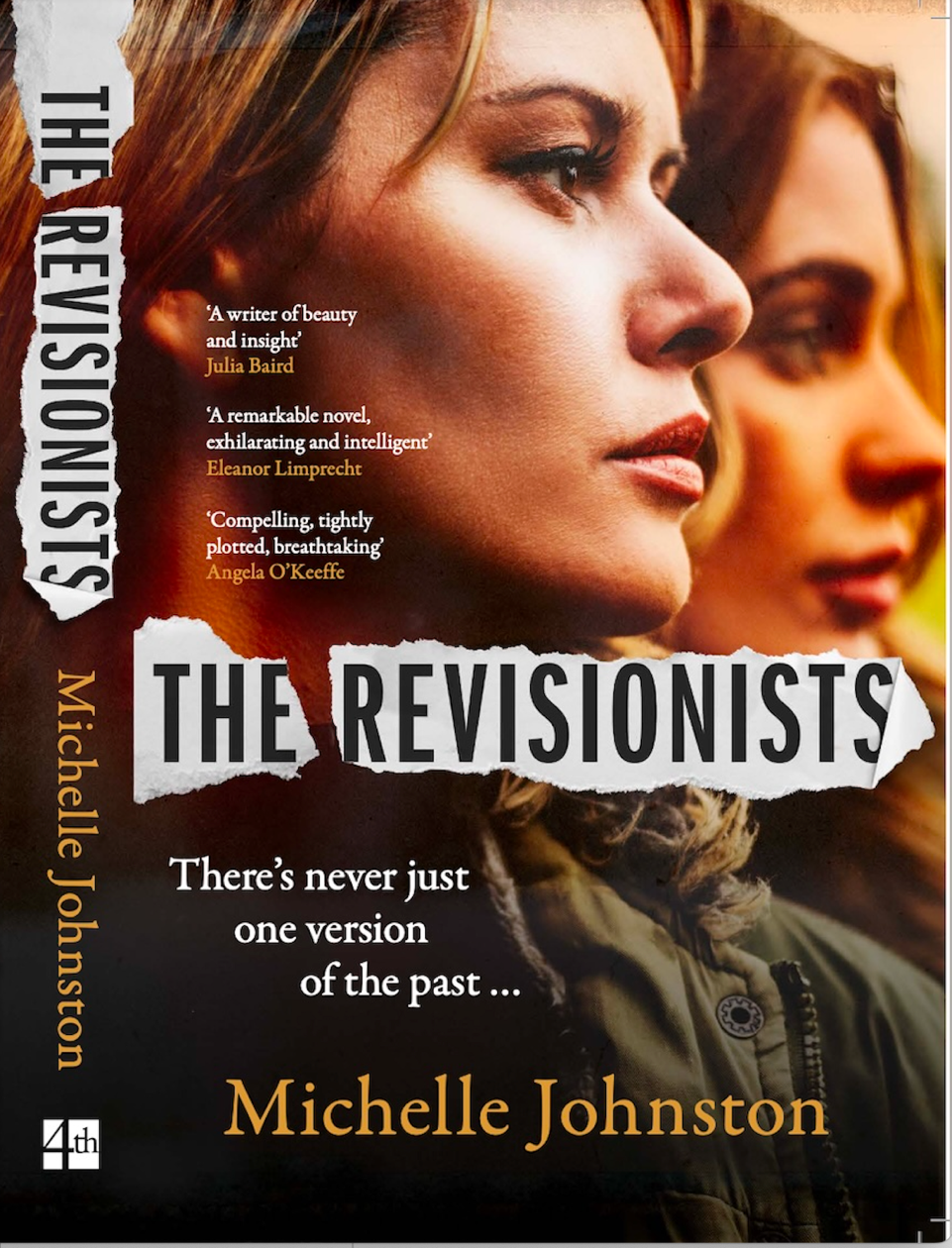
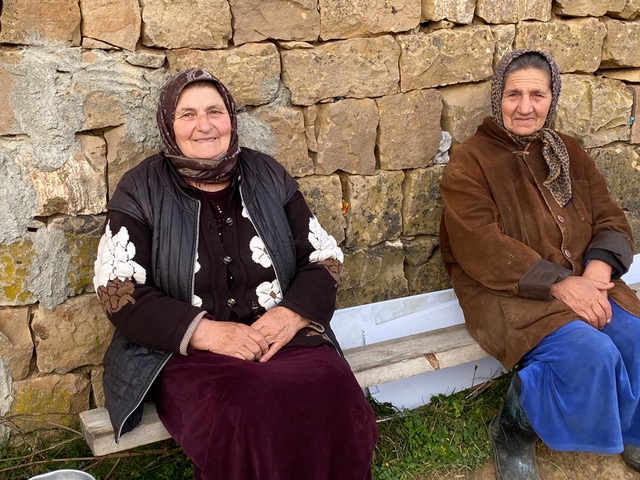
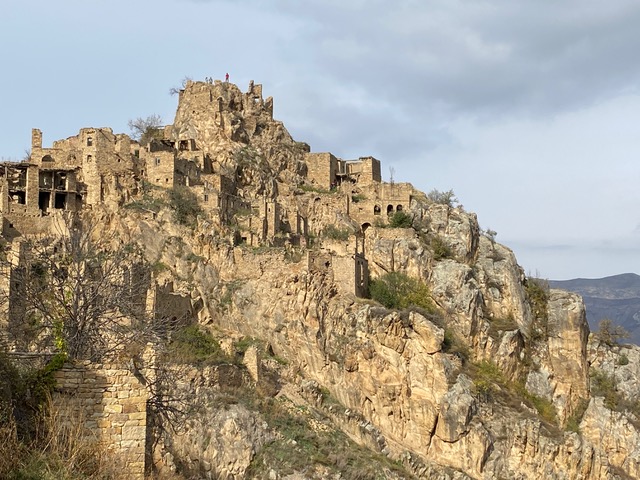
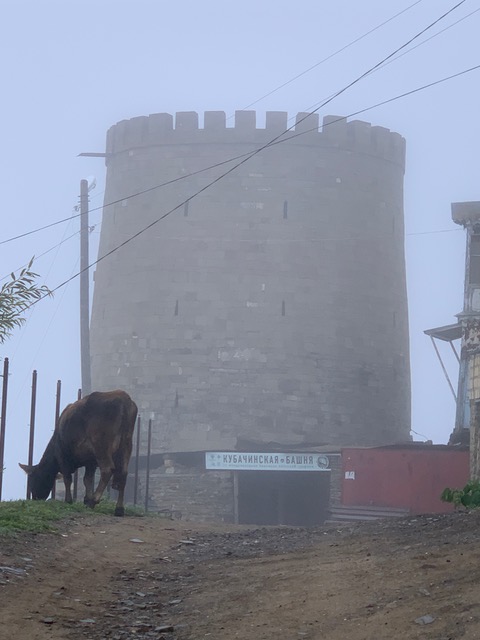


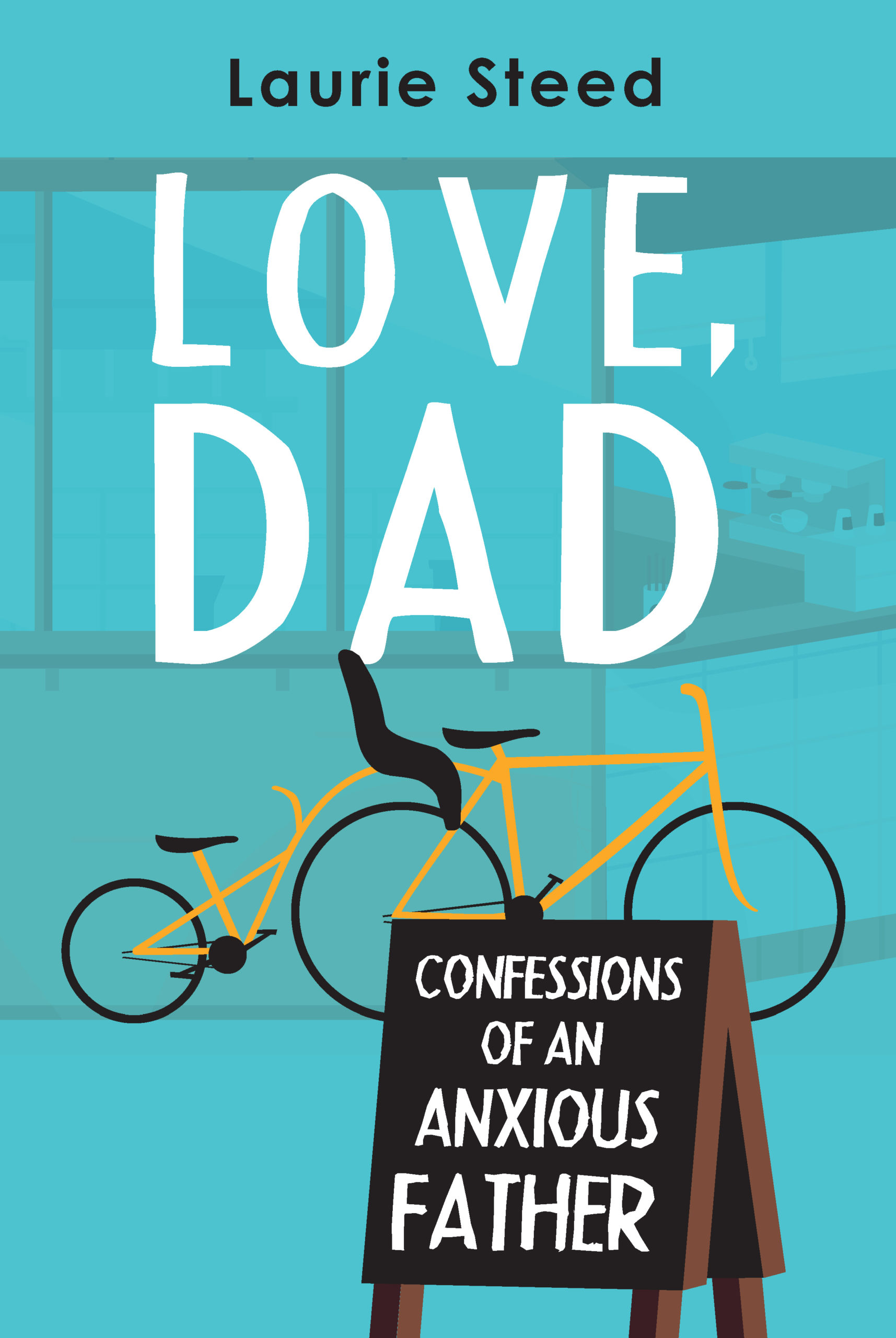
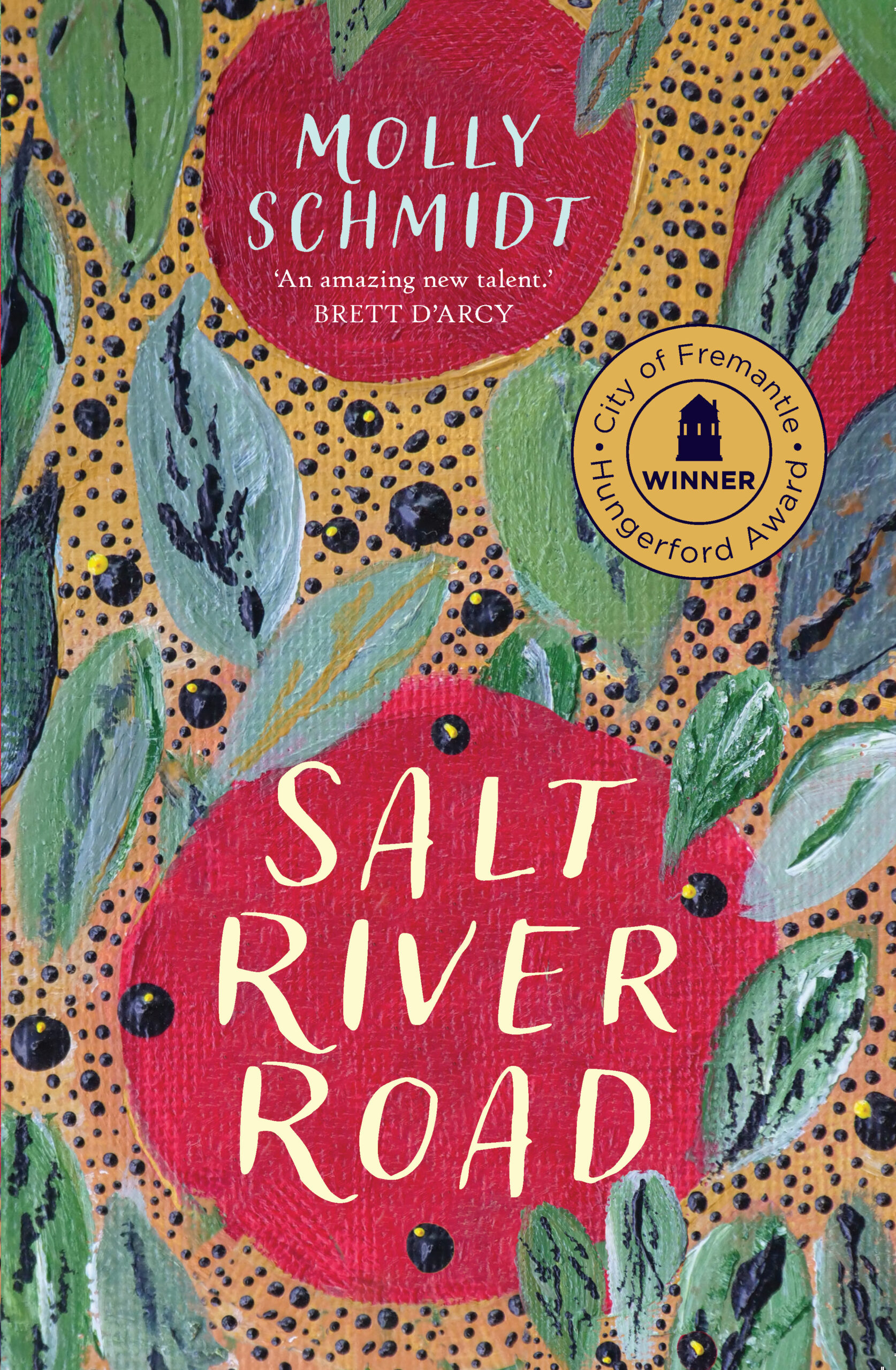
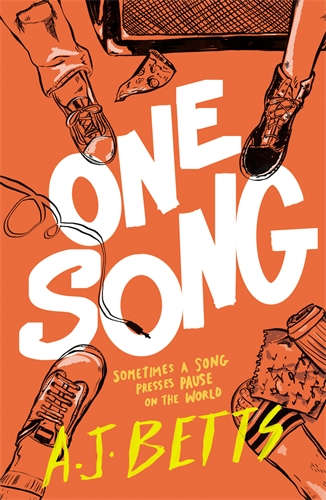


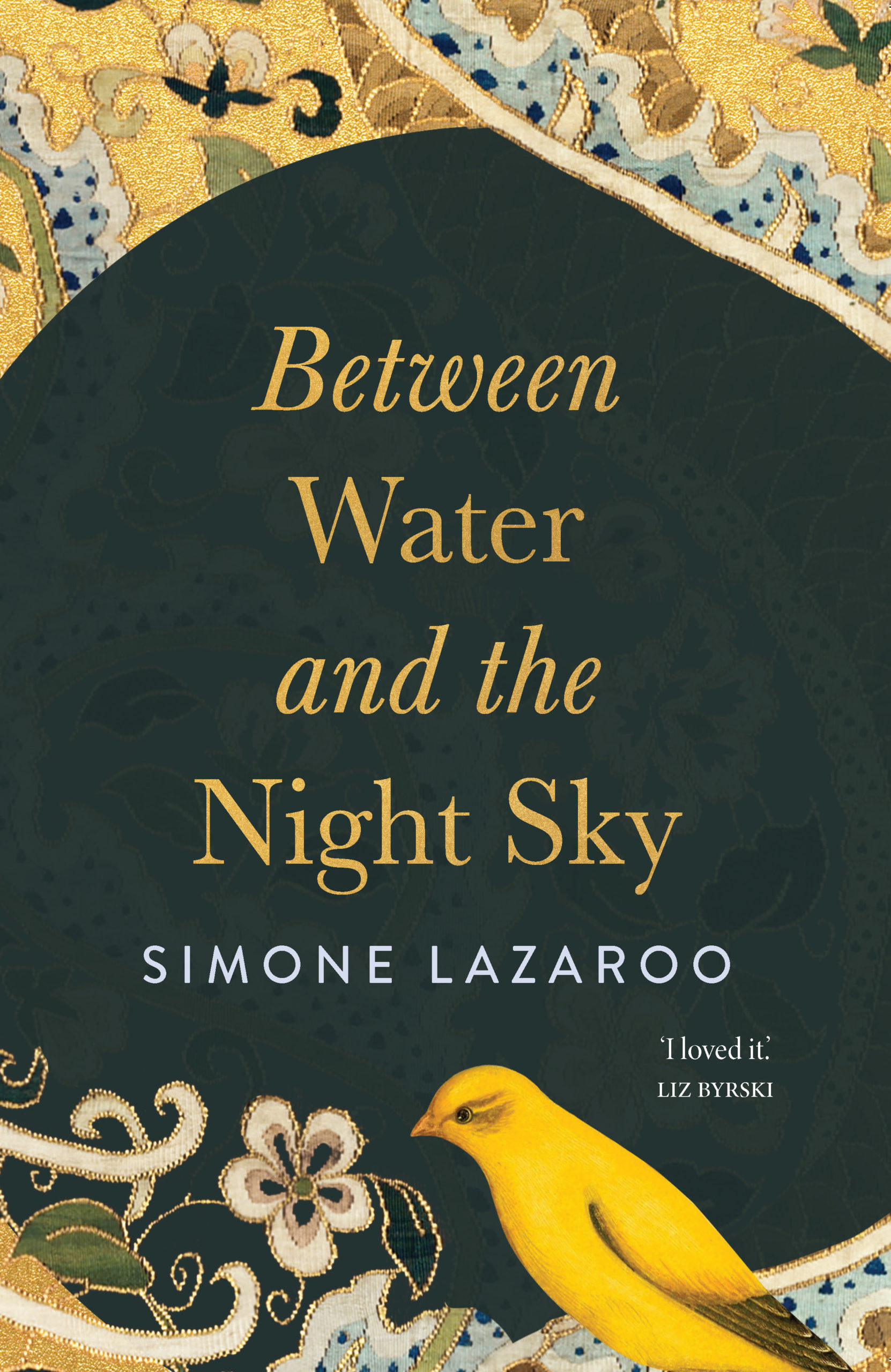


 looking up/looking down