Category Archives: 2 2 and 2 (writers + new books)

2, 2 and 2: Dianne Touchell talks about Forgetting Foster

Author PhotoDianne Touchell is one of my favourite writers of young adult fiction. Among the many things I admire in her work are its fearlessness, its compassion, its humour, and the respect she so obviously has for her young characters. It comes as no surprise to me to hear that she thinks young adults are far more interesting than grown-ups.

Dianne’s debut, Creepy & Maud (Fremantle Press, 2012), was shortlisted for the Children’s Book Council of Australia’s Book of the Year Award in the Older Readers category. Her second, A Small Madness (Allen & Unwin, 2015), was a Notable book in the CBCA Book of the Year Awards, and you can read her 2, 2 and 2 interview about A Small Madness here.

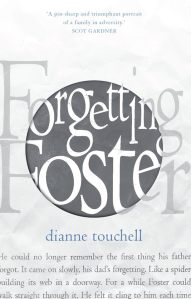
I am delighted to be featuring her new novel, Forgetting Foster. Here is the book’s blurb…

Foster suddenly recognised the thing that rolled over him and made him feel sick. It was this: Dad was going away somewhere all on his own. And Foster was already missing him.

Foster Sumner is seven years old. He likes toy soldiers, tadpole hunting, going to school and the beach. Best of all he likes listening to his dad’s stories. But then Foster’s dad starts forgetting things. No one is too worried at first. Foster and Dad giggle about it. But the forgetting gets worse. And suddenly no one is laughing anymore.

A heartbreaking story about what it means to forget and to be forgotten.

Over now to Di…
Forgetting Foster Cover

2 things that inspired the book

1 Two people I loved were affected by Alzheimer’s disease and psychotic dementia. Strong, opinionated, charismatic women with large personalities and a lifelong interest in their internal and external worlds. The sort of women you can never imagine would die at all, let alone slowly walk out of their own bodies long before death actually took them. It does something to you, watching them slowly leave you, watching them slowly leave themselves. It did something to me.

There’s the denial that anything is actually wrong, then the anger that you’re now caring for someone who should be looking after you, then the guilt about that anger, then the exhaustion of that caring, and then the fear that as this godawful illness seems to have its teeth in the women of this family I might go the same way. Every time I misplace my keys or walk into a room and forget why I’m there I laugh and then I panic.
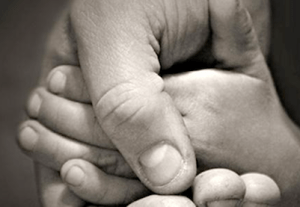
Hand holding 1

2 I began to wonder what makes a relationship. If a relationship is created and sustained through shared memories, mutual histories and love, what happens when one person in that relationship begins to lose their memory, their history. What happens the first time they look at you with fear instead of love. I struggled with this. I still struggle with this even though both these women are dead now and it doesn’t make a lick of difference.

2 places connected with the book

1 The grown-up mind, which hides in practicalities, logistics, rosters, medical jargon and medication regimes. The mind that takes comfort in turning emotional chaos into an Excel spreadsheet of what time this pill has to be taken and what time this doctor has to be seen. The mind that doesn’t breathe much because too much down-time will create a space for pain. An impractical landscape where I chose to pitch my tent. I spent a lot of time there.

2 The child mind, which hasn’t learned to prevaricate, hasn’t learned to white-knuckle things, hasn’t learned the need to control everything. The mind that acknowledges being frightened and feeling hurt and does both things loudly. The mind that can separate love and fear and can express frustration in words and in play. Their feelings are just as big and confusing but can be relieved by one big long scream. I spent time there too.
6bgeneral1front (1)

2 favourite things about the book

1 Foster’s father loves stories and has created a love of stories in Foster that enables him to retreat to toy soldiers and dragons and myth as a way of interpreting and coping with confusion and grief. This gives Foster a lovely perspective, an understanding that the world is big and full of bravery. I particularly like this response from Foster when someone takes the time to ask him what he has learned from his dad:

He said stories are the most important thing. He said people don’t tell stories or listen to other people’s stories enough. He said people are mad as March hares but to love them anyway. He said battles are won or lost before the first shot is fired. He said babies need to get the finger of God on them. He said if God is real then so are Dragons. He said the brain is a super-hero and he said Mum is a princess. Oh, and he said an unkind word can clear a room quicker than a fart.

2 Foster has a way of making things that aren’t funny…very funny. He hasn’t learned to be self-deprecating or cynical yet, which means much of the humour comes directly from bald honesty. I like the scene where Dad takes all his clothes off because they are ‘itching’ him. Fossie simply announces that Dad has his Christmas socks on, without mentioning they are the only thing he has on. The grown-up response is shock, embarrassment, defeat. Mum is so appalled that she drops her phone mid-conversation into a bowl of cereal. Throughout the book I could always rely on Fossie taking the sting out of desperate situations by speaking his mind without fear of the consequences, the result of which is often very funny.

Forgetting Foster is available in bookshops now
Visit Di’s website
Find out more at Allen & Unwin
13 Comments

Filed under 2 2 and 2 (writers + new books)

2, 2 and 2: Natasha Lester talks about A Kiss from Mr Fitzgerald

UnknownIt’s a pleasure to welcome Natasha Lester to 2, 2 and 2. Natasha has been a writer friend for several years (see the Writers Ask Writers series of posts) and I’ve had the privilege of reading, in draft form, parts of the novel she is about to release, so I know that readers are in for a treat!
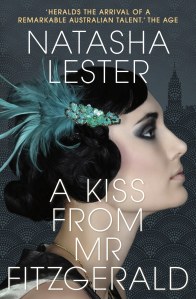
A Kiss from Mr Fitzgerald (Hachette Australia) is Natasha’s third book, and she already has her fourth ready to follow in April 2017. Her previous novels are What is Left Over After (2010, winner of the TAG Hungerford Award for an unpublished manuscript) and If I Should Lose You (2012). She is well known as a writing teacher and mentor, and has been described by The Age newspaper as ‘a remarkable Australian talent’.

Here’s the blurb for A Kiss from Mr Fitzgerald:

It’s 1922 in the Manhattan of gin, jazz and prosperity. Women wear makeup and hitched hemlines—and enjoy a new freedom to vote and work. Not so Evelyn Lockhart, forbidden from pursuing her passion: to become one of the first female doctors.

Chasing her dream will mean turning her back on the only life she knows: her competitive sister, Viola; her conservative parents; and the childhood best friend she is expected to marry, Charlie.

And if Evie does fight Columbia University’s medical school for acceptance, how will she support herself? So when there’s a casting call for the infamous late-night Ziegfeld Follies on Broadway, will Evie find the nerve to audition? And if she does, what will it mean for her fledgling relationship with Upper East Side banker Thomas Whitman, a man Evie thinks she could fall in love with, if only she lived a life less scandalous?

And now over to Natasha:

Unknown-1

2 things that inspired your book

1 Bizarrely, a biography of Emily Dickinson, Lives Like Loaded Guns, by Lyndall Gordon, was the thing that really kicked the idea off. And no, I’m not a huge Emily Dickinson fan, nor am I a big biography reader. It was really a moment of serendipity. I was at the Perth Writers’ Festival in 2012 and Lyndall Gordon was speaking about her book and for some reason I went along to the session—I don’t know why but I’m so glad I did! Lyndall spoke so feelingly about Emily Dickinson and her biography that I just had to buy it. One of the things the biography touched on was the fact that in the mid to late nineteenth century, a very small number women began to go to university for the first time, even though it was very much frowned upon by society. Of course, these days, women go to university and nobody thinks twice about it, so I was fascinated by the idea that university used to be, for women, an exception rather than the norm. Being the evil novelist I am, I began to wonder what would be the most unacceptable thing for a woman to study at university and it was medicine, with obstetrics right at the top of that list. That was when I knew I had my book.

2 The other inspiration was a scribbled note I’d written down after watching an ABC documentary on the history of music about 10 years ago. One of the segments in the documentary was about an infamous Broadway revue called the Ziegfeld Follies and I thought to myself at the time: wow, that would be a fabulous setting for a novel. So, a woman studying obstetrics in New York combined with my scribbled note about the Ziegfeld Follies in New York became, via a long and winding road, A Kiss from Mr Fitzgerald.

2 places connected with your book

1 New York is the lifeblood of my book. It wouldn’t be the same without that city. It’s a city I love, a city with a huge history, but it’s also a city of opposites: uptown and downtown, the east side and the west side, skyscrapers and tenements. And it’s those contrasts that I play with in my book: two sisters who are unalike, yet related by blood; two brothers who are the obverse of the other, yet love the same woman; the struggle of a woman to break into the world of medicine and obstetrics against the wishes of all the men in charge; the life that goes on in a boardinghouse in Greenwich Village versus that which takes place in a mansion on the Upper East Side. All the places I’ve used in A Kiss from Mr Fitzgerald actually existed, from the New Amsterdam Theatre at 42nd Street, to the Sloane Hospital for Women on Amsterdam Avenue, to Chumley’s speakeasy in Greenwich Village, and Minetta Street, where Evie lives, on one of the few curving streets in the city.
[The following photos were taken by Natasha on a research trip to New York.]

Unknown-3

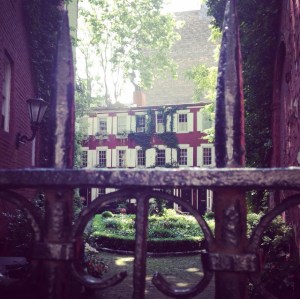
Grove Court, Greenwich Village


Unknown-2

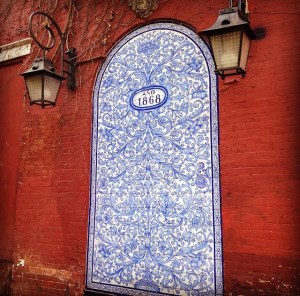
Perry Street, just off Bleecker Street, Greenwich Village

2 Evie grows up in Concord, Massachusets, which is where Louisa May Alcott lived, and where she wrote Little Women. I wanted Evie to grow up outside Manhattan so that the decision to go to medical school involves not only a complete shift in the direction of her life, but also a physical shift in terms of where she lives. And Little Women was a source of inspiration to me when I was writing—it’s a book about sisters, as is mine—so I thought it was fitting to set part of A Kiss from Mr Fitzgerald in Concord. It’s completely unlike New York City, full of pastel-coloured timber houses and so much greenery, so it lends another contrast, plus it’s close to Radcliffe College, where Evie initially goes to school. I visited both Concord and New York when researching the book, which meant I was able to write with a full and complete picture of both places in my head.

2 favourites from the book

1 The 1920s has a very specific set of slang words, which I just loved using. Terms like panther sweat for whiskey, spifflicated for drunk, hotsy-totsy for excellent, and billboard for a flashy woman. Plus the animal anatomical phrases, used to signify that something is great: cat’s whiskers, cat’s meow, cat’s pyjamas, butterfly’s boots, bee’s knees, elephant’s eyebrows. I had lots of fun with all of these.

2 One of my favourite quotes from the book is the first line of Part 2, where we jump ahead two years in time. Our last impression of Evie at the end of Part 1 is as a determined woman who’s decided to go ahead with medical school no matter what the cost to her reputation, but she’s still a relatively polite person, and a little afraid of what her decision will mean. Then she has this line of dialogue at the start of Part 2 and we know instantly that things have changed: she’s much braver now, and she’s prepared to fight. Her supervisor at the hospital, a man who can’t comprehend the idea of a female obstetrician, has just told Evie, in front of all the other medical students, that she’s not qualified to have an opinion about birthing women, and this is Evie’s response:

‘Given that I possess one, I think I have a more intimate knowledge of the vagina than any man could ever lay claim to. That should make me well qualified to be an obstetrician,’ Evie said.

Exactly!!!

A Kiss from Mr Fitzgerald will be in stores on 26 April.
Visit Natasha’s website
Find out more at Hachette Australia

11 Comments

Filed under 2 2 and 2 (writers + new books)

Robyn Mundy talks about Wildlight

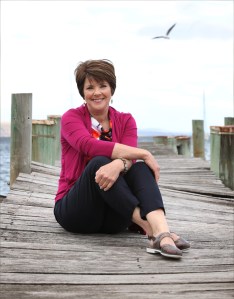
Robyn Mundy author #1205CFD

Photo by Kirsty Pilkington

I’ve been waiting a long time for something new from my friend Robyn Mundy, and the wait has been worth it. I couldn’t be more thrilled that she’s here talking about her brilliant new novel, Wildlight (Picador).

Robyn’s first novel, The Nature of Ice (Allen & Unwin, 2009), remains one of my all-time favourites, and was shortlisted for the 2010 Dobbie Award. If you haven’t read it, I urge you to beg, borrow or steal a copy—or preferably buy one here. After you’ve read Wildlight, that is.

If there is a link between The Nature of Ice and Wildlight, it is in the wild places that Robyn brings so beautifully to life in each—in the former, Antarctica; the latter, Maatsuyker Island.

Robyn is intimately acquainted with both. In the preliminary stage of writing Wildlight, she and her partner spent four months living and working alone on Maatsuyker Island as volunteer caretakers and weather observers. And she has summered and over-wintered at Australian Antarctic stations, working as a field assistant on science research projects.

Robyn works seasonally as an Assistant Expedition Leader on ship-based tours to the Antarctic, Arctic and other remote locales. The rest of the time, she lives in Hobart, where she writes and teaches writing.

Here is the blurb for Wildlight:

We all bow to the weather. It’s the light and dark of being at this place. You plant yourself on the edge of an ocean and you see how startling nature is, that it’s fierce and beautiful and totally indiscriminate.

Sixteen-year-old Stephanie West has been dragged from Sydney to remote Maatsuyker Island off the coast of Tasmania by her parents, hoping to recapture a childhood idyll and come to terms with their grief over the death of Steph’s twin brother. Cut off from friends and the comforts of home, exiled to a lonely fortress with a lighthouse that bears the brunt of savage storms, the months ahead look to be filled with ghosts of the past.

Steph’s saviour is Tom Forrest, a 19-year-old deckhand aboard a crayfishing boat. When the weather allows, Tom visits the island, and he and Steph soon form an attraction. But Tom must conceal at all costs the illegal fishing he takes part in, orchestrated by his tyrannical brother. And he dare not dwell on his fear of the sea or his deep-worn premonition that the ocean will one day take him.

Wildlight is an exquisite, vividly detailed exploration of the wayward journey of adolescence, and how the intense experience of a place can change the course of even the most well-planned life.

And now, over to Robyn…

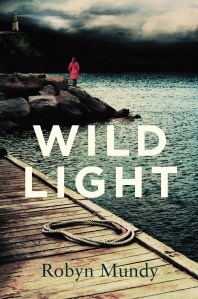
Wildlight front cover

2 things that inspired your book

1 Land: I grew up studying my parents’ wall chart of Tasmania and listening, through a crackling radio, to evening weather reports from around the state. Maatsuyker Island’s pattern of westerly storms had me picture a wind-battered outpost on the edge of the Southern Ocean; I’d see keepers trudging to and from the lighthouse to dutifully tend its light. I must have put myself in that picture, for I longed to know such a place.

2 Ocean: A second inspiration stems from a growing-up of boating: rowing down the bay to pull the net and craypot, or trips with Dad in the big boat, a packet of jaw-wrenching Minties ever at hand. I can still summon the moment of seeing the craypot reach the surface, peering down to a small haul of crayfish.

As an adult, visits to Hobart often included a walk around Constitution Dock to see the fleet of fishing boats with their craypots stacked on deck. But it wasn’t until I spent four months on Maatsuyker Island in 2010–11, looking down upon these small boats in formidable conditions, that I gained full admiration for their fishermen and women.

IMG_9190 Serenity 2#1216508

How and why do these formative experiences, stored in memory sometimes for decades, transfigure into story? I only know that a wild place, and the people who inhabit it, inspired the makings of Wildlight.

2 places connected with your book

1 Becoming: I’m interested in the way a wild place—far removed from the comfortable urban lives we might otherwise live—impacts upon us. I’m not talking idyll. Immersion in such a setting can be hard, uncomfortable, may even resemble an imprisonment. Stephanie of Wildlight will tell you that. But ultimately, and sometimes only on reflection, the encounter—clear and simple in its focus, removed from the thousand distractions that cluster our day—is liberating, vivid, perhaps powerful enough to shape or direct us beyond. I am fascinated with the process of becoming and its connection with place.

2 Writing at Camden Haven: In the early stages of writing Wildlight I was lucky enough to be awarded a writing residency at gorgeous Camden Haven on the Mid North Coast region of New South Wales. It came packaged with the valuable guidance of mentor Ian Templeman, to whom Wildlight is dedicated. One day Ian commented on my hosts’ home, built on a bend of the Camden River: I can imagine your character living somewhere like this. That idea put itself to creative work and evolved into the setting and trajectory of the final part of the novel. Thank you, dear Ian.

2 favourite quotes from the book

1 I really like my character Tom. He is nineteen, a deckie on his older brother’s crayboat. He wants a purpose to his life. He wants to be free of his brother’s control. Tom’s need for a future of his own choosing has him chart the point within a person where goodness ends and a darker force takes over. With sound reason Tom fears the ocean, but at the same time the awe he feels for his surrounds is something I love about his character:

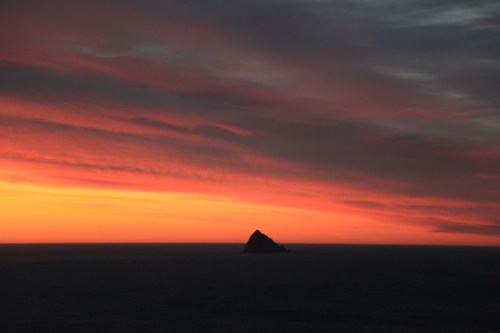
On a clear morning he’d be pulling pots in the dark, the first hint of dawn the eastern horizon purpling to a bruise. Before the sun tipped above the ocean, the promise of light would amplify the sky—a curtain turned blood orange, the Mewstone toy-like against its breadth.

IMG_8394 red sunrise Mewstone_web

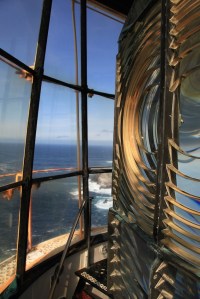
2 On my desk I have a piece of lighthouse glass I found on Maatsuyker Island. For such a small object it’s surprisingly heavy, the glass 10 mm in thickness. It holds its own story: a bygone storm with force enough to smash a toughened shield of glass. Throughout Wildlight the glass of the lighthouse takes a hold of my character Stephanie:

She heard herself babbling when she’d promised herself she wouldn’t; that at first the glass looked clear but when you really looked it was the most delicate sea green imaginable, each curve infused with hundred-year-old bubbles. The lighthouse glass was sunlight punching through the back of a wave and that’s how she saw it, the swirl and twist and how the ocean’s energy seemed locked inside the glass. Light set it in motion.

IMG_8367 prisms & view_web

Wildlight is in bookstores now
For more information, visit Pan Macmillan/Picador
Visit Robyn’s website, Writing the Wild
Book trailer here

10 Comments

Filed under 2 2 and 2 (writers + new books)

2, 2 and 2: Sara Foster talks about All That is Lost Between Us

Sara Foster Image 1 (2016) for webWhat a pleasure to introduce the first of three books being released in 2016 by members of the Writers Ask Writers group that I belong to (along with Dawn Barker, Emma Chapman, Sara Foster, Natasha Lester, Annabel Smith and Yvette Walker).
A big welcome to my friend Sara Foster.

All That is Lost Between Us is Sara’s fourth psychological suspense novel. Come Back to Me was published in Australia in 2010 and reached the Sydney Morning Herald top ten Australian bestsellers list. Beneath the Shadows reached no. 4 on the Australian Sunday Telegraph bestseller list, and rights were sold in the USA and Germany. Shallow Breath, Sara’s third release, featured in the Australian Women’s Weekly, was chosen as Book of the Week in the Sydney Morning Herald, and was longlisted for a Davitt Award.

I’m looking forward to settling down on the couch with this new one.

Here is the blurb for All That is Lost Between Us:

Seventeen-year-old Georgia has a secret—one that is isolating her from everyone she loves. She is desperate to tell her best friend, but Sophia is ignoring her, and she doesn’t know why. And before she can find out, Sophia is left fighting for her life after a hit and run, with Georgia a traumatised witness.

As a school psychologist, Georgia’s mother Anya should be used to dealing with scared adolescents. However, it’s very different when the girl who needs help is your own child. Meanwhile, Georgia’s father is wracked with a guilt he can’t share; and when Zac, Georgia’s younger brother, stumbles on an unlikely truth, the family relationships really begin to unravel.

Georgia’s secret is about to go viral. And yet, it will be the stranger heading for the family home who will leave her running through the countryside into terrible danger. Can the Turner family rise above the lies they have told to betray or protect one another, in order to fight for what matters most of all?

Set against the stark, rugged beauty of England’s Lake District, All That is Lost Between Us is a timeless thriller with a modern twist.

Over to Sara…

all_that_is_lost_COVER-2-page-001

2 things that inspired the book

1 Teenagers using social media. I’ve read so many stories about teenagers getting into a terrible mess online, and I’ve witnessed it myself on the odd occasion. These crises can take less than a minute to begin, but the consequences may be felt for years. During my research I was deeply affected by some of the things I came across: a fifteen-year-old girl posting her suicide note on social media; another young girl who had been stalked for years online. Social media can be a beautiful thing when it connects people, but it has such a dangerous side, too, and because it’s only come about within the last ten years, we’re all still figuring out how to deal with it. When so many adults are addicted to web-based games and interactions, it’s very hard to encourage young adults to use these platforms sparingly and in ways that keep them mentally healthy.

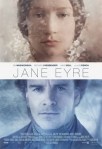
2 The 2011 film of Jane Eyre. When I first began working on this story, I couldn’t get away from the image of Jane running across the wild landscape in the film, when she’s escaping Thornfield and Rochester’s revelation about his mad wife Bertha. I couldn’t understand why I kept going back to it! However, as soon as I learned about fell-running—an extreme form of cross-country running that is popular in the Lake District—I knew that it was perfect for my heroine. My vision of Jane was superseded, and it became seventeen-year-old Georgia who has to flee danger by running across the precarious landscape of the fells.

Jane_Eyre_Poster

2 places connected with the book

1 The Lake District—a gift for any writer. I loved bringing it to life within the novel. Most of my main characters have tarn waters running through their blood, and one way or another they are all connected to the landscape around them—metaphysically as well as physically. With a place such as this, I was always going to be left feeling disappointed that I had to leave so much out! As well as providing some stunning scenery for me to work with, I also got to know the darker side of the fells through the work of the mountain rescue teams. These amazing groups of volunteers conduct hundreds of rescues every year.

2 The Spirit Road—also known as the Corpse Road. This was an ancient track along which those in outlying villages would bring their dead for burial in consecrated ground—carrying the coffins for days over rough and rocky terrain. In my present-day story the kids now use this track, as it connects the tiny hamlet of Fellmere to the town of Ambleside. Along the way they tend to scare one another with tales of ghosts, and often sit on the corpse stone to chat—a stone where, centuries earlier, coffins were laid while their bearers rested. The track’s purpose has changed remarkably, but the notion of loved ones bearing incredible burdens to protect one another’s souls still connects the two stories across the centuries.

Spirit Road 1 for web

2 favourite sentences in the book

1 Here’s one from Anya, the mother in All That is Lost Between Us, who is trying to come to terms with her firstborn child getting ready to leave the nest:

Back then we were only looking forward, towards an endless plateau of possibilities. Then life took over, constricting us into one narrow pathway that was slowly overlaid with a movie reel of memories, the film eroding in places, our choices blurred with our forgotten dreams, our triumphs and our regrets.

2 And to counterbalance, here’s one from Callum—mountain rescue volunteer, Anya’s husband and Georgia’s father:

When there was only clear, fresh air above him and so much of life was hidden in the valleys, it was easy to watch his troubles slide away down the hunched, broad backs of those giant slopes like the smallest of pebbles.


All That is Lost Between Us will be in available in February 2016
Visit Sara’s website
Find out more at Simon & Schuster Australia
Sara will be a guest of the 2016 Perth Writers Festival

4 Comments

Filed under 2 2 and 2 (writers + new books)

2, 2 and 2: Michelle Michau-Crawford talks about Leaving Elvis and Other Stories

MichelleLR-3I’m delighted that the first post for 2016 in my 2, 2 and 2 series, which highlights writers with new books, is Michelle Michau-Crawford and her debut short story collection Leaving Elvis and Other Stories (UWA Publishing). Michelle was one of the ‘next wave’ women writers featured on the blog in 2014, and I also had the great pleasure of editing this remarkable collection.
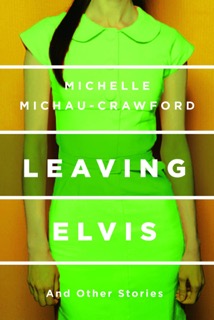
If the name of the author or the title story sounds familiar, you might be recalling that Michelle won the prestigious ABR Elizabeth Jolley Short Story Prize in 2013 for the story ‘Leaving Elvis’, which was subsequently published in ABR.

Michelle has worked as a university lecturer, speechwriter, researcher and public relations officer, and lives in Perth with her menagerie in a house surrounded by vegetable gardens and fruit trees.

Here is the blurb for Leaving Elvis:

We’re travelling light, without excess, into our future. Gran had been rough as she uncurled my hands from their position, gripped around the open car doorframe, and shoved me into the passenger seat.

A man returns from World War II and struggles to come to terms with what has happened in his absence. Almost seventy years later, his middle-aged granddaughter packs up her late grandmother’s home and discovers more than she had bargained for. These two stories book-end thirteen closely linked stories of one family and the rippling of consequences across three generations, played out against the backdrop of a changing Australia.

A debut collection—as powerful as it is tender—from the winner of the 2013 ABR Elizabeth Jolley Short Story Prize.

And now over to Michelle…

12218707_10153761607677079_2142340854_o (1)

2 things that inspired my book

1 This collection started as a sort of side-project to take me away from the novel I thought I should be finishing. In a roundabout way, a gentle rejection was the inspiration for finally letting go of something that had ceased to bring me any real satisfaction in order to focus on something that was bringing me satisfaction. By the time I’d completed one story and some first drafts of several more short stories, I had grown to resent sitting down to work on the novel. I had basically killed that work by overwriting and overthinking it. But somewhere along the way I had convinced myself that without seeing it through to publication, I was a phoney, and that once it was done I could put it aside and ‘write more short stories’. One day I braved up enough to share the manuscript with a publisher for feedback, and when we met to discuss it she identified what I already knew. We suggested putting the manuscript aside for a while. I was so relieved that I may have jumped up from my chair and given her a hug and said something along the lines of ‘Thank goodness, now I can go to work on what I really want to be doing.’ I seem to recall that I then proceeded to babble on about the closely linked stories I was working on.

That publisher was Terri-ann White from UWA Publishing, so the rejection story had a very happy ending for me!

2 For as long as I can remember I have had a fascination with abandoned and lost children. I was born just six months before the Beaumont children disappeared in January 1966, and from early childhood always knew that children could simply cease to exist in the blink of an eye. In 2005 I began what would amount to eight years’ work (not full-time, I might add) on what eventually became the short story ‘Leaving Elvis’. I was researching for an Honours project at the time, looking at memory and trauma in Australian literature. My particular interest at that point was in intergenerational trauma and patterns of behaviour, and abandonment, in all its various forms, of children by adults. I came across Peter Pierce’s The Country of Lost Children: An Australian Anxiety (1999). In his book Pierce describes the way that the theme of abandonment has flowed through non-Indigenous Australian literature since white settlement, and contemplates the contemporary ‘lost child’ as a victim of white society itself. Where early writings centred on fears about a hostile and unforgiving land, writing changed direction around the 1950s, a period generally recognised as a time when there was a loss of innocence in white Australian culture. Without intending to, and certainly without realising it until well into the writing of the collection, I appear to have continued this pattern and written a book that explores, in part, the lost child as victim of society itself, along with intergenerational patterns of behaviour in a period commencing around the 1950s.

2 places connected with my book

1 The small ‘home’ town that features in a number of stories appears to be somewhere in or near the Western Australian wheat belt. However, I have intentionally left the location unspecific so that by changing a few minor details it could be just about any small town or outer suburb in Australia where people have somehow found themselves living. It is the sort of place where, with no real aspirations or ambition to spend a whole life there, several generations of one family now reside, doing the best they can. Some of the people in these stories are prone to plotting or dreaming about escaping to that mythical ‘somewhere else’ where they can leave their past behind and live a more fulfilling life. Ultimately, when it comes down to it, wherever they may find themselves living, this is the only place they have to come back to in order to feel some sense of connection and belonging to a physical environment.

2 The sky is a place that is significant in Louise’s adult life. In her years in Europe, it is the thought of the specific colours and expansiveness of the Australian sky that increases both her longing for home and her sense of isolation. At one point, she has a fling with an English artist who’d tried to paint the Australian sky just so she’d have an opportunity to be able to talk about home and the sky with him. Many years later, in another story, she realises that she has to return to Australia, to her home town, while looking up at the sky of the northern hemisphere with it’s ‘skew-whiff shades’ that will never be right.

2 favourite moments in the book

1 In the story The Light, there is a moment where Natalie, having reached rock-bottom, and with every reason not to feel good about anything at that particular time in her life, sits in an isolated place in nature and feels a few fleeting moments of calm. ‘She’s never had religion, but there’s something soothing and spiritual-like about being here, and she feels close to relaxed, sitting there with the sun disappearing while the immense orange sky turns purple and grey.’ Often the people in these stories struggle to feel they belong and maintain connections, Natalie perhaps more so than others. But that passing moment of recognition that there is something bigger than her and her problems is enough.

2 I’m interested in those vulnerable moments in childhood and adolescence where there is an understanding in the young that there is something going on within their bodies and minds, but still an inability to fully understand or articulate those changes. There is a moment in the story ‘Rendezvous’ where this occurs. Louise reflects on being about eleven years old when she’d stood in front of her friend Leslie Mulligan: ‘pulling petals off a daisy one at a time, she’d stared him in the face, he loves me, he loves me not.’ Watching her friend grow pink and embarrassed, she’d run off laughing, knowing that she had ‘some sort of mysterious power over him, but not yet knowing how or when to use it.’  Confused by both his and her reaction to the experience, she hides until Leslie finally gives up searching for her and goes home.


Leaving Elvis and Other Stories will be available in bookshops in February 2016
Find out more at UWA Publishing
Visit Michelle’s website or connect via her Facebook page
Michelle will be a guest of the Perth Writers Festival 2016

7 Comments

Filed under 2 2 and 2 (writers + new books)

2, 2 and 2: Jenny Ackland talks about The Secret Son

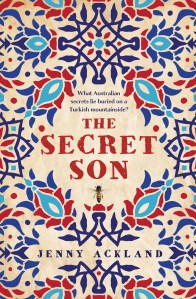
I have been following Jenny Ackland’s blog, Seraglio, for some time, and was delighted to have the opportunity to meet her in Ubud recently, where she was launching her debut novel, The Secret Son.

Photo by Mark Wilson

Photo by Mark Wilson

Jenny has travelled widely and spent several years living in Turkey and Japan. She now lives in Melbourne, where she is a writer and teacher.

I am intrigued at what Jenny has said about The Secret Son, and it’s on top of my Christmas reading pile. Here is the book’s blurb:

Two men, living almost a century apart, with an unknown connection. Set in Australian and Turkey, The Secret Son tells the story of what happens when an Australian soldier, James, is accidentally left behind at Gallipoli. Helped by a young Turkish boy, James settles on a mountainside village, never to return home. Almost a century later, young Turkish-Australian Cem travels to Turkey, against the wishes of his haunted, tight-lipped grandfather. What is the story behind the dark deeds that connect the two men? An Australian historian determined to find the truth, a stolen inheritance, a wishing tree, a long-lost grandmother, and an unlikely sweetheart come together in a dazzlingly original, audacious and exhilarating novel about love, honour and belonging. The Secret Son is a moving meditation on the strength of women and what it means to be a good man.

Over to Jenny…

secretson_cover

2 things that inspired my book

1 The seed of origin of The Secret Son came when I was living in Istanbul in 2000. I had been married to a Turkish man for ten years (why yes, a carpet seller!) and we had a child, who was then three. My mother came to stay with us and for my birthday gave me a trilogy of novels by Turkish author Yaşar Kemal called The Wind from the Plain. It was the first novel in that series that introduced me to the rambunctious and vivid lives of a group of Anatolian villagers, seasonal cotton pickers whose small lives exploded onto the pages. I was stunned by the beautiful prose, the tender rendering of these people and the humour with which Kemal described their lives of battle and conflict.

The Wind from the Plain was the first Turkish literature I’d read, and was seminal for me. I’d loved Istanbul from the moment I’d arrived in 1990, as a young backpacker, only there because her father had paid for her ticket so that she could go, as some sort of proxy for him, to the 75th commemoration at Gallipoli that April. In the ancient part of a metropolis, where others complained about the too-frequent and oppressive mosque calls to prayer, I was excited and felt entirely satisfied being there.

I read the trilogy and I decided I wanted to write my own story, a novel, about a bunch of Turkish villagers living in a Turkish village. I soon had 60,000 words, but then life got in the way as it does and the work was put to the side until 2010. I realised that much of the Turkish village stuff would have to go, but it still forms an important component of the novel that eventually emerged.

ince-memedden-tipli-yillara-yasar-kemal

Yaşar Kemal

2 Four days after leaving Melbourne, I met my future husband on the grass at the Hippodrome outside the Blue Mosque, and that same night went to Gallipoli for the dawn service at Anzac Cove. Standing there on the beach, seeing the old soldiers walking to their seats, each escorted by a young Australian or New Zealand serviceman, watching old men who’d survived the horror as almost-boys raise their walking sticks and wave to the crowd, had been unexpectedly moving to this callous young woman. I cried with everyone else. I took photos and knew I would never forget those moments, but I never expected I’d write about it in a novel or that it would be relevant to any novel I might write. But it turns out that it was an intrinsic part of the way this novel emerged, in parts, over years.

First, I had those 60,000 words set in my imaginary Turkish village. Next came the idea of Cem, a young Turkish-Australian man, child of migrants, growing up in Melbourne. He was the bridge for Australian readers, and a character who could visit Gallipoli in 1990. The second bridge to the village was James, a young man from Beechworth, who gets accidentally left behind in Gallipoli during the Allied evacuation of December 1916. How could I write a novel about Turkey, particularly one that drew connections between that country and this, and not include Gallipoli in some way? I had to find out a way to try to write about this iconic part of Australian history without being clichéd, predictable and trite. While it’s not a large part of the book, it is a crucial element.

2 places connected to the book

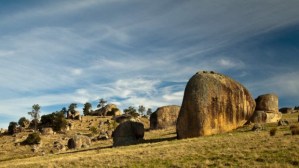
1 The area around Beechworth, and extending down to the Strathbogie Ranges, is known as Ned Kelly country. In my novel, Beechworth is the country Victorian town where James grows up with his beekeeping mother, Madela. The reason for the inclusion of Beechworth is that one part of my story is concerned with the possible secret son of Ned Kelly, and that James might be that son. The Strathbogie Ranges are a stunning part of Victoria. There is something mystical about the landscape: small hills and rises, with no great sweeping flatlands between them, enormous granite boulders scattered about. You get the sense of being pocketed away, nestled even, when you are within that landscape. I am drawn as a person and writer to rural areas. Where others seek coastlines and ocean, I turn the other way, and my mind often travels inland, in the opposite direction from the locations Germaine Greer once noted we have built our cities, along the beaches, looking outwards, away from the great inhospitable interior. I like land and hills and rivers. I like wide open spaces, not dense forested mountains. The ocean scares me but I plan to write about it one day.

strathbogie

2 My second place connected to the novel is a metaphysical one. It was a state I held mentally while writing the book, as well as several states I wanted to explore thematically in the novel. I’m really interested in the interstitial space that exists between cultures and identity, between one boundary and the next. I am also interested in the idea of traversing time, nations, histories, identity, gender and even genre. Not strictly a historical work, this novel includes real historical characters that have been expanded fictionally and given new lives (maybe cheekily). Two of Australia’s enduring cultural fascinations (Ned Kelly and Gallipoli) have been mashed together, there’s an element of mysticism or magical realism, and time skipping to let the reader see either the conclusions or the likely outcomes of most of the main characters. The other state I held while writing this book was I attempted to be playful and not take it too seriously, allowing myself to follow paths that might have seemed ludicrous and risky. But I reasoned that if I didn’t have fun while writing, and encounter surprises and feel exhilarated and set myself challenges while writing, then the reading experience would probably be a flat one. I suppose it was a way of justifying to myself how I could dare write this story, and how I could dare enjoy doing it so much.

2 favourite things connected to the book

1 Berna is many people’s favourite person in the book. Berna was originally a side character, but she emerged more strongly towards the end of the development of the manuscript as a necessary strong anchoring female voice and as a character who sits at the centre of the two men’s storylines. Her narrative is written in first person and hers is the only voice the reader gets in that form.

Berna is a mystical and knowing old woman. She is also wry. While the male concerns in the book are about working out one’s path in life, how one wants to be in life, how to be a good man (and these are universal concerns, of course), Berna is the central spindle around whom the threads of the other narratives wind. Her voice first came into the manuscript in the form of her feminist rant, which I named ‘Berna’s Lament’, and I realised this was the psychological centre of the book and that Berna needed to be more prominent.

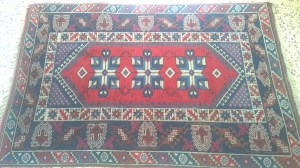
2 When I was wrangling with the structure of the book, I was imagining it as a Turkish carpet with a medallion design. This was really helpful and an amusing challenge to myself to ‘make it fit’. As I mentioned above, I wanted Berna’s Lament to be at the exact centre of the novel (the central ‘medallion’), with the narratives of James (first medallion) and Cem (third medallion) sitting on either side. I had scenes written on index cards, and laid them out on the floor over and over, adjusting and shaping, until I had it in perfect balance. Then it went to the publishers for the editing process and things had to be moved a little, but still, in my imagination, it’s in the form of carpet; the medallions are there, repeating motifs are there, and the borders are there as well as the fringe. The ‘intentional mistake’ is mentioned in the book as something that carpet weavers from the Islamic world deliberately do, because in their minds only God can create something perfect. Other people say this isn’t true, that the mistake a person can see in an oriental carpet is simply a sincere mistake, or a forced change of colour because the wool supply has run out. But I like to believe in the intentional mistake, and while I did have an intentional mistake that was edited out before the manuscript even got to the publisher, of course there are still errors in the book and I comfort myself by thinking they are intentional, in the spirit of the carpet weavers of Anatolia.

turkish rug

The Secret Son is in bookshops now
Find out more at Allen & Unwin
Follow Jenny’s blog, Seraglio

19 Comments

Filed under 2 2 and 2 (writers + new books)

2, 2 and 2: Rebecca Lim talks about Afterlight

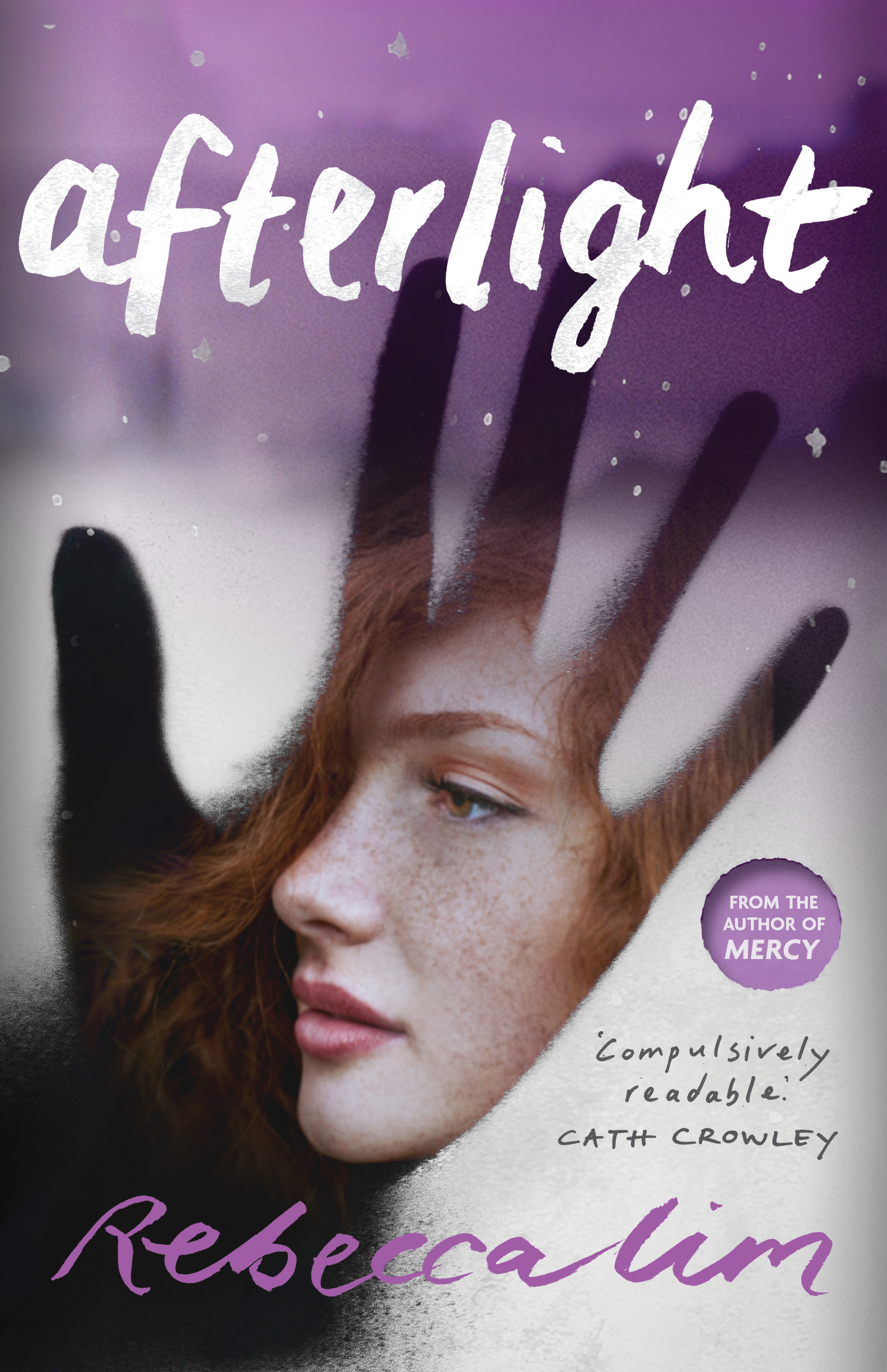
9781922182005Anyone who read the last issue of my newsletter will know that I loved Rebecca Lim’s YA novel The Astrologer’s Daughter (Text Publishing, 2014) and its fearless protagonist Avicenna Crowe. So I was delighted to find that Rebecca has recently released a new novel, Afterlight—and even more so when she agreed to answer some 2, 2 and 2 questions.

RebeccaLim-credit-EugeniaLim

Rebecca has been prolific since leaving her former profession as a commercial lawyer to write full time. She is the author of sixteen books for children and young adult readers, including the acclaimed Mercy series. Her work has been longlisted for the David Gemmell Legend Award, the Gold Inky Award and the CBCA Book of the Year Award for Older Readers, and she has been an Aurealis Awards and Davitt Awards finalist. Her novels have been translated into German, French, Turkish, Portuguese and Polish.

Rebecca was born in Singapore and is now based in Melbourne.

Here is the blurb for Afterlight:

Since her parents died in a freak motorbike accident, Sophie Teague’s life has fallen apart.

But she’s just enrolled at a new high school, hoping for a fresh start.

That’s until Eve, a beautiful ghost in black, starts making terrifying nightly appearances, wanting Sophie to be her hands, eyes and go-to girl.

There are loose ends that Eve needs Sophie to tie up. But dealing with the dead might just involve the greatest sacrifice of all.

Dark, thrilling and unrelentingly eerie, Afterlight will take you deep into the heart of a dangerous love story, revealing the otherworldly—and deadly—pull of past wrongs that only the living can put right.

Over now to Rebecca…

9781925240498

2 things that inspired the book

I write these slightly freaky books for children and young adults that feature empowered female characters living in a fictional world that—as much as possible—resembles the real world I live in and not the one depicted in, say, Neighbours. So if you pick up one of my stories—no matter if you’re a three-year-old or an eighteen-year-old—you’ll be met with young women from different socio-economic and ethnic backgrounds finding reserves of strength, ferocity, tenacity and adaptability in the face of great adversity. I’m not interested in presenting the lives of pretty people facing mildly perplexing personal conundrums, because I don’t know anyone like that. So as a starting point, the ‘real’ world will always inspire any fiction I create and you’ll find my characters will reflect you, me and the woman standing next to you at the bus stop. My fictional universe includes Chinese and Colombian kids, people who speak Italian, Spanish or Russian, homeless teens living in their cars and people who have to work as strippers, waitresses or clairvoyants, just to survive. Archangels, demons and Norman knights also exist in my universe because, damn it, they can. I always proceed on the basis that anything is possible.

We live in a dark and deeply complex world. The news is a potent trigger for a lot of my work. A few of my novels are fictional responses to some terrible abduction, cold case and imprisonment stories that were emerging around the time I was writing the books. The things people do to each other in real life are staggering, and I write to try and make sense of questions like: Why do bad things happen to good people? What happens to human energy, human consciousness, after death? Are we ruled by fate or by our own free will? How does one bad past act reverberate into the future?

Afterlight had its genesis in a terrible shooting that occurred early one weekday in the Melbourne CBD a few years ago. A bikie and a tabletop dancer were involved. Innocent people on their way to work, or just going about their business, were critically injured or killed. My outrage about violence against women is an underlying theme in most of my books for young adults.

2 places connected with the book

I live in Melbourne and have lived all over it geographically since we moved here from country Queensland when I was a pre-schooler. I’ve set my books in places like Paris and Milan, Macchu Picchu and small town USA, but nothing gives me more of a thrill than having my characters literally running for their lives through places I’ve known and loved for years.

My last book, The Astrologer’s Daughter, was set in and around Chinatown and North Melbourne. The action in Afterlight takes in the famous Greek Quarter in the CBD, but I also have Sophie ‘Storkie’ Teague (my main character) living in a rundown pub in North Fitzroy and running errands out to far flung Melbourne bayside and northern suburbs, at the behest of an insistent dead woman. The walking trail that runs alongside Merri Creek is pivotal to the last stages of the book.

2 favourite things

At heart, I’m a massive introvert, and sometimes going out into the world, or seeing what we as a species do to each other and our environment, can be a little disheartening or depleting.

Early music—particularly choral music by Palestrina, Allegri, Taverner and Monteverdi, and any recording, really, by Jordi Savall or Hespèrion XX—will have a quietening/recharging effect. I managed to sneak a choir or two and a few choral and classical music references into my series for young adults that began with Mercy (2010, featuring a fallen amnesiac archangel), which I was secretly chuffed about. Nobody else enjoyed those bits as much as me, possibly (!), but then again no one has probably ever quoted lyrics from Lakmé by Léo Delibes in a YA novel, so there you go.

The other thing I can’t do without is reading. I read all over the shop—YA, picture books, historical fiction, literary fiction, thrillers, mysteries, true crime, science, you name it—and I like to write across the spectrum, too. Why just write a contemporary YA novel when it can also be a mystery/thriller/paranormal book with touches of romance in it?

Afterlight is in bookshops now
Find out more at Text Publishing

8 Comments

Filed under 2 2 and 2 (writers + new books)

Susan Midalia talks about Feet to the Stars

UnknownRecently, during a major decluttering exercise involving thirty or forty archive boxes, I came across a collection of my undergraduate literature assignments (do I need to mention I’m a hoarder?). As I sorted through them, I was reminded that long before Susan Midalia and I became friends, and writing and editing colleagues, she had been my lecturer and tutor in a unit on Australian Literature and Film—a unit I had loved, not least because Susan is the most inspiring of teachers. I think she has been teaching me, in one way or another, ever since.

Susan retired from an academic career in 2006 to write fiction full-time, and her new book follows A History of the Beanbag (2007), shortlisted for the Western Australian Premier’s Book Awards, and An Unknown Sky (2012), shortlisted for the Steele Rudd Award. She is, or has been, a judge of several literary awards, including the WA Premier’s Book Awards, the T.A.G. Hungerford Award, the Todhunter Literary Award and the Margaret River Short Story Competition. She is a board member of writingWA, Margaret River Press, and A Maze of Story, a volunteer organisation that encourages creativity in socially and economically disadvantaged children. She is also a regular facilitator of short story writing workshops.

I’m delighted she has agreed to answer some 2, 2 and 2 questions about her new book, the intriguingly titled Feet to the Stars.

Here is the back-cover blurb:

Susan Midalia’s third collection of stories, Feet to the Stars, offers keenly observed details about everyday life, expressed with pathos, tenderness and bracing wit. Subtly rendered and emotionally engaging, these stories speak of the transformative capacities of the human mind and heart, and of the ways we affect each other, sometimes unwittingly and often profoundly. They offer us the pleasure of listening to different voices, and the satisfaction of careful crafting and evocative prose.

Over now to Susan…

feet_to_the_stars_cover

Two things that inspired me to write the book

There are two areas of experience that keep returning to me, not always consciously or deliberately. The first is children. This might be partly autobiographical; having helped to raise two adult sons who I love fiercely, I remain fascinated by that complex combination in children, particularly adolescents, of wisdom and naiveté, kindness and self-absorption; by their capacity to enrich and sometimes to burden the life of a parent; by their idealism and freedom from hypocrisy, which reinforces for me, and I hope for all of us, the value of hope in a cynical adult world.

A second preoccupation in my new collection is the need for political engagement as a means of questioning structures of power. I was inspired to write stories such as ‘The hook’, ‘Oranges’ and ‘Exploring’—all of which in their different ways deal with issues of injustice and political self-interest—partly because I’ve been increasingly concerned by what’s happening to, and in, Australia. Like many Australians, I’ve become dismayed, saddened and indeed afraid of the lack of compassion and basic human decency that I believe is beginning to characterise this country. Not that I want to preach to my readers, because good writing doesn’t pontificate or tell the reader what to think. Rather, I try to encourage reflection on the way we treat one another, both in our daily lives and in the wider society, for in the end, that’s what matters most to me.

Two places connected with my book

First, and speaking geographically, most of the stories in this collection are set in Australia. Sometimes the physical settings are integral to the meaning of the story; in ‘Exploring’, for example, a road trip across the Nullarbor and the setting of Cottesloe Beach are used as a means of questioning cultural myths of identity. For the most part, however, the stories are urban/suburban, and here I’m not so much interested in physical space but how ‘Australian-ness’ is manifest in the way my characters speak, think and behave.

I’m very aware that I’m not given to creating literal settings, mainly because it’s not one of my strengths as a writer. I greatly admire writers who make settings seem real, immediate, atmospheric, who offer us either the pleasures of recognition—places we know—and the pleasures of geographical difference. But I’ve decided to leave that to those wonderful writers, and console myself with the fact that this absence in my stories puts me in the brilliant company of Jane Austen, whose novels very rarely create physical settings. Like Austen, I’m drawn instead to inner spaces—to our thoughts and feelings, motives, fears, desires—the whole glorious mess of human consciousness. This is the second element that’s prompted me to write this book: I’m interested in the things people think but don’t always say, as well as in what they manage to say in those moments of confusion, clarity, humility, disillusionment, affirmation, despair, consolation, that constitute our lives. One of my main goals in this collection was the creation of a range of different inner spaces and voices: males as well as females, adolescents and adults, working-class and middle-class. Trying to imagine what it might be like to be someone who’s very different from me is both immensely pleasurable—a bit like being an actor, I guess—and an ethical imperative, an act of the empathetic imagination which for me lies at the heart of writing, reading and being.

Two favourite passages from Feet to the Stars

The first is from a story called ‘Because’. Narrated retrospectively by a woman called Violet, it’s a story centred on her ‘search’ for her mother, Beth, who went missing when Violet was two years old. Here is Violet, recalling the objects once owned by her mother:

What else did my father give me? What scraps and shards, what rags of passing time, through which I might recall my mother? Were there other evidential texts of more, or less, veracity? More, or less, haunting? He gave me objects: a bronze letter-opener; a box of unwritten postcards; a silver hairbrush with an embroidered backing, stitched in crimson and green. All of which I saw, and continued to see, as unexceptional. But I am fond of my mother’s tiny, grey pincushion in the shape of a mouse, which holds for me the pathos of the miniature; and a marcasite brooch in the shape of a bow, fashionable during her time, and fashionable once more. But whenever I look at these objects, touch them, I cannot feel my mother. Perhaps a bracelet or a necklace, something she had worn against her skin, might have made a difference. Or perhaps it is merely the paradox of any object from the past, its presence confirming absence. Like a photograph of the dead: you are here; you are gone.

And here’s an extract from the titular story, ‘Feet to the Stars’. It’s narrated from the perspective of Paul, a middle-aged teacher in a private girls’ school, who has been visiting—at her request—one of his students, hospitalised with anorexia:

At school the girls had made a card for Nell and asked him to sign it. One of those jumbo-sized cards, meant for celebrations and silly occasions, and at the top of the page, a quotation in bright red letters: Clownlike, happiest on your hands, feet to the stars. Sylvia Plath. Bella said it had taken ages to find words that everyone agreed on: some girls just wanted a simple message like get well soon or we miss you, and the school sacristan preferred something from the Bible.

‘We talked about the poem, remember?’ said Laurie. ‘About being a kid, about being happiest, and how we only think we’re happy cos we party and drink and stuff. And how that’s not really being happy, it’s just pretending to be a grown-up.’

‘Nell forgot to put her feet to the stars,’ said Imogen. ‘Or maybe she doesn’t know how.’

And so Paul signed his name, added it to the names of his students, who didn’t always have the language but who certainly understood.

‘We’re giving it to her tomorrow,’ said Imogen. ‘Me and Helena.’

He didn’t say, Helena and I.

‘And Nell thinks the other girls can start visiting her now.’

He told them that their friendship would mean a great deal to her. That it might even help more than all the doctors could. And then, because he couldn’t help himself, because he’d been lecturing students for years, would be lecturing until the day he died, he told them about Carl Jung.

‘He was a famous psychoanalyst,’ he said. ‘He spoke to many troubled, unhappy people, gave them the benefit of his complex theories and many years of training. But in the end he believed he did nothing that a good friend couldn’t have done. Listen. And show they care.’

Helena gave him a puzzled look. ‘So that’s how you pronounce it,’ she said. ‘Jung. I thought it rhymed with dung.’ She beamed at her classmates. ‘I’m reading his work on the collective unconscious. It’s very deep.’


Feet to the Stars will be in bookshops on 1 August 2015
You can find out more at UWA Publishing

10 Comments

Filed under 2 2 and 2 (writers + new books)

2, 2 and 2: Felicity Young talks about The Insanity of Murder

Attachment-1Western Australia is home to several world-class crime writers, and one of them is Felicity Young.

Felicity was born in Germany, attended boarding school in the UK, and emigrated to Western Australia with her parents in 1976. She, her husband and their three children moved to a small farm 40 kilometres north of Perth in 1990, and now, when she is not writing, she works on their Suffolk sheep stud and rears orphaned kangaroos.

It’s no secret that I have loved Felicity’s Dody McCleland series since the first book was published in 2012. Set in Edwardian London, it features Britain’s first female autopsy surgeon, and I was interested to read on Felicity’s website that the background of this character is drawn from the life of Felicity’s grandmother, who was at that time one of only a handful of female graduates of Trinity College, Dublin. Crime plus historical fiction is an exciting mix, and Felicity always weaves in social issues of the times, along with family, class and gender dynamics.

dissection-of-murder-170264antidote-to-murder-170264scent-of-murder-170264

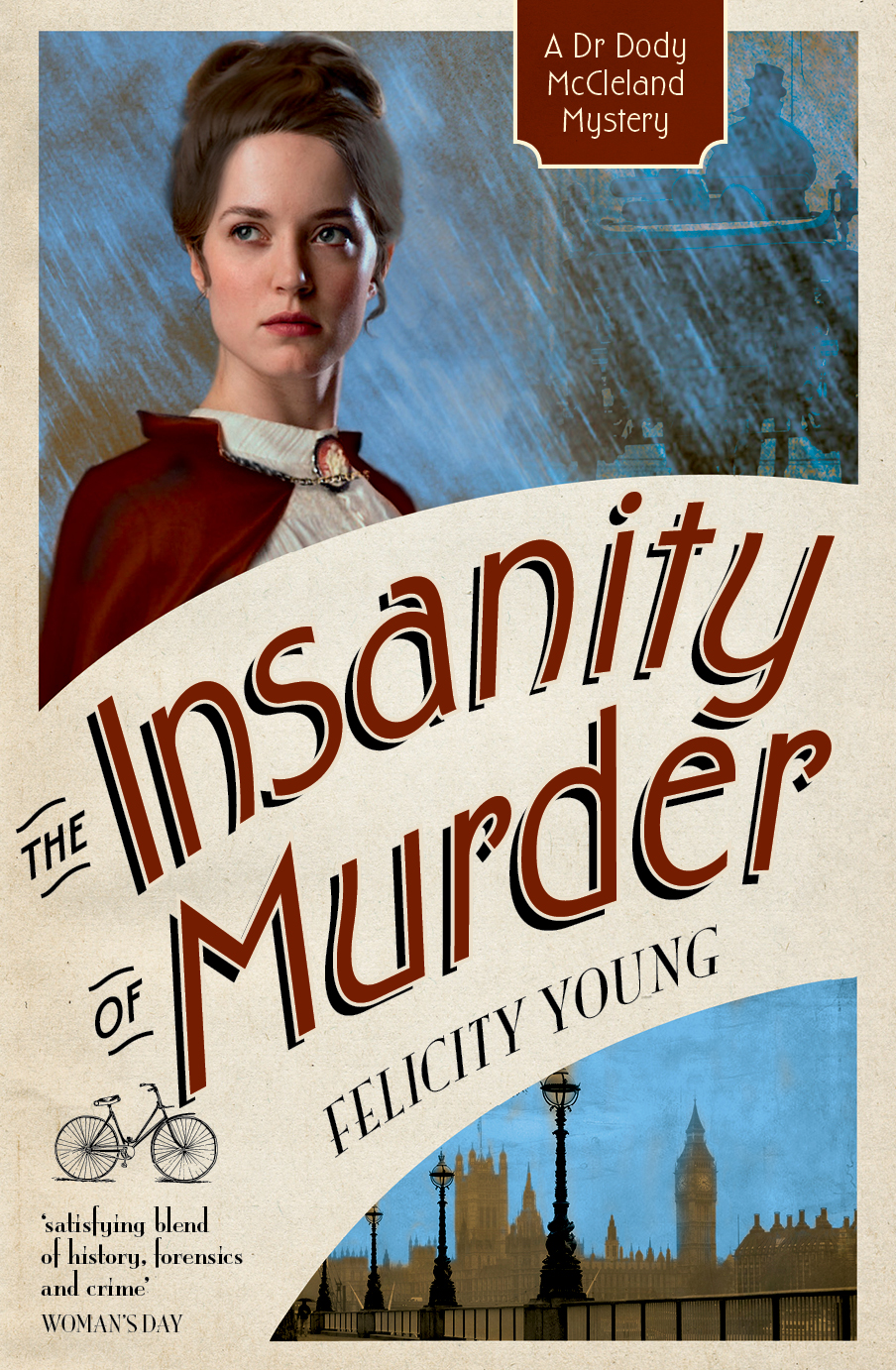
I am looking forward to reading the latest (fourth) in the series, The Insanity of Murder.

Here is the book’s blurb:

To Doctor Dody McCleland, the gruesome job of dealing with the results of an explosion at the Necropolis Railway Station is testing enough. But when her suffragette sister Florence is implicated in the crime, matters worsen and Dody finds her loyalty cruelly divided. Can she choose between love for her sister and her secret love for Chief Inspector Matthew Pike, the investigating officer on the case?

Dody and Pike’s investigations lead them to a women’s rest home where patients are not encouraged to read or think and where clandestine treatments and operations are conducted in an unethical and inhumane manner. Together Dody and Pike must uncover such foul play before their secret liaisons become public knowledge—and before Florence becomes the rest home’s next victim.

And now, over to Felicity…

Unknown-3

2 things that inspired the book

1. One of the constant topics running through my Dody McCleland series is society’s attitude to women in the Edwardian period. I’ve dealt with hunger striking suffragettes, criminal abortions and the abuse of the weak by the powerful. None, however, can be more horrific to me than the treatment of the mentally ill.

My concern and interest in the topic began when I was a student nurse seconded briefly to Graylands psychiatric hospital. I’ll never forget witnessing a woman being subjected to ECT therapy: the tying down, the lack of control and the awful convulsions. I am in no position to give an opinion on the efficacy of the treatment, other than to say that to an almost layperson it seemed horribly brutal, a remnant from another time.

If I had not seen this with my own eyes, I don’t think the treatment of female insanity in the Edwardian period would have resonated so strongly with me.

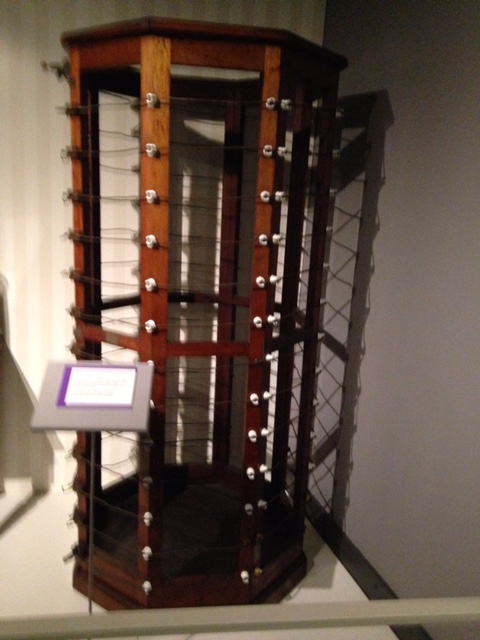
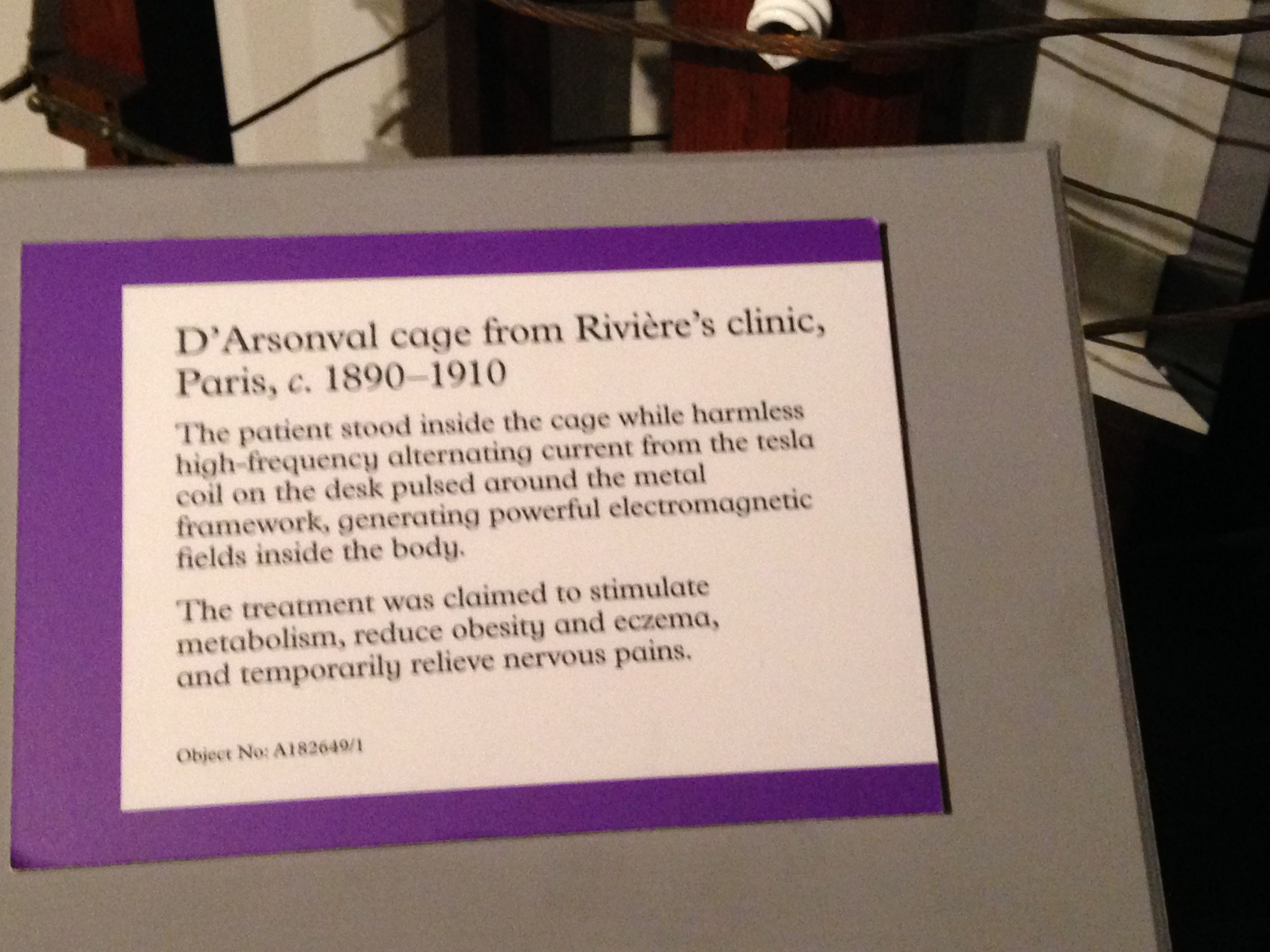
2. Leading on from this, the second inspiration would have been my visit to the science museum in London, where I came across this charming contraption. It’s a D’Arsonval cage, believed to cure all sorts of medical and psychological problems. With a small amount of poetic licence, I modified this machine and turned it into something much more lethal.

Unknown-2Unknown

2 places connected with the book

1. The Elysium rest home for women is my old school boarding house, from the croquet pitch at the front and down the hill to the lake where we would smoke and meet boys. I was never a smoker, but enjoyed the danger of hanging out with the rebels. As for meeting boys, well, maybe one or two.

2. The coal cellar in one of the final chapters belonged to my grandmother. It was a spooky place with big lacquered doors through which, once a month, the coalman would tip his delivery of coal and coke.

2 favourite things about the book

1. The themes of my books are often quite intense and I lighten the tone every now and then with humour. I particularly enjoy writing the character of Florence, my protagonist’s sister. She is everything Dody is not—impulsive, flippant, reckless and irreverent—but also vulnerable, especially in this book. The extract below follows a scene in which Florence has taken some pills in order to appear insane to a ‘nerve doctor’.

Dody turned on her sister as soon as Doctor Lamb had left the house. ‘Florence, how could you!’ Florence calmly ignored Dody’s outburst and reached for the sherry decanter.

Dody slapped her hand away. ‘Don’t you dare! Not on top of those pills you’ve taken.’

‘Pills, what pills?’ Florence asked innocently.

Dody felt like strangling her. ‘Fast acting, short lasting. I left them on the dressing table—more fool me—never expecting that you would help yourself to them. I can see your demeanour improving before my very eyes.’

‘That reminds me; I must look a fright. May I borrow your comb please, dear?’

2. I wouldn’t be writing this series if I did not revel in the research. While I research the major topics I often come across interesting little tid-bits that just have to be found a place in the manuscript. I came across one little known fact, a dietary guideline called ‘Fletcherizing’, while I was researching the topic of anorexia in Edwardian women. Doctor Fletcher was known as the ‘Great Masticator’.

This is taken from a scene featuring Dody’s rather ‘straight’ lover, Chief Inspector Matthew Pike, and his daughter, Violet.

‘Would you like an ice cream, or a packet of biscuits to take home? They bake them on the premises. I’m told you cannot find fresher biscuits in the whole of London.’

Pike nodded to a pile of artfully arranged biscuits displayed under a glass dome on the tearoom’s expansive counter. Next to it stood an extravagant iced wedding cake all Doric columns and bell towers. It looked very pricey. How much did it cost to get married these days? he wondered absently.

‘No, thank you, Father,’ Violet answered. ‘Doctor Fletcher says ices and biscuits are incredibly bad for one.’

Pike’s eyes flicked back to his daughter. ‘And who’s Doctor Fletcher when he’s at home?’

‘A diet doctor from America. Among other things, Doctor Fletcher says one must chew each mouthful thirty two times: “Nature will castigate those who don’t masticate.”’ She paused and regarded him with a frown. ‘I’m not teasing this time, it’s not funny, Father. Many famous and intelligent people are followers of his teachings.’

‘I’m sure they are,’ Pike said, trying to maintain a straight face.


The Insanity of Murder will be available on 1 August.
You can find out more at HarperCollins Publishers Australia
You can also visit Felicity’s website


12 Comments

Filed under 2 2 and 2 (writers + new books)

2, 2 and 2: Ian Reid on The Mind’s Own Place

Reid photoI had the pleasure of sharing the stage with Ian Reid at a ‘Stories on Stage’ event at Koorliny Arts Centre in Kwinana last year—a presentation in which we discussed our shared interest in research and the use of history in the fiction we write. We have no doubt haunted the same desks and microfilm readers and reading rooms at many libraries and archives. We also share a publisher, UWA Publishing, so there are multiple intersections between our writing and publishing lives.

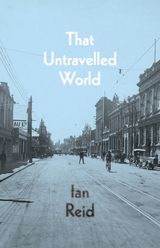
Ian’s publication record, however, is far more extensive than mine. He is the author of a dozen books across several genres—fiction, non-fiction and poetry. His work has been widely anthologised, awarded prizes, and translated into several languages. His previous historical novels are The End of Longing and That Untravelled World.

EoL_mainEdn-198x3009781742583969

Ian lives in Perth, where he is an adjunct professor at The University of Western Australia and an emeritus professor at Curtin University. He was recently awarded the State Library of Western Australia’s 2015 Battye Memorial Fellowship.

I am looking forward to reading his new novel, The Mind’s Own Place, which is about to be published.

Here is the book’s blurb:

Two women and three men, displaced in different ways by the rapid transformation of Victorian England, travel separately to a small settlement on Australia’s western rim. With them they carry social ambitions and psychological wounds. As their lives intersect in the Swan River Colony, what they encounter is not quite what they expect. Who will struggle, who will thrive, and how will each react when secrets emerge?

Though fictional, The Mind’s Own Place is partly based on the actual experiences of historical figures: a pair of convicts from respectable backgrounds, talented and enterprising but troubled; two female immigrants, free settlers, not equally fortunate or resilient; and the first detective in Western Australia, who eventually uncovers more than he intends.

Like Ian Reid’s previous acclaimed novels, this powerful story explores intricate relationships between the shaping of character and the pressure of adversity. It reveals damaged families, mixed motives, and the long shadows thrown by the past.

Wherever his characters go, Ian Reid places us vividly there.—The Age

 And now, over to Ian…

TMOP front cover copy

2 things that inspired the book

My imagination was stirred by the fact that the Swan River Colony, even after shiploads of convicts began to arrive, remained for several decades a very small community in which people were often closely connected, at times more closely than they knew. There were, I discovered, only a couple of degrees of separation between noteworthy historical figures who came to Perth and Fremantle at that time, and I began to invent a story around that factual core.

It also struck me that what we now call the Industrial Revolution was by no means confined to cities. The profound economic, political and social transformation of Victorian England caused turbulent effects in small towns and villages across its countryside, dislocating the lives of families and individuals. By choice or not, some of these people consequently found their way to the western shore of Australia, flotsam and jetsam of that upheaval on the other side of the world.

2 places connected with the book

As intimated in its title, much of this novel turns on the importance of location, location, location. Of the several places that figure prominently in the story, two come particularly to mind here.

The Old Mill in South Perth: many know this 1835 building to be one of the earliest that survives from colonial days in Western Australia, but not many know how or why its structure was boldly altered in 1880 by a fascinating emancipist known as Satan Browne. The highs and lows of Browne’s career in England and Australia, culminating in his project of turning the abandoned mill into something visionary, provided me with the basis for one of the main narrative strands in my novel.

Old Mill

Old Mill, South Perth (courtesy Battye Library)

Newton-in-Makerfield (now known as Newton-le-Willows): this little Merseyside market town suddenly became an important centre of railway engineering because it was at the mid-point of the Liverpool–Manchester line, which opened in 1830 as the world’s first steam-powered public transport system. The once-quiet town’s new industrial activities included the Vulcan Foundry, in which famous locomotive inventor Robert Stephenson was a partner, while the magnificent Sankey Viaduct, designed by Stephenson’s father, straddled a canal just outside the town. Newton is the setting for a few of my novel’s early chapters.

sankey-viaduct

Viaduct across the Sankey Valley (Henry Pyall, 1831)

2 favourite situations in the book

In a Lancashire town, a young boy becomes wedged under the rails of a railway bridge embankment as the train comes closer.

He began to tremble. The trembling was not only within his body but also in the beam on which he lay, and in the track close above him. Then the trembling became a shuddering vibration, and with it a rumble that grew louder and louder into a terrible approaching clamour…

In an Essex village, an adolescent girl who is sent to fetch a rabbit carcass from a neighbour’s barn becomes enticed by the farm boy into quaffing cider.

So she drank again, quickly. It made the back of her throat tingle, and she began to feel giddy as a peg-top. Arthur stood closer to her, his warm breath redolent of apple juice…


The Mind’s Own Place will be in bookshops on 1 July 2015
You can find out more at:
UWA Publishing
Ian Reid’s website, Reid on Writing

7 Comments

Filed under 2 2 and 2 (writers + new books)