Tag Archives: Fremantle Press

2, 2 and 2: David Whish-Wilson talks about O’Keefe

The use of any content on this blog to train AI is prohibited.

It’s been five years since I last posted in my ‘2, 2 and 2’ series featuring writers talking about specific aspects of their new books. I love hearing about those kernels of inspiration that lead a writer into a new work, and also about how their works connect with particular places. The third ‘2’ is different for each writer, and either the writer chooses something important to their work or I choose something I’m curious about.

Up to late 2020, I had featured 56 books. A chance reference to one of these posts recently made me think it’s time to revive the series.

David Whish-Wilson was my last guest, so it is entirely fitting that he should be the first now, and I’m delighted that he agreed!

David is an impressively prolific writer, having published eleven novels and three creative non-fiction titles while somehow also managing to teach creative writing at Curtin University in Perth and to create stunning-looking knives—this last possibly very handy for a crime writer! His crime novels have received two Ned Kelly Award shortlistings, and his last, Cutler, was shortlisted for the Danger Awards and the Western Australian Premier’s Book Awards.

David’s new release, O’Keefe, is the second in his Undercover series (following on from Cutler). Here is the blurb:

Fresh from his exploits on the high seas, undercover operative Paul Cutler assumes a new identity to become Paul O’Keefe.

Paul is tasked with stepping into the shadows to reveal the mysteries surrounding a surge of Mexican cartel meth flooding Australian streets. Assigned to infiltrate a newly appointed security company at Fremantle Port, he discovers a clandestine world of off-the-books operations, and a business front that goes far beyond mere security. There’s a dangerous game afoot over who gets control of the port’s smuggling operations, and O’Keefe is caught in the crossfire.

A pulse-pounding thriller that takes a hard look at the Australian ‘cocaine gold rush’, where maritime crime meets the ruthless currents of the underworld.

Over to David…

2 things that inspired the novel

The first thing is that I wanted to follow on from the maritime theme of Cutler, which was set on the high seas amid the depredations of a modern industrial fishing vessel and all that entails. I greatly enjoyed writing Cutler, but because my protagonist was the only English speaker on board the vessel, it limited my enjoyment in terms of writing dialogue in the Australian vernacular, something I remedied by setting O’Keefe largely in Fremantle port, amid a mixed bunch of smugglers, local characters and policing officials.

What really inspired O’Keefe was coincidentally seeing an old friend from the Netherlands in a news bulletin following the murder of Holland’s best known journalist, Peter de Vries, in 2021. I was watching a late-night YouTube video about the murder and there was my friend, who I hadn’t seen for 30 years, distraught and grieving, a member of the public who’d gathered outside the journalist’s home. I became interested as a result in the pernicious influence cocaine money is having on Dutch and Belgian civil society, with the murders of lawyers and threats against politicians and judges, to the point that some have begun to label these two countries ‘narco-states’ (in the same vein as Mexico, Columbia, Ecuador, etc.). Given the high price of cocaine in Australia (the most expensive country in the world, bar two Middle East countries where drug possession carries the death penalty) and the fact that we’re per capita some of the largest users of cocaine in the world, I began to follow local events more closely, seeing some of the early warning signs of what has happened in countries like Holland, Belgium and parts of Spain and the Balkan states (where cocaine money brings violence, but also mass political corruption and the erosion of trust in civic institutions). I wrote O’Keefe as a way of situating that research in a local context, using examples of things that are on the public record as happening here already, and indicating the potential for some of the more serious things that have happened elsewhere.

2 places connected with the novel

This is probably my most Fremantle-centric book, despite the frequency of settings here in earlier Frank Swann and Lee Southern novels (and in some of my non-fiction). O’Keefe is a work of fiction, and there’s no suggestion that what I write about is actually happening now in the port (where I write, looking across at it), but I loved revisiting some of my favourite haunts in a contemporary context, when my earlier novels were all historical in some sense.

Even though what guided the setting of the story here was the port itself, the emotional momentum behind it was the awareness of the consequences that the so-called ‘war on drugs’ has meant for similar places, especially due to the extraordinary amounts of money generated by cocaine smuggling specifically, when large bribes can be offered without affecting the bottom line, when large amounts of money can be used to buy political influence without affecting the bottom line, and when well-funded violence is ruthlessly used to silence those who threaten business interests.

2 sobering thoughts

One quote contained in the book that really describes the way this particular branch of organised crime works is the terrible choice that people in positions of influence are forced to make between accepting either ‘the bribe or the bullet’. O’Keefe is written as a crime thriller, an entertainment for those who enjoy the genre, and designed to be enjoyed by anyone whether they’re interested in drug policy or not, but behind the thrills and spills is the reality of this quote for the characters in the story, but also sadly for many people caught up in the business reality of the world’s most lucrative recreational drug.

I highly recommend anyone interested in the failures of the war on drugs to read British journalist Johann Hari’s book Chasing the Scream. Treating drug addiction as a medical issue and decriminalising drug possession (such as in Portugal) will inevitably result in some degree of social harm; however, given the destabilisation of nation states caused by drug cartels and traffickers, the horrific violence associated with the international drug business, the overdose deaths and the incarceration of drug users and small-time dealers worldwide, the wastage of police resources and the fact that wherever there is prohibition there is organised crime, and wherever there is organised crime there is political and police corruption, it’s incredible to read in Hari’s text that the near universal prohibition on recreational drug use is the result of a single, troubled, moralistic, hypocritical and highly motivated American public servant, and that things could have so easily been so different.

O’Keefe is in stores now
Find out more at Fremantle Press
Follow David via his website or on Instagram

Leave a comment

Filed under 2 2 and 2 (writers + new books), New books, Western Australian writers

Talking (new) fiction: Julia Lawrinson’s Trapped!

I’m delighted to be featuring in this post one of my favourite Western Australian authors and another new book that celebrates Western Australian history. Julia Lawrinson’s Trapped!, a verse novel for middle readers, draws on an episode from the rich history of the Eastern Goldfields and is, I’m sure, destined to become a favourite with schools, libraries and young readers.

Julia is one of the most accomplished—and prolific—writers I know, and a truly impressive speaker. Her author biography only scratches the surface of her career, but here it is: She has published more than fifteen books for children and young people, from a picture book to books for older teenagers, and in 2024 published a memoir called How to Avoid a Happy Life [highly recommended]. Her books have been recognised in the Children’s Book Council Awards, the WA Premier’s Book Awards and the Queensland Literary Awards, and she has presented to schools across Australia, in Singapore and in Bali. She is an enthusiastic adult learner of Indonesian, yoga and the cello. Her favourite place on earth is the dog park.

The Julia Lawrinson section of my bookcase is huge!

In 1907, the mining town of Bonnie Vale experiences a sudden deluge of rain that floods a gold mine while miners are still at work down the shaft.

Joe’s dad is one of them. And it soon becomes clear that he’s the only one who hasn’t made it back out yet. Where is he? Why didn’t he escape with the others? And more importantly, how will they rescue him?

Inspired by the true story of the trapped miner of Bonnie Vale and told in verse, Julia Lawrinson weaves a tale that will beckon readers down into the gold mine with Joe’s dad to find out how the rescue unfolded.

AC: Julia, we’ve both wandered through the rooms at the wonderful Exhibition Museum at Coolgardie. Was it there that you first heard about the incredible rescue that is at the heart of this new novel? I seem to remember that the museum has one room dedicated to the story.

JL: Yes, it was—I had absolutely no idea of it, and once I’d gone through the story, panel by panel, I couldn’t believe that it wasn’t better known outside the goldfields. At the end of the story, you turn on a light, and there is a life-size reconstruction of the rise, complete with Varischetti in it, which was completely arresting.

AC: Bonnie Vale, where the novel is set, was a mining town about 15 kilometres north of Coolgardie. I say was because it appears on the map today as just the name of a mine site. What was the town like in 1907, when your novel is set?

JL: In the goldfields of 1907, the gold rush was on the wane but was still attracting prospectors from all over the world. Bonnie Vale was gazetted in 1897, and had twelve streets and about as many mining operations, of which the Westralia mine was the biggest. It had about 1,000 official inhabitants, but hundreds more—like Modesto ‘Charlie’ Varischetti—lived in tents, shanties made of flat tin cans and brush shelters. There was a state school with either one or two teachers, a hotel built of iron, a post office, and all the trades you could want in 1907: blacksmiths, carpenters, butchers, a baker, a tinsmith and a plumber. There was Australian Rules football, foot racing and weekend cricket, including a women’s team, and an 11 kilometre cycling track. A Catholic priest visited from Coolgardie once a month.

AC: As someone fascinated by the ghost towns of the Eastern Goldfields, I’m wondering whether you were able to visit the site during your research and, if so, whether there is any remaining physical evidence of the township that once existed there?

JL: I really wanted to go. I applied for two grants but didn’t get them, so had to rely on photographs and descriptions. I had been to Kalgoorlie and Boulder many times, and Coolgardie twice, so I tried to extrapolate a bit. Apparently there is nothing there now, but I would have liked to have stood on the ground and felt it.

AC: Trapped! is told through the eyes of Joe, the eldest son of the trapped miner, Modesto Varischetti. Was there a real Joe?

JL: There was a Joe (Giovanni, not Guiseppe), but he was Modesto’s brother, not his son. Varischetti did have a twelve-year-old at the time he was trapped, but she was a girl, and in Italy with her four younger siblings. The story needed the point of view of a young person involved and invested in the rescue, and so Joe was created.

AC: I’m interested in your decision to write the story in the form of a verse novel, which is, I think, a first for you. Could you talk, please, about why you chose this form and the technical challenges and opportunities it presented?

JL: Initially I wrote the novel alternating between Joe’s point of view and third person. I ended up getting bogged in detail and research—about everything from the mine to the living conditions to the school routine and children’s games. In despair over this unwieldy manuscript, I decided to try and cut it down to the absolute nuts and bolts of the story. Before I knew it, I had a few experimental pages of verse. I sent it to Cate Sutherland at Fremantle Press, and she loved it, so I kept going. I was focusing on what it sounded like, reading it.

AC: The novel’s intended readership is middle readers, defined as age eight and over (although I think it could be read and enjoyed by anyone). Does the verse novel genre have specific appeal for this age group?

JL: I hope so! Kids can sometimes be overwhelmed by blocks of text, especially in this digital age, and I think poetry as a format is much friendlier.

AC: Apart from being a thrilling narrative of a near-impossible rescue, Trapped! is also a very skilfully told story about social divisions: the Italians and the ‘Britishers’, the working men and the bosses. Some people might be surprised to learn that Italian immigration to Western Australia began this early. What were the circumstances that led to the migration of Italians to the other side of the world in these early years of the twentieth century, and what attitudes did they find here?

JL: The agricultural poverty of northern Italy led many Italians to move from working in lead or zinc mining in that area in the late 1800s to the goldfields for work, mostly with the aim of sending money home to their families. But the attitude they found from the labouring ‘Britishers’, or Australians of British descent, was often harsh. One woman who grew up in Bonnie Vale from 1899 and lived there until 1911 said the mines chose to employ the Italians as ‘cheap labour’. She remembered some Italians walking seven miles from the train line to the Westralia mine, but were chased off: her mother, who ran the hotel, hid them wherever she could, in the pantry and under the bed, and told the men chasing them to take it up with the mine managers, not the poor Italians.*

There were Royal Commissions in 1902 and 1904 into foreign contract workers, focusing mostly on Italians. Even though the commissions concluded there was no undercutting of wages, the tension remained. In 1934 there was a riot in Kalgoorlie, aimed at ‘Dingbat Flat’, which housed Italians, Slavs and other southern Europeans.

My step-Nonna came to Western Australia as a child in the 1930s, and for all her days she remembered the terrible treatment she got from the other children, who made fun of her accent and the food she ate. Her stories were the basis of Joe’s treatment in the novel.

I think readers now will be surprised at how acrimonious the relationship was between Italians and Anglo Australians. To me it shows that divisions—even ones that appear stubborn and intractable—can eventually be overcome in the right circumstances.

AC: Given the dramatic nature of the Bonnie Vale mine collapse and the rescue of Varischetti, one might imagine it would be a story known to most Western Australians. It certainly held the attention of the state, the country and even the world while it was happening. But are you finding this is the case?

JL: No, the story is remarkably unknown—hence this book! There is a quote from The West Australian from 29 March 1907 which says: ‘Our educational authorities would do well to find a place in the school reading books for so inspiring a story from real life.’ It’s taken more than a century, but I hope Trapped! is it!

*The woman was interviewed by Tom Austen for his book The Entombed Miner (St George Books, 1986).

Trapped! is published by Fremantle Press
Follow Julia on Substack; contact her via her website or Fremantle Press

Leave a comment

Filed under New books, Talking (new) fiction

Talking (new) fiction: Emily Paull’s The Distance Between Dreams

I love history, and Western Australian history is a particular interest of mine, so I’m delighted to be featuring today a new historical novel that is set in Western Australia and focuses on major world events of the mid-twentieth century.

The Distance Between Dreams (Fremantle Press) is Emily Paull’s first novel, following her short story collection Well-Behaved Women (Margaret River Press, 2019). It was shortlisted for the 2023 Fogarty Literary Award, awarded biennially to a Western Australian author between 18 and 35 for an unpublished work of adult fiction. (*The Fogarty Award is currently open; the deadline for entries is 18 April 2025.)

Emily, a Western Australian writer and librarian, has also been shortlisted for the John Marsden & Hachette Australia Prize for Young Writers and the Stuart and Hadow Award. She is well known in the Perth writing community as an interviewer and reviewer, and her book reviews have been published in The AU Review and Westerly.

Sarah Willis longs to free herself from the expectations of a privileged upbringing, while Winston Keller can’t afford the luxury of a dream. Despite their differences, the pair are drawn together in a whirlwind romance that defies the boundaries of class.

But when a dark family secret pulls the young lovers apart, and the Second World War plunges the world into chaos, it seems impossible that they will ever find their way back to each other—or even hold onto the dream of what might have been.

AC: Emily, I know that The Distance Between Dreams has had a very long gestation. How different is the novel we read today from the one you envisaged when you began?

EP: When I first started writing this book, I was 17 years old. I was studying for my final year of school before university, and one of my favourite subjects was history. I’d also just been on a trip to Japan—all of these things influenced elements of this book.

Initially I remember thinking that it was going to be a mystery of sorts, or a missing persons case set in the 1940s. In the original planning for the book, Winston was going to be trying to work out what had happened to Sarah, who he had met, had a whirlwind romance with, and who had then gone missing. But when I started writing, a completely different story came out!

I think the roots of the story as I envisaged it in 2008 are all still there, reflecting on class and family and secrets, but the layers that have been added since, as I have learned more and read more and got feedback from other writers, as well as working with some incredible editors, have added so much. I’m actually very grateful that it took 17 years to get published if this is the end result. It was worth it. (Though ask me again after I have seen some reviews…)

AC: I love that Western Australian history is front and centre in this novel, intersecting with world history and the history of individuals and families. How did you go about bringing to life Fremantle in the prewar and World War II period?

EP: I know a lot of readers have started to feel like war novels, and in particular World War II novels, are a bit overdone, but as someone who grew up in Western Australia, I felt like our history wasn’t really all that present in the novels that were available. We’ve had a couple of wonderful books published since then, and I’ve enjoyed reading how other writers have approached this period, but I really wanted to write a book that was like the ones I loved reading, but was set in a place that I knew.

Fremantle was the second biggest naval port in the world during WWII and the biggest was Pearl Harbour, so after December 1941, West Australians might have been feeling a little anxious, but the influx of American naval personnel who were stationed in Fremantle after March 1942 also meant that there was a lot of excitement. Australian women really only knew American men from what they saw in the movies, so is it any wonder that quite a few of them got swept off their feet—though not all of them would have had a happy ending to their love stories.

Aside from books, my biggest research tool was Trove, the online newspaper archive. This was really useful for looking at the daily papers, and wherever I mentioned a particular time period in my writing, I could go and look at what the characters might have been seeing in the news that day to give me an idea of what daily life might have been like, what they cared about, what their leisure options were, etc. Sometimes a newspaper article even gave me a new direction to explore and this occasionally turned into a scene.

AC: Part IV of the novel, which evokes the horrifying conditions of prisoners of war forced to clear the jungle for construction of the Thai–Burma Railway, must have been a challenge to write. What sources did you use, and (without getting into spoiler territory) how did your research impact on the story and your writing of it?

EP: This section is another reason why I am glad that the book is being published now, in the version that it is in, rather than in an earlier form. I knew that I wanted Winston to go away to war, but I originally had a time jump, where we didn’t get to see where he ended up or what happened to him, and reading it back, that always felt off to me. A very, very intelligent writer I was friends with was the first person to suggest to me that Winston might have ended up as a prisoner of war and encouraged me to do some research into the Thai–Burma railway. I read a lot of history books, but I also read some memoirs and biographies (a few self-published) about people who had been there or who had a similar experience, and the film The Railway Man came out at exactly the right time for me.

Hilariously, I remember when The Narrow Road to the Deep North came out, I was so upset because I thought that writing about this was going to be something that set me apart and then Richard Flanagan had come along and drawn attention to that part of history again so everyone would write about it. I wanted to hate that book, but I didn’t, I loved it so much, and I am excited to watch the TV show that’s out this year.

It was difficult to write, yes, but I also wanted Winston’s experience to be meaningful, rather than just be a whole section of him suffering and being ill-treated and getting sick for the sake of it. So, while there are some things in there (based on what I found in research) that are really awful, there are also moments of friendship and hope.

AC: Could you talk, please, about the decision to make Winston an artist and Sarah an actor? What does creativity bring to the lives of these young characters?

EP: I can’t draw, so making Winston an artist was maybe a bit of wish fulfillment on my part there. I liked the idea that Winston has a very practical attitude to life, but that he feels almost compelled to create things. When things get too much and he needs to unwind, he can lose himself in drawing. He’s tall and strong but he’s also sensitive and artistic, which makes him a target for a group of young men who have been bullying him since his school days—boys who have discovered that money can’t buy talent.

Sarah’s acting was originally a bit of an affectation. She starts off not wanting to be an actress so much as she just wants to be famous and a lot of this is tied to the idea of her being almost starved for love. Her parents’ love is very superficial. But she finds that she’s good at being dramatic and funny and performing for people, and making her friends laugh, so she thinks, why not make it a career. It’s only when she actually starts working with a proper theatre group that she realises acting isn’t what she thought it was and that she truly does love it.

I used to love drama class at high school so I think I gave her a bit of my own love of acting too.

AC: The plot brings the issues of gender and class to the fore. The word feminism existed in those years, but I doubt it would have been treated seriously, let alone respectfully, in Perth and Fremantle. In Sarah, you’ve constructed an interesting character of her time. Was it difficult to strike a balance between the Sarah who is a product of patriarchal dominance and the Sarah who is alive to an incipient feminism?

EP: That’s always the danger, isn’t it, as a modern woman writing women in earlier times? It’s nearly impossible not to give them too much of your own feminism…They might not have used the word often, but during both World Wars, women found themselves taking on new roles and finding capabilities as they had to keep things running on the home front, or as they became nurses or worked in roles in the military. I imagine it was really hard for them to go back to the way things were when men started to return and wanted their jobs back.

Sarah was a tough character to get right in general, because of how brash she can be and because of the way she puts on a persona to get through the world sometimes—deep down, she’s quite lonely at the beginning of the book. Early readers kept telling me that they didn’t understand why Winston liked her so much and I was really perplexed by that, but I think the contradiction you talk about is a big part of it. Sarah knows that the life her father is giving her is a good one and she is supposed to be grateful, but she also knows that there’s a lot wrong with her situation and she feels like she deserves more, she just doesn’t know how to get it. I had to revise her many, many, many times. But I also feel that any woman who has been told to tone it down, or that she’s too much, too loud, too dramatic etc. will relate to Sarah.

AC: Did you know, from the beginning, that class would play such an integral role in your story? I ask because I’ve sometimes heard, or read, the comment that Australia has always been a ‘classless society’, which to my mind could not be further from the truth.

EP: That came up so often in my history classes, the idea of Australia being an egalitarian society, and it’s just not true. You just have to travel from one suburb to another to see it, even in relation to the older houses, the schools, the churches.

Yes, class was always integral to the tension in my book. Sarah’s father, Robert Willis, is from a farming background but he’s very proud of being a self-made man because he sold the farm and used it to start a business manufacturing and distributing cigarettes. I think part of the reason why Robert is so against the idea of Winston and Sarah being involved is that he sees her association with Winston as a kind of backslide to working-class status, and he thinks of that as shameful.

The difference in their classes also means that Sarah is able to imagine a lot of different possibilities for her future and have an idealised dream life in her head because money makes things more possible, whereas Winston has never even considered doing anything other than working in a factory and doing what he needs to do to make ends meet. It’s only when they meet and see the world through each other’s eyes that things begin to change for them.

AC: I always ask writers about the title of their work because I have had varying experiences with titles myself—ranging from ‘always was’ to ‘the book has to go the printer next week and still doesn’t have a title’! Where do you sit on that continuum with this book?

EP: I am not very good at titles! Originally the book was called The Compound because that is the name of the album that inspired it. Then after a few years I realised that didn’t really tell people much about the book and I workshopped all sorts of different ideas, coming up with Between the Sleepers. The idea of that was that sleepers meant railway sleepers but also the image of people sleeping, dreaming, and referenced Sarah’s feelings that Fremantle sometimes felt like a sleepy little town away from everything exciting. I still really love that title even though so many people have told me they don’t understand it!

When I entered this book in the Fogarty Literary Award in 2023, I knew that it had already been rejected by Fremantle Press I *think* twice by that point, and to give it the best shot I could, I needed to come up with a new title. Finally, I decided to go with The Dreamers.

The team at Fremantle Press came up with The Distance Between Dreams, and I liked the way they had elements of the two previous titles in there, but it did take me a while to warm up to it! Now that I’ve seen it printed on that beautiful cover, however, I can’t imagine it called anything else.

The Distance Between Dreams is published by Fremantle Press
Follow Emily on Facebook, Instagram, Substack and her website

Photo credit: author photograph by Jess Gately

Leave a comment

Filed under New books, Talking (new) fiction

2024 Winner, City of Fremantle Hungerford Award

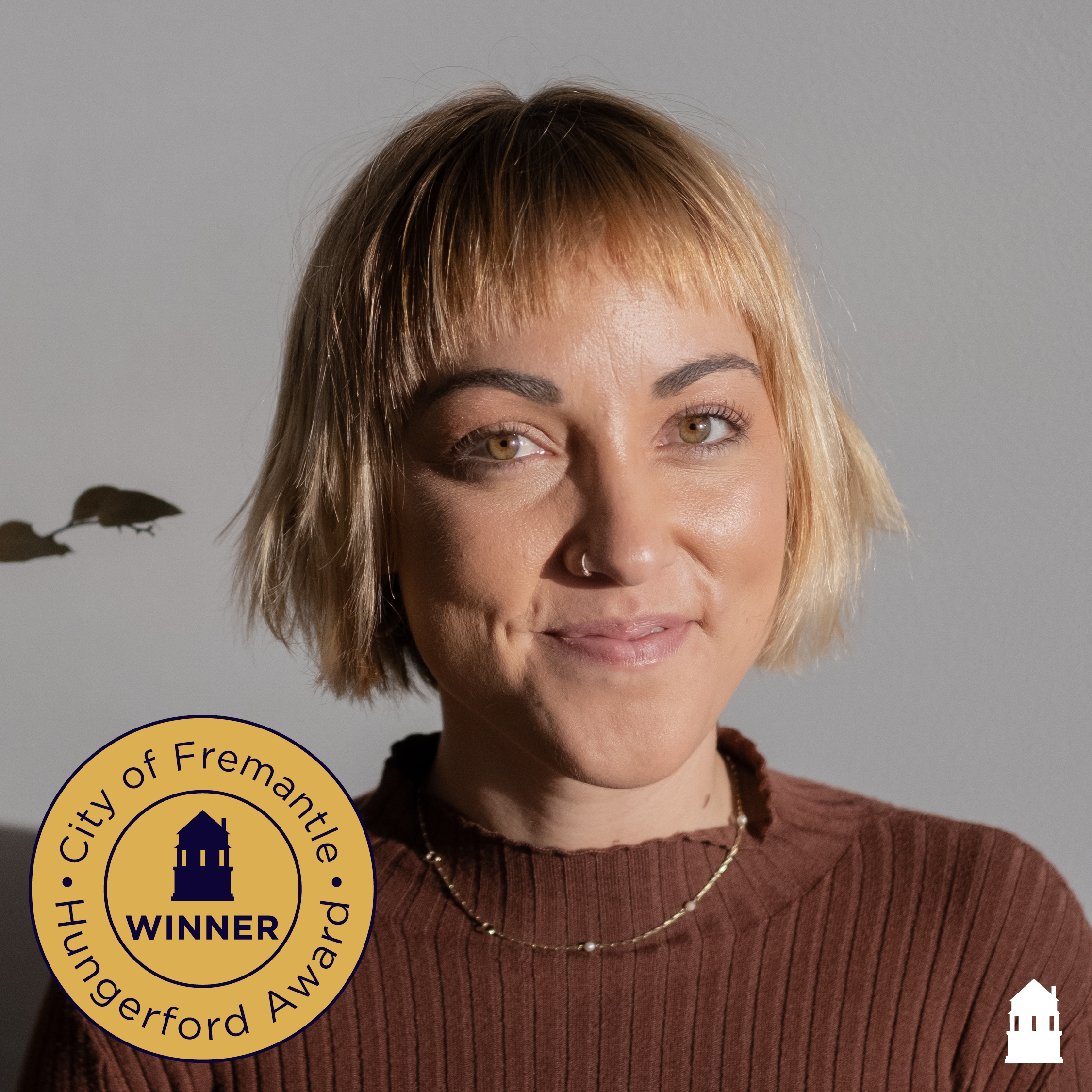
Warm congratulations to Yirga Gelaw Woldeyes, winner of the prestigious City of Fremantle Hungerford Award for 2024. Yirga’s memoir, የተስፋ ፈተና / Trials of Hope, is told in both poetry and prose, in English and Amharic (using Ethiopia’s indigenous script, Ge’ez Fidel), and follows his journey from boy shepherd in Ethiopia to human rights academic at Curtin University in Perth.

Yirga is a writer, researcher and poet from Lalibela, Ethiopia, who now lives in suburban Perth with his wife, writer Rebecca Higgie (award-winning author of the astoundingly imaginative The History of Mischief).

Yirga said:

The Hungerford Award means an opening of hope, a realisation that stories and languages like mine could have places in a world where they are rarely heard. People who live carrying multiple worlds shouldn’t have to hide or sacrifice one world to exist in the other world. This too is our home; our stories can be heard.

The City of Fremantle Hungerford Award is presented biennially for an unpublished manuscript by a Western Australian author, with a cash prize of $15,000, a publishing contract with Fremantle Press and, new this year, a residency fellowship with the Centre for Stories in Perth. In its thirty-three year history, the award has introduced many new writers who have gone on to establish stellar careers—among them, two of my all-time favourite writers, Gail Jones and Simone Lazaroo.

Congratulations must also go to the three other shortlisted authors for this year’s award: Howard McKenzie-Murray, Jodie Tes and Fiona Wilkes. Being shortlisted from a field of eighty manuscripts is no small achievement!

The award was judged by writers Richard Rossiter, Marcella Polain and Seth Malacari, and Fremantle Press publishers Georgia Richter and Cate Sutherland.

1 Comment

Filed under Publishing news

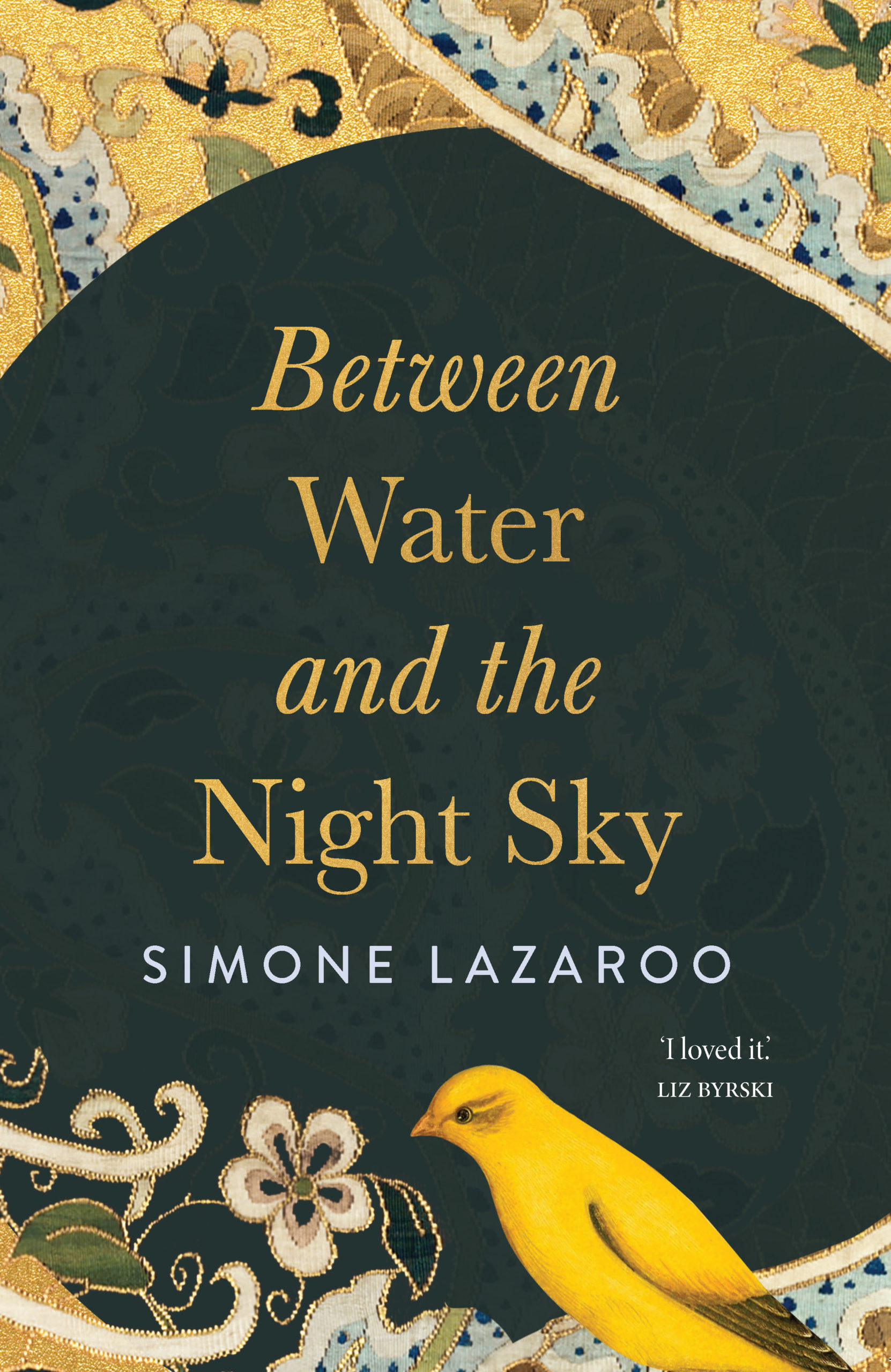
Talking (new) fiction: Simone Lazaroo’s Between Water and the Night Sky

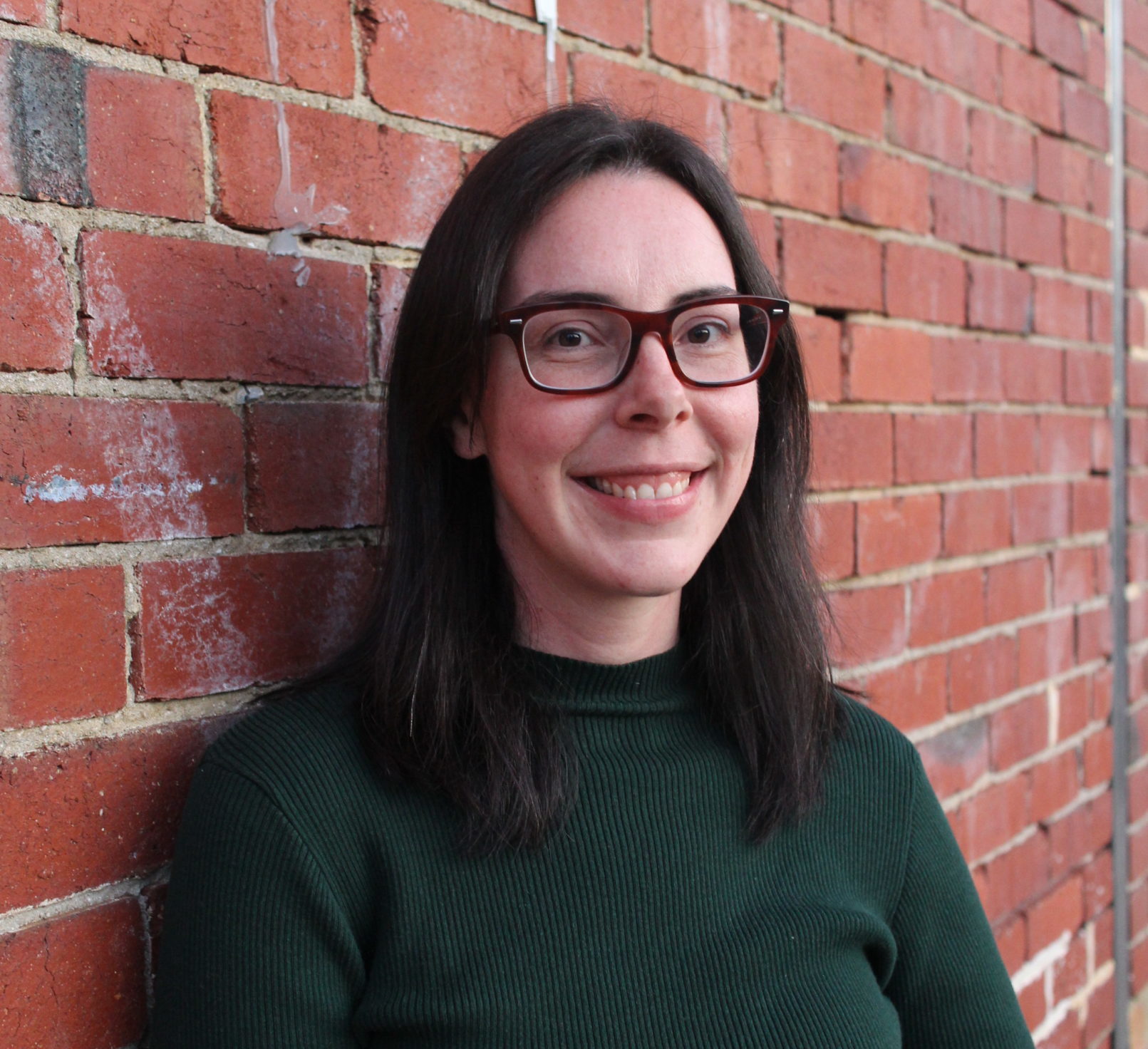
The work of three writers most influenced me in the years when I was studying literature and writing, all the while daring to hope I might one day be able to write, myself. Those three writers were Gail Jones, Joan London and my guest today, Simone Lazaroo. You can imagine, then, how delighted I am to have the opportunity to interview Simone here.

Simone migrated to Western Australia from Singapore as a young child. She is an honorary research fellow at Murdoch University, where she taught creative writing for many years, and is part of a Spanish-funded research group.

Since winning the T.A.G. Hungerford Award in 1993, Simone has published six novels, as well as numerous short stories and essays, and has won the WA Premier’s Book Award for Fiction three times. She has also been shortlisted for the prestigious Kiriyama Prize and the Nita B. Kibble Award.

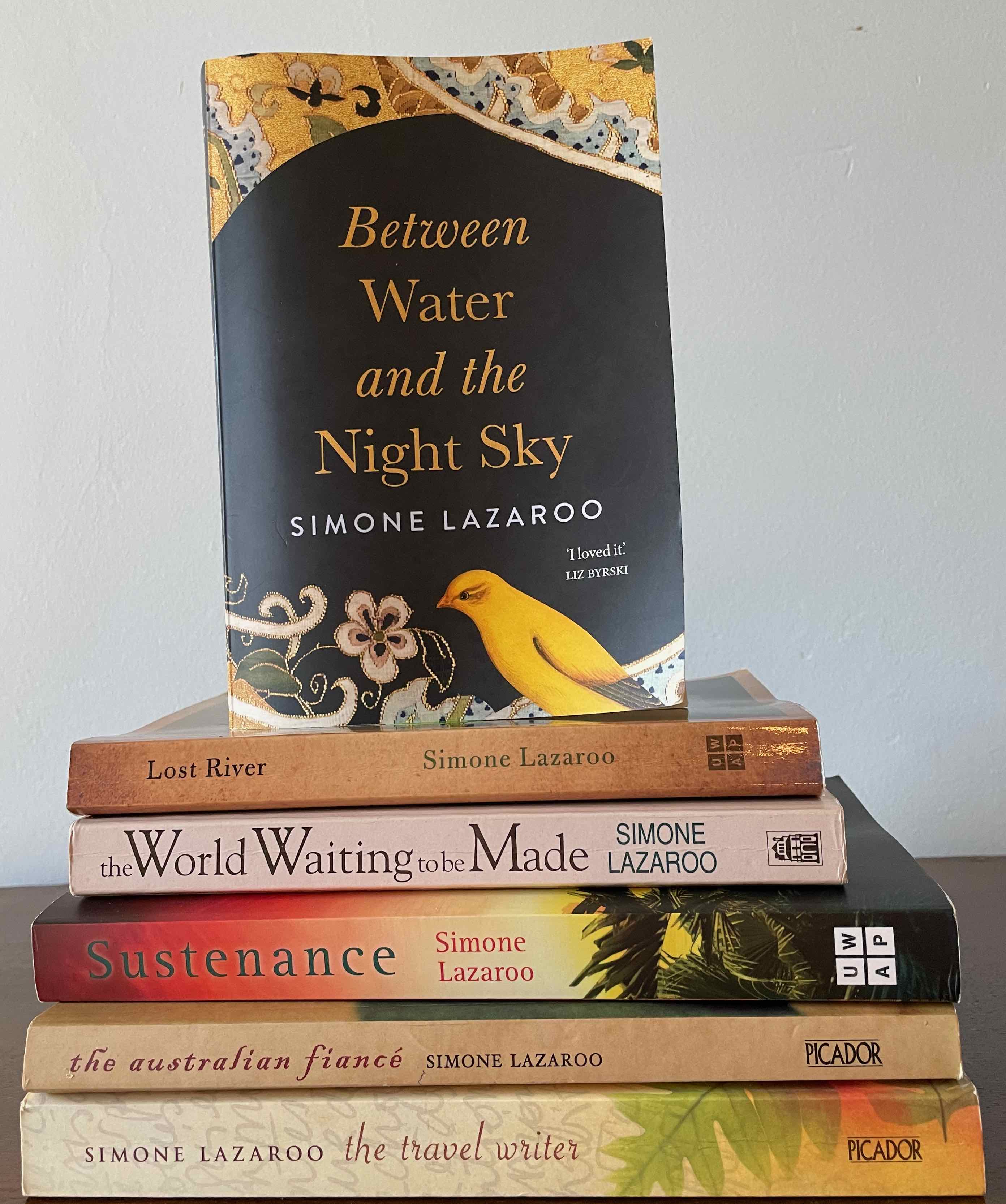
If you are not acquainted with Simone’s work, please do hunt down the brilliant novels that form her backlist: The World Waiting to Be Made, The Australian Fiancé (optioned for film), The Travel Writer, Sustenance and Lost River: Four Albums.

But before you do that, there’s the sixth, her new release, Between Water and the Night Sky

Elspeth is full of inexpressible longings: to leave behind life in Perth and her beginnings in a small wheatbelt town, and a secret she scarcely comprehends.

Francis wants to fit in—to make a life for himself after migrating from Singapore that is not determined by the colour of his skin or the judgement of others.

Told by their only child, Eva, this is a novel about falling in love, and falling apart—the beautiful, sad story of a shared history that never ends.

Memorialising courage

AC: Simone, Between Water and the Night Sky has been described as auto-fiction, a hybrid genre blending elements of fiction and autobiography. There are many ways a novelist can weave real events and characters, and themselves, into a work of fiction; Donald Stuart, for example, whose novel Shuggie Bain is often classified as auto-fiction, said that it was not autobiographical but inspired by his own experiences. Could you please talk about your choice to write this novel in the way you have, and some of the challenges it posed?

SL: Between Water and the Night Sky began as a couple of short stories that drew on incidents from my parents’ lives, but fictionalised aspects of these (including some elements of plot, setting, characterisation, imagery). But a few years after my mother died, I felt compelled to incorporate extracts from these short stories into a longer story that memorialised aspects of my mother in particular, including her relationship with my father. I focused particularly on my mother’s courage and creativity in the face of considerable struggles she’d experienced. I’d always felt that the way she lived her life showed a kind of heroism often unacknowledged by society. Doubtless many of us know individuals who have shown unacknowledged courage in dealing with the after-effects in their daily lives of traumas they’ve endured, although we sometimes don’t know the precise nature of those traumas.

I also tried in this book to convey many of the social and historical circumstances of my parents’ lives, to give a sense of the era and some of the social and geographical settings in which they lived. For example, partly due to aspects of the White Australia Policy still operating then, marriage between Anglo-Australians and Asians was unusual in the late 1950s, when my parents married, as was migration of Asians into Australia. However, partly because I simply didn’t know certain details of my parents’ lives before and after their marriage, imagination was all I had to fill in the gaps. Also, as the writing of the story progressed, it took on a life of its own. I used various fictional techniques (some of which I’ve alluded to above) to make the story more engaging, and because of issues of privacy.

At the intersection of cultures

AC: Throughout your body of work, you have explored characters at the intersection of cultures. Could you discuss how this plays out in Between Water and the Night Sky?

SL: The marriage of Elspeth and Francis might be considered an embodiment of the intersection of cultures—in this case, Francis’s Singaporean Eurasian culture and Elspeth’s Anglo-Australian culture. And of course, they each experience the upheavals, difficulties and joys of migrating and living in cultures and nations they are unfamiliar with. These kinds of experience can make unusual demands on the individuals involved, and on their relationship with each other. Some of the effects of such experiences upon a bicultural (or perhaps it would be more apt to say multicultural) marriage and family are reflected in this book.

Ways of seeing

AC: A photo’s just a memento of how a person looks at a particular moment…but a person’s life floats across countless moments. Elspeth, p. 164

I love the use of photography as an elemental motif in the narrative. The younger Francis is a keen hobbyist photographer, an interest gifted to daughter Eva, who studies photography at university. It recurs again and again as a metaphor for light and shadow, positive and negative, truth and illusion. I wondered, too, about the relationship between photographs and words in telling the story of a life—whether each complements the other, compensating for the other’s limitations. Was photography always a fundamental part of the story of Francis, Elspeth and Eva?

SL: Yes—photography is in a sense emblematic of how Francis and Eva develop their ways of ‘seeing’ other individuals, particularly during Francis’s courtship of Elspeth and later as Eva sees Elspeth aging. Many of us are familiar with the ways in which family photographs help trigger narratives and understandings about family members.

An enduring kind of love

AC: The relationship between Elspeth and Francis is both incredibly strong and heartbreakingly fragile, and ultimately does not survive—or at least not in the way we expect of a love story. But (and I’m trying not to wander into spoiler territory here) long after finishing the novel I was left thinking about the nature of love, and what endures between people. Did you conceive this work as a love story?

SL: Not while I was in the early stages of writing it. But as the writing progressed, I reflected on some aspects of Elspeth’s and Francis’s relationship with each other in the light of some of the wisdom I believe my parents acquired about their relationship as they aged, and saw that a nonetheless enduring kind of love had developed between my parents, despite the breakup of their marriage. Although my parents didn’t have the conversation that Elspeth and Francis have just before he dies, I wanted to convey something of the growing respect they had for one another as they aged.

Indirect trauma

AC: The great trauma of Elspeth’s infancy, painfully, shockingly, revealed to her late in life, in some ways drives the narrative. Again, I don’t want to give too much of that away. But I have always been interested in the idea that trauma can be passed from one generation to those that follow, and I sense that in this novel. Could you talk about that aspect of the work?

SL: I’m certainly not an expert in these matters. But I’d suggest that while the offspring of a person who has suffered trauma may experience it much less ‘directly’ than that parent, they nonetheless are affected by their parent’s long-term psychological responses to the trauma, which can continue to play out in their daily life decades after the traumatic event—in ways such as depression, anxiety, perhaps difficulty with some kinds of social engagement—even if the parent hasn’t told them about the traumatic event. And it’s possible that offspring who know more directly about their parent’s trauma may feel a heightened sense of responsibility towards their parent, sometimes resulting in the offspring taking on a carer’s role towards the parent at a young age; this can in turn lead to depression and anxiety in the offspring, particularly if they feel powerless to ‘cure’ or make their parent feel ‘better’.

Narrative immediacy

AC: I’ve noticed that while you don’t use it exclusively, you often seem drawn to writing in the first person. What does first-person narration bring to a novel such as this?

SL: As one of my hopes for this novel was that it might help people who’ve suffered similar kinds of trauma feel less alone, I used first person to try and build a sense of more ‘direct’ communication between the writer and reader.

More broadly speaking, I sometimes use first person in my fiction to give a sense of immediacy and direct revelation of the narrator’s thoughts, feelings and experiences—although attentive readers and writers know this isn’t impossible to achieve with third person point of view, too.

When you have to let a title go

AC: Between Water and the Night Sky is a beautiful, evocative title. Was it an ‘always-was’ title or one that took time to emerge?

SL: It took a long time to emerge—partly because I discovered around the middle of last year, while I was working and travelling in Europe, that the title I’d originally chosen for the manuscript-in-progress (almost three years ago) was very similar to the title of someone else’s novel published about two years ago. So en route to various work destinations in Europe, and just as the cover design was being finalised, I had a frantic email correspondence with the exceedingly helpful and patient Georgia Richter of Fremantle Press, in an effort to find another suitable title. Both titles included water, which is central to the novel’s preoccupations with the Indian Ocean and with states of merging, flux, separation and release, in the relationship between Elspeth and Francis, and in her life generally.

Between Water and the Night Sky is published by Fremantle Press
Simone Lazaroo is on Facebook

1 Comment

Filed under Favourite books, New books, Talking (new) fiction

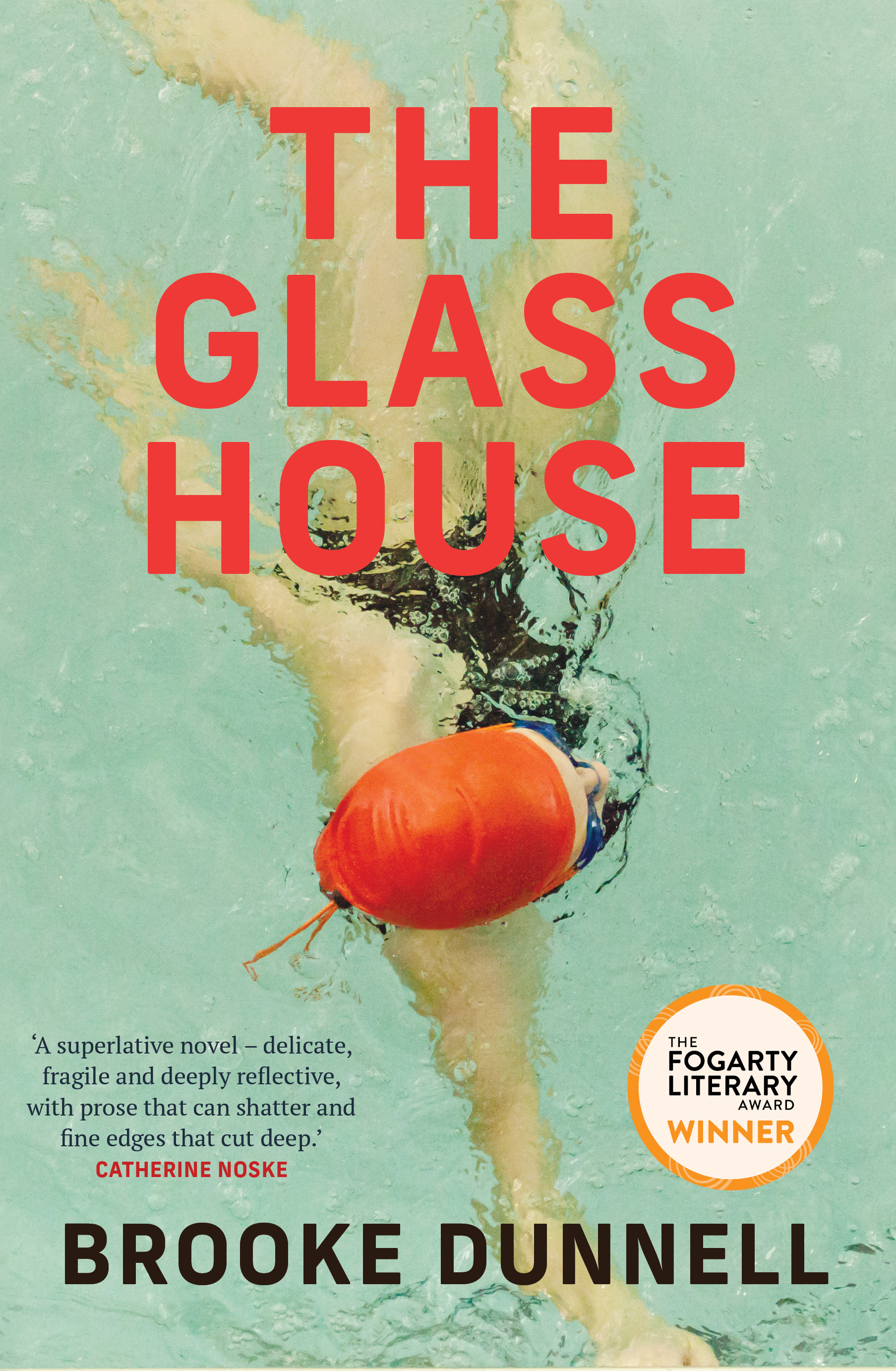
Talking (new) fiction: Brooke Dunnell’s The Glass House

Unpublished manuscript awards such as the City of Fremantle Hungerford Award and the Fogarty Literary Award have brought into the light many new writers with impressive manuscripts. It’s my great pleasure to introduce Brooke Dunnell and her debut novel, The Glass House, which won the 2021 Fogarty Literary Award for an unpublished manuscript by a WA writer aged 18 to 35.

Brooke’s short fiction has been widely published (I remember choosing one of her stories for the journal Westerly when I was fiction editor), and her collection Female(s and) Dogs was a finalist for the 2020 Carmel Bird Digital Literary Award. She is well known in Western Australia as a creative writing teacher, mentor and workshop presenter.

Julia Lambett heads across the country to her hometown where she’s been given the job of moving her recalcitrant father out of his home and into care. But when Julia arrives at the 1970s suburban palace of her childhood, she finds her father has adopted a mysterious dog and refuses to leave.

Frustrated and alone, when a childhood friend crosses her path, Julia turns to Davina for comfort and support. But quite soon Julia begins to doubt Davina’s motivations. Why is Davina taking a determined interest in all the things that Julia hoped she had left behind? Soon Julia starts having troubling dreams, and with four decades of possessions to be managed and dispersed, she uncovers long-forgotten, deeply unsettling memories.

Gaining momentum

AC: Brooke, The Glass House dives deep and wide into contemporary life, giving us a story about parenting, marriage, childhood and ageing, among other things. Can you tell us about the genesis and development of the novel?

BD: It’s often really hard to know exactly where a novel originated, especially when it was so long ago!

For a while, I’d been exploring the idea of a character who is trying to decide whether to have children when they’re put in a position of responsibility for their own parent. Seeing the parent ageing and looking back on the decisions they made in their life would be a way of giving the character a different perspective on their desire for children of their own.

The concept by itself ended up being a bit too navel-gazey, with a lot of looking back at the past and not so much in the present. There wasn’t much momentum until I thought about adding the third generation—a child. I was interested in that moment of early teenagerhood and the issues and vulnerabilities that can come along with it. Once I hit on the idea of the main character not only putting herself in the position of being a parent, but also of being a child, then things got moving in a much more promising way.

A house, a suburb

AC: The Glass House is set mostly in Perth, where Julia travels from Melbourne to care for her elderly father and to help him pack up his house and his life. The house and the suburb, which play a major role in characterisation and plot, feel entirely authentic, and I wondered whether you adapted something familiar to your own childhood in creating them.

BD: Thank you so much, that’s wonderful to hear! I definitely mined elements from my childhood, though I haven’t identified it as taking place anywhere too specific because I wanted to be able to fictionalise places like the river and shopping centre in order to suit my own purposes.

I grew up in Willetton and our house was a late nineteen-seventies build on a big block, with a front yard, backyard, pool, Hills Hoist—the whole shebang. All my friends’ houses were similar. They don’t have the same charm as other architectural styles (apologies to anyone who particularly likes brown-brick bungalows with cathedral ceilings and sunken lounges!), but to me they have a lot of personality.

Wherever you grow up, I think most kids just see their house and area as ‘the norm’ and it’s hard to get an outside perspective until you have more experience. For Julia, the contrast of living in a flat in Melbourne and coming back to this really big house with a big yard in a quiet family suburb allows her to see the home, her father and her childhood in a new way.

Mothering Evie

AC: The relationship between your main character, Julia, and her stepdaughter Evie is such a tender portrait of mothering, avoiding the common trope of the child damaged by parental separation. Evie is beautifully mothered by both Julia and her biological mother, Samara, in ways that are supportive and complementary. Could you talk about your development of this aspect of the novel?

BD: It was important to me that Evie have a good relationship with her parents and with Julia, and for Julia and Samara to have a fairly good relationship as well, because I was interested in the fact that things can go wrong even when you’re trying really hard to do everything right. Evie is a very strong young woman, and this is in part due to her parents and Julia putting her best interests first. I gave Evie that personality to contrast with how Julia saw herself at a similar age, which was much less assertive and more desperate for approval.

Julia remains a fairly passive person as an adult and so it’s natural that she defers to Samara, not only because Samara is Evie’s mother but because she’s also a strong person. Samara could have used this influence negatively, but I wanted her to be kind and caring so that Julia slowly realises what friendships between adult women should be like.

When a friend might not be

AC: The sinister tone that gradually enters this suburban domestic scenario is subtly realised, which of course makes it all the more sinister! One of the sources of Julia’s (and the reader’s) unease is the character Davina. Please tell us about her.

BD: Davina was Julia’s friend when they were little, and she’s there when Julia returns to Perth and wants to be best friends again. Because Julia’s feeling exhausted, frustrated and vulnerable, having left her marriage in Melbourne on uncertain terms and facing the difficulty of moving her father and all his stuff, she’s flattered by Davina’s attention and confides in her a lot. After a while, she starts to realise that she’s not getting much back from Davina, who’s opaque about her own life and cagey when it comes to the past. Over the course of the novel, as she goes through the family belongings, Julia begins to work out just why she stopped being friends with Davina in the first place.

Sinister dreams

AC: The main narrative is interspersed with fragments from Julia’s dreams, which escalate tension and that sinister tone. If it’s possible to do so without introducing spoilers, could you tell us how these work in the story?

BD: Julia’s understandably stressed while she’s back in Perth. She’s put a pause on a marriage that’s having problems, and part of that is telling her husband Rowan that they shouldn’t contact one another for a while, so they can see what it’s like to be apart. She starts having bad dreams about her stepdaughter Evie being pursued by a sinister male figure, and because she can’t contact Rowan and ask what’s going on, the situation just exacerbates. Julia’s not the type who believes in prophetic dreams or anything like that, but the nightmares are so realistic, she wonders if she’s losing her mind.

Starring role for Biscuit

AC: Biscuit, the dog, must take a bow as one of the most important canine characters I’ve ever met—oddly so, since he ambles through the narrative in typical old-dog fashion! What do animal characters allow a writer to bring to a narrative?

BD: I love Biscuit! I love all dogs, obviously—even the fictional ones.

I think animals, in fiction as well as in life, can be good intermediaries between people. Biscuit forms a bit of a buffer between Julia and her father, and it’s good, because if he wasn’t there, the interactions between the two of them might be even more fraught. The dog is a symbol of Don’s independence; a way he can show Julia that he can still make his own decisions and be in control. For Julia, the dog is just a manifestation of Don’s stubbornness and denial.

I think animals also become carriers of the personalities and stories we assign to them. Both Don and Julia put a lot of meaning into Biscuit. For Don, the dog needs to be protected and kept stable, not subjected to anything that might unsettle him. For Julia, the dog is at risk just being in Don’s company, because Don doesn’t have the capacity to walk him or give him mental stimulation. Living with Don, the dog has food, shelter and company, which Julia doesn’t think is enough. But Biscuit ends up having a side to him that even Don and Julia didn’t realise.

Genre hopping

AC: How did you find the leap from writing short fiction to writing a novel?

BD: I didn’t find it too arduous, because I’ve been trying to write novels for a long time. It’s definitely a different process—a novel gives you much more space to go off in different directions, have elements evolve at a slower pace, and introduce a wider range of themes. One of the pleasures of writing a short story is that you can keep the whole thing in your head at once, and that’s far more difficult with a novel! I plan to keep writing in both genres, because that gives me the scope to explore a wider range of ideas.

Towards publication

AC: What has been the most surprising thing about your journey towards the publication of The Glass House?

BD: In practical terms, I’ve been surprised in various ways at how the book publishing process works—the lead time needed, how interest gets drummed up, that type of thing. It’s been fascinating to see the different aspects come together, and it’s made me admire people who work in publishing and bookselling even more. They put so much hard work and passion into producing and promoting books they didn’t even write! Thank God for them.

More generally, I’ve been surprised and moved by the number of people who genuinely care about the fact that I’ve written a novel and are interested in it! I knew the WA writing community was close and supportive, but it’s been to a greater extent than I ever expected. Readers and even people I meet in passing can be really enthusiastic, too. I’ve been in a perpetual state of the warm fuzzies for a while now!

The Glass House is published by Fremantle Press
You can follow Brooke via Instagram, Twitter or her website

2 Comments

Filed under Talking (new) fiction

2022 Hungerford Award winner

Huge congratulations to Fremantle writer Molly Schmidt, winner of the 2022 City of Fremantle Hungerford Award! Molly takes home a cash prize of $25,000, and her winning novel, Salt River Road, will be published by Fremantle Press.

Fremantle Press publisher and Hungerford judge Georgia Richter described Salt River Road, a coming-of-age story set in regional Western Australia in the 1970s, as a novel that ‘focuses on the fabric of small-town life, and the complexity of family and community relationships.’

Molly Schmidt said:

I wrote this story in consultation with Noongar Elders from the Albany area and I am so grateful for their time and friendship. I hope Salt River Road can become a poignant example of the possibilities of cross-culture collaboration.

The 90 manuscripts submitted for this year’s award were read by Rashida Murphy, former Hungerford winner Natasha Lester and long-time Hungerford judge Richard Rossiter. They reported that the writers who stood out were those who

combined a natural affinity with words alongside an understanding that their story needs to appeal to a reader, which meant that they had honed and edited and shaped their work, thus setting their manuscripts apart from the others that felt less fully realised and needed more time, development and writerly sweat to be successful.

Congratulations must also go to the other shortlisted authors:

  • Joy Kilian-Essert, The Slow Patience of the Sea
  • Gerard McCann, Tell Me the Story
  • Marie O’Rourke, Kintsugi

The longlist included Matthew Chrulew, Narelle Hill, Rachael Keene, Shannon Meyerkort, Stefanie Koens, Christine Talbot and Annie Wilson.

The award is sponsored by the City of Fremantle and Fremantle Press.

3 Comments

Filed under Fremantle Press, Publishing news

Talking (new) fiction: Sharron Booth’s The Silence of Water

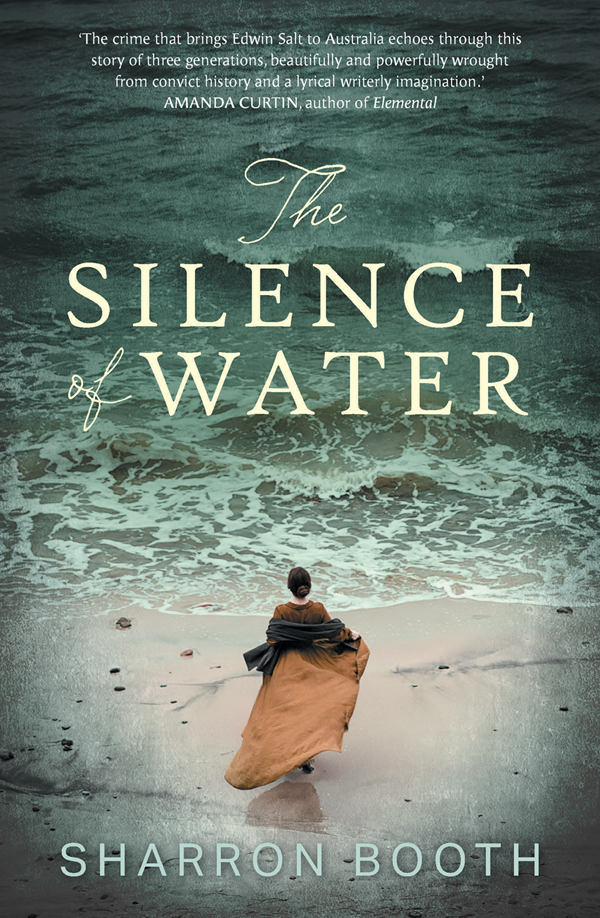
Sharron Booth’s debut novel, The Silence of Water, is a beautiful work of historical fiction. I admire it immensely—as you can see from my endorsement on the cover.

In constructing questions to pose to Sharron, I think I was influenced by memories of my own exploration of Western Australian convict history for The Sinkings, and the ever widening circles of research that help a writer to understand the people, places and social worlds of the past. It’s evident from her responses that, like me, Sharron formed deep emotional attachments to those she researched, and to artefacts of the past—sometimes to be found beneath one’s feet.

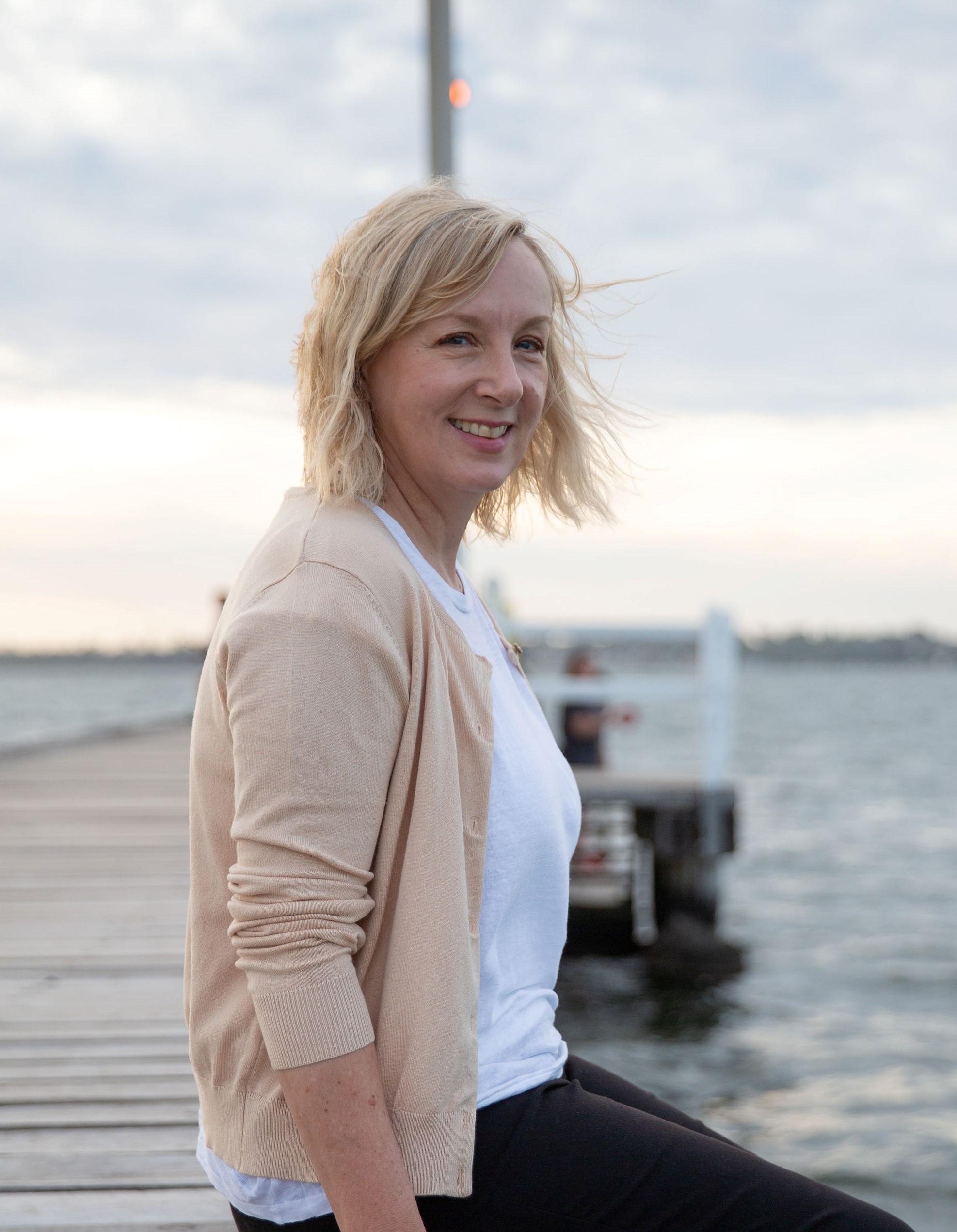
Sharron emigrated from the UK (Yorkshire) to Western Australia as a child, and works as a professional writer. Her creative work has been published in literary journals and newspapers and broadcast on ABC Radio. The Silence of Water was shortlisted for the 2020 City of Fremantle Hungerford Award—once again proving what a wonderful source of new talent this award represents.

It’s the turn of the century when Fan’s mother, Agnes, announces the family is moving to Western Australia to take care of Agnes’s father—a man they’ve never spoken of before now. Fan finds herself a stranger in a new town living in a home whose currents and tensions she cannot read or understand.

Resentful of her mother’s decision to move, Fan forms an alliance with her grandfather, Edwin Salt, a convict transported to Australia in 1861. As she listens to memories of his former life in England, Fan starts snooping around the house, riffling through Edwin’s belongings in an attempt to fill the gaps in his stories. But the secrets Fan uncovers will test the family’s fragile bonds forever, and force Edwin into a final reckoning with the brutality of his past

When you witness a different crime

AC: Sharron, The Silence of Water is a work of fiction, but it is partly based on people and events drawn from convict history. Was there something in your research into that history that immediately presented itself to you as being a subject for fiction or did you arrive at that point gradually, through the process of accumulating facts and impressions? What was it that lit the spark?

SB: I knew that I needed to write about these events and people, particularly the women, immediately after I read the medical reports and newspaper accounts of the crime that Edwin Salt committed. They upset me so much. I felt as if I had witnessed a very different crime to the one being reported. In the early days, I’d imagined I might write a fairly straightforward account of the life of a Western Australian convict. Those documents reminded me there was no such thing as a straightforward account and that archives always reveal the biases of their times. I didn’t have a clue how I would do it but I knew I wanted to write about the women I had read about, in addition to the convict.

Fragments, glimpses and whispers

AC: The novel is told from the alternating points of view of three characters: Edwin Salt, his daughter Agnes and his granddaughter Fan. Fan’s narrative anchors the present of the novel—the events of 1906—while Edwin’s and Agnes’s range between 1906 and earlier times. There are always challenges in using a non-linear approach, but could you talk about the opportunities such a structure gives a writer in telling the story of three generations?

SB: Before I did much research, my original intention had been to write a past/present dual narrative. Then I discovered that Agnes had left Western Australia at around eighteen years old and started a new life in South Australia. Based on the records, she didn’t seem in a hurry to return. Creatively, I liked the idea of the family conflict that could arise from a decision to move back to Western Australia after a long absence. Plus, moving states at a young age in the late 19th century seemed like a gutsy move for a woman. It made me want to give her a bigger role in the story.

The interwoven structure allows the reader to watch Edwin, Agnes and Fan as they grow up, struggle, make decisions, lie, behave badly. The structure lets the reader know parts of each character that not even other characters know about. It makes for a richer experience of the story.

It also allows the reader to go on the journey with Fan as she uncovers long-buried family secrets. I think it more realistically reflects the way we tend to find things out about our families: in fragments, glimpses and whispers, and almost never in an ordered, linear way.

Bad wives and mothers?

AC: The adolescent Fan is my favourite character—imaginative, independent, witty, and endearing in her fascination with the past and its secrets; a strong girl in the process of becoming a strong woman. But many of your female characters—Eliza, Mary Ann, Cath, Agnes—are strong women, albeit within the context of their times and socio-economic constraints. Were you conscious of foregrounding women’s stories in a novel that is to some extent shaped by the life of one man?

SB: When I read the archival material about Mary Ann and Cath (two of Edwin’s three wives), my emotions ranged from anger to compassion. Mary Ann was decried publicly as a bad wife and bad mother and yet contemporary understanding might suggest she was suffering from post-natal depression. Cath was arrested for using offensive language, an offence that was used almost exclusively against women. I wanted to bring both women out from under the weight of the records. I consciously looked for moments of resistance; they were hard to find but they were there. I used those fragments as starting points for thinking about character. For example, one of the most enduring features about fictional Cath is her voice. She isn’t afraid to speak her mind. People pay attention when she talks. Agnes remembers the sound of Cath’s voice long after her mother has died. I did this to ‘write back’ to the fact that Cath had been criminalised for using her voice.

Flowers on an unmarked grave

AC: Your research for the novel was wide-ranging, taking you from Western Australia to South Australia to various places in the United Kingdom, and from archives and libraries to the kind of experiential research that involves communing with the past through the physical remains to be found in houses and churches, streets and landscapes. Where did you find your greatest inspiration?

SB: I loved the archival research, but visiting the places where my characters had lived got me properly under the skin of this story. Two moments stand out: one in Semaphore and one in Edinburgh. I was walking along Semaphore beach, minding my own business, when in my imagination I saw a girl running over the dunes towards the ocean, her hair trailing behind her. She seemed to fly into the ocean. It was one of those between-two-worlds moments that writers sometimes talk about but I secretly didn’t believe in, until it happened to me. I knew this girl was Fan and that she was here to shake things up.

The second was in Edinburgh in a small church graveyard on a quiet, sunny afternoon. I laid some flowers on the unmarked grave of a woman to whom I had no connection except the privilege of having time and resources to pursue my interest in her life. I told her that I had no idea why this story had chosen me, but no matter what, I would try to do justice to her. The novel did not really come together for me until that afternoon.

Lucky charms

AC: As someone powerfully influenced by physical objects, I’m wondering whether you also acquired anything of this kind during your research, something that helped you to make emotional connections with your material. Was there a talisman sitting on your desk while you wrote?

SB: I also find physical objects inspiring. They ground me to the truth of my characters, and to place, through the fog of the writing process.

My desk was crowded with lucky charms while I wrote The Silence of Water. I collected shells and rocks from Semaphore beach. I pinned all my train tickets from the UK research trip on a cork board. When I visited York, Western Australia, via the old convict route from Greenmount, I dug up a stone from part of the original convict-laid road.

I cut my hands and broke fingernails liberating that rock from the ground. I could only imagine the effort it had taken to put it there more than 150 years ago. It inspired a scene in the novel where Edwin and his fellow convicts work on a road gang.

Watery places

AC: Could you talk about the symbolism of water in the novel?

SB: The ocean is a place of duality. It both separates and connects places. I read somewhere that the ocean symbolises ‘the terrifying sublime’: it’s spiritually uplifting but it can also kill you. In the novel, some characters find great solace in watery places and others meet their end there.

The ocean is essential to my spiritual wellbeing and so it was perhaps unsurprising that it found its way into my fiction. I can’t say I intended to write about water but that’s what happened! I’ve given my love of the ocean to Fan, although she is much braver than I am. For Fan it is a place of calm, compared to the soup of unspoken tension in her Fremantle house.

For Agnes, too, the water is important: she associates the sounds and smells of the river with her mother and the precious times they spent together. Agnes’s relationship to water symbolises her grief and how she deals with significant losses.

I found it interesting that Edwin, Agnes and Fan all made long journeys across water to start new lives. I wanted to explore how people respond to unfamiliar places by asking the question: is it ever possible to truly escape the past?

Silences and the forgotten

AC: Are you naturally drawn to the past, and to historical fiction? Do you see yourself continuing to work in this genre? Which I suppose is another way of asking if you are currently at work on something new!

SB: I’m particularly drawn to stories about how actions of the past, particularly in families, influence the present. While The Silence of Water is historical fiction, I see it primarily as a family story that just happens to be set in the past.

At a broader level I’m also fascinated by the role that secrets and silences play in narratives of Western Australia’s identity. Reading the archives is eye-opening, but so is the daily news.

I’m working on a non-fiction project inspired by some now-forgotten Western Australian women writers, as well as a novel that is set in the more recent past. It’s wonderful to be writing something new, now that the characters from The Silence of Water are making their own way in the world.

The Silence of Water is published by Fremantle Press
You can follow Sharron on Facebook, Instagram, or via her website

Photo credits: author photo by Jess Gately; photo of artefacts by author

4 Comments

Filed under Talking (new) fiction

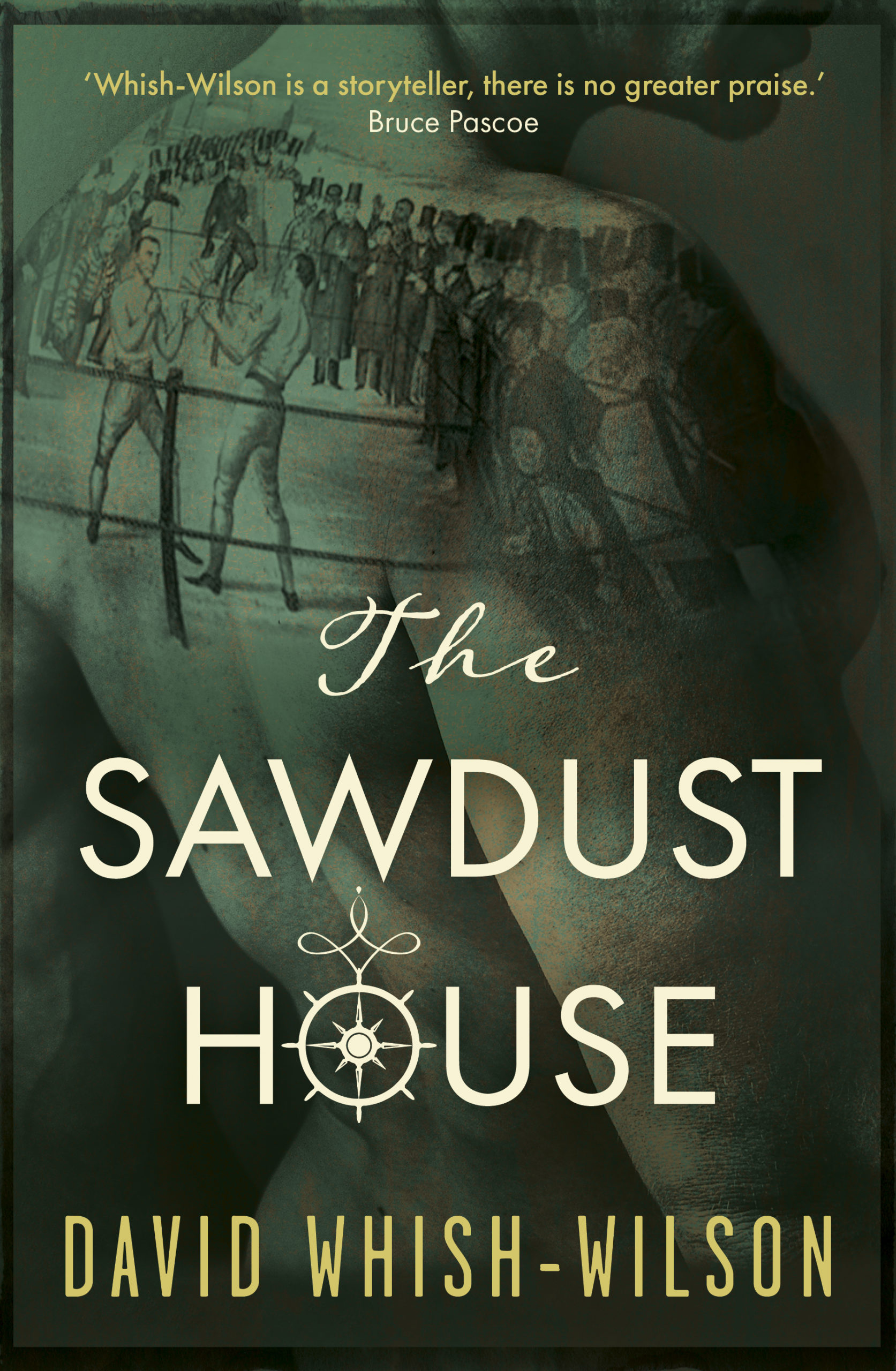
Talking (new) fiction: David Whish-Wilson’s The Sawdust House

I’d have thought you’d be hard pressed to find a reader less likely than me to fall in love with a novel about a boxer. But it’s 2022—unpredictable to the marrow—and here am I, smitten, and urging everyone who appreciates superb literary-historical fiction to read David Whish-Wilson’s captivating new release, The Sawdust House.

Mind, this novel is ‘about a boxer’ as much as Oliver Twist is about a greedy boy—something that will become abundantly clear when you read David’s generous responses to the questions I’ve put to him.

David is one of Western Australia’s most prolific and versatile authors, having published six crime novels, four in the Frank Swann series, which explores the seedier aspects of 20th-century Perth; three works of non-fiction, including a stellar contribution to the NewSouth Books City series, Perth; and a historical novel, The Coves, that traverses some of the ground covered in his new novel. A much valued teacher and mentor, he coordinates the Creative Writing program at Curtin University, and lives and writes in Fremantle.

San Francisco, 1856. Irish-born James ‘Yankee’ Sullivan is being held in jail by the Committee of Vigilance, which aims to rout the Australian criminals from the town. As Sullivan’s mistress seeks his release, and as his fellow prisoners are taken away to be hanged, the convict tells a story of triumph and tragedy: of his daring escape from penal servitude in Australia; how he became America’s most celebrated boxer; and how he met the true love of his life.

Hard citizens

AC: David, the present of the narrative is San Francisco, 1856, at the time when citizens had formed a Committee of Vigilance to deal with Australian gangs of criminals who had dominated the city—the setting also for The Coves. Was it during the course of your research for that novel that you happened upon the story of James ‘Yankee’ Sullivan?

DW-W: Yes, I came across his name several times while doing archival work in San Francisco on the story of the wild Australian men and women who so rapidly established themselves in that city, and whose reputation as ‘hard citizens’, formed in the crucible of the Australian convict system, gave them such a bad reputation. One such citizen was Yankee Sullivan, as he was known, considered a leader and something of a celebrity due to his once status as the US boxing champ, but also his ability to roguishly engage with the local media. He was caught up in the second great purge of Australians from San Francisco in 1856, arrested for being a ‘shoulder-striker’ for the Democrat party, which led to him being locked up in a makeshift vigilante prison while others arrested in the same purge were being lynched.

Contemplating an extraordinary life

AC: What was it about Sullivan’s story that caught your interest initially?

DW-W: The fact that Yankee Sullivan was a colourful figure and a boxer, strangely enough, didn’t initially draw me toward him as a subject. I was curious as to why this man, considered by some to be the father of American boxing (which is now of course a multi-billion dollar industry), wasn’t better known in Australia, but that wasn’t enough for me to consider dedicating researching and writing about him for a couple of years. I did a bit of digging and learned about his time as a convict in Australia, where he was a serial escapee and was sent to Moreton Bay as a sixteen-year-old (then the worst prison in Australia, under the notorious Commandant Logan—the subject of the terrific Drones song ‘Sixteen Straws’). It interested me that he’d been able to escape Australia, and reinvent himself so thoroughly (and quickly) in the milieu made famous by the Scorcese film Gangs of New York, where he became a significant figure, but it wasn’t until I found some words written by his wife following his death in San Francisco that I really felt like I wanted to explore the parts of his life absent in the historical record. She’d noted his vulnerability, and his melancholy, and his fears, which is the starting place of the novel—the human story of a man who’s lived an extraordinary life but is now facing an imminent and humiliating death, using storytelling as a way to distract himself from his situation but also to communicate the things most important to him.

‘Letting the language wash through me’

AC: As someone deeply interested in structure and point of view, I am in awe of The Sawdust House as a masterpiece of both, with two main characters—Sullivan and the reporter Thomas Crane—in conversation with each other while Sullivan waits, in a cell, for his fate at the hands of the Vigilance Committee. Were there challenges in using this device?

DW-W: I felt like I needed someone for Yankee Sullivan to communicate with in his prison cell, someone who Yankee not only trusts, but can see himself in, had his life been different—had he been blessed with some of the opportunities that we take for granted now. But I also wanted Thomas Crane to see something in Yankee that he himself lacked, as an introvert, a certain flamboyance and courage, so that they reflect one another on an emotional level. So the novel proceeds by way of this conversation, and by way of internal monologue that reflects Yankee’s gradual fracturing self as a product of his distress, melancholia, and lack of food and sleep, and Crane’s observations of Yankee and thoughts about his own situation. I haven’t told a story this way before, and so it proceeded slowly, and in fragments, and in a non-linear fashion, moving backwards and forwards in time, with abrupt switches from the present to the past. As a process, I found it intriguing, surprising, and pretty enjoyable, in that because both characters were keen to speak to one another (and to me), I was able to proceed intuitively, with minimal anxiety about where the narrative might be going, instead just letting the language wash through me.

Archival discoveries

AC: Your research for the novel, as outlined in your Author’s Note at the back of the book, was wide-ranging, including archives, informal sources and site research. Is there one that stands out for you now as the most valuable of these—a photograph, a document, a feature of the landscape?

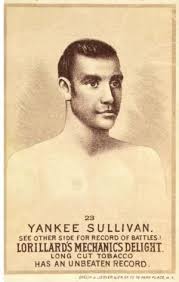
DW-W: I think the two most important research moments involved the discovery, in the archives, of details about Yankee’s transportation to Moreton Bay as a sixteen-year-old, which was a bland record providing dates only, plus a small note to say that he’d also escaped from Moreton Bay before being recaptured. Knowing how harsh that penal colony was in turn linked to the second most important research discovery, which was a portrait of him as a young man in New York, where he looks so calm and healthy. Knowing how many times he’d been flogged in Australia, how scourged his back must have been, made the portrait (which was used to advertise a tobacco brand) extra poignant to me, and helped with his characterisation, and the development of his voice.

Truths of fiction

AC: You speak, in your Author’s Note, of having ‘changed names and dates and amalgamated characters for dramatic purposes and to better suit the truths of fiction’. Could you talk about the ‘truths of fiction’ as they apply to The Sawdust House?

DW-W: Yankee Sullivan was a much-mythologised character in the US, and some of that reputation was the product of self-mythologisation. This is natural, to a certain extent, for an escaped convict whose worst fear (according to his wife) was to be returned to the chain in Australia. It looks like not a single person in the US, including possibly his Australian wife, knew his real name, for example, or that he’d begun his boxing career in the dusty streets of Sydney, New South Wales. I explore some of that concealed history in the novel, working with the main features of his life that were known (and including some of the newspaper reports written about him, verbatim, as well), but where appropriate I also felt like I needed to streamline some aspects of the narrative by designing devices (such as Yankee’s being chained to Leggo on the transport ship) and by changing dates while keeping to the emotional truths of the events as they played out, and as they affected Yankee’s reputation. This reputation was cemented, for example, when he cheekily sailed back to England and challenged the British middleweight boxing champion, Hammer Lane, to a bout, which Yankee won, despite the risk of his arrest and potential execution before sailing back to the US. In revolutionary America, this was a big deal, and I explore this in the novel while having slightly changed the focus of the return trip, to one where he’s in fact there searching for what remains of his family.

When a character begins to speak

AC: Is the fictional newspaperman Crane (I’m assuming he’s fictional) based on a real journalist of that time, or is he perhaps one of those ‘amalgamated characters’?

DW-W: Thomas Crane is an entirely fictional character. In fact, I met him for the first time just as the reader first finds him, as a disembodied voice addressing Yankee in his prison cell, before he proceeds to colour himself in, so to speak. Without the benefit of much planning or foresight, all of his personal aspects appear to the reader as they appeared to me, too, as Crane becomes a key figure in drawing out Yankee’s story, but also in exploring some of the aspects of Mormonism that so interested me in researching The Coves, such as how violent and chaotic the early history of that religion was.

‘The way he sees the world…’

AC: Sullivan’s narrative, though it carries stylistic characteristics of an untutored 19th-century voice, is frequently poetic. To give one example of many:

…I barely have recollection of what I have said from one utterance to the next. Since my incarceration here I am like a taper whose wick is my voice and the flame has been lit but the wick consumed as it goes—

Did the Walt Whitman connection—which came as a surprise—give you opportunities for developing Sullivan’s voice in this way?

DW-W: The link to Whitman developed later, when I was excited to read that he was a contemporary of Yankee’s in New York City, and when I came across some fascinating anecdotes about him in different texts. The development of Yankee Sullivan’s voice, on the other hand, which of course is an approximation, or a hybrid version of a 19th-century voice shaped by a life in several different countries, was one of the great joys of writing The Sawdust House. As an aspect of this hybridity, perhaps, and of the need to let him speak freely, I was fortunate that right from the beginning, Yankee expressed himself in imagery and metaphor, which is something I hadn’t anticipated, but which is important, because without it I don’t know if I would have been able to sustain the narrative. I was frequently surprised and delighted by the way he sees the world, and while I wasn’t doing any contextual reading at that point, not wanting to complicate the language with another’s voice, it seems to me in retrospect that Whitman’s expansive and enthusiastic style might be an unrecognised influence.

The power of white space

AC: I found the physical layout of the novel fascinating, with each question and each answer of the interview beginning on a new page, even if they occupy only one or two lines. White space speaks eloquently in The Sawdust House, and it contributes to the way you control the pace. But, as white space also = page extent = money, I’m wondering whether there was any discussion surrounding this aspect between you and your publisher.

DW-W: Fortunately, because it’s quite a short novel, the white space, which like you say is there to control pace but also to serve as an absence/presence, or a silence/voice, wasn’t mentioned as a significant issue. Essentially, I think I’m very blessed to have a publisher willing to take a risk with a non-traditional kind of narrative, and an editor who was able to see the merit in this kind of approach. I don’t know if the two things are related, but perhaps it’s significant that Fremantle Press is one of the last publishers around who still publishes terrific poetry.

Title as talisman

AC: The title is immediately intriguing, but I also found it to be one of those titles that was even more resonant after I’d finished the novel. Was it always your working title, or one that came to you in the writing process, or later?

DW-W: It was always my working title, acting while I wrote as a kind of talismanic aspect of Yankee’s yearning, both during his difficult years of captivity, and then, after he’d achieved his parents’ dream of owning a public house/saloon with that name, as an aspect of his recognition that the very things he’d done to achieve that dream had diminished him and his ability to value this achievement—something which becomes significant toward the ending of the novel.

The Sawdust House is published by Fremantle Press
You can follow David on Twitter and Instagram, and contact him via his website

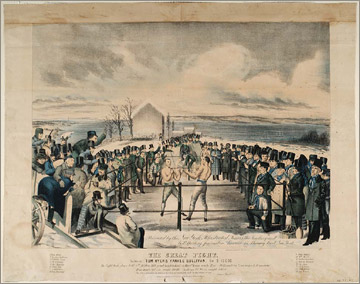
Photo credits: boxing image—James S. Baillie, 1849, black and white lithograph of Thomas Hyer, American Heavyweight Boxing Champion of 1841, fighting Thomas Sullivan on a snowy day in Baltimore; Yankee Sullivan image—Lorilliard’s Mechanics Delight Boxing Card

3 Comments

Filed under Talking (new) fiction

Talking (new) fiction: Portland Jones’s Only Birds Above

Portland Jones is a beautiful writer—a favourite of mine on the strength of her brilliant debut novel, Seeing the Elephant, which was shortlisted for the City of Fremantle Hungerford Award. I came late to reading this, but I have been singing its praises ever since, and if you haven’t yet read it I urge you to (as Molly Meldrum used to say) do yourself a favour and seek out a copy.

Needless to say, I was excited to hear that Portland’s second novel was scheduled for 2022, and anxious to read it. I was not disappointed. Only Birds Above is sublime, and I think you’ll get a sense of that from reading her responses to my questions below.

Portland Jones is a writer, lecturer and horse trainer who lives and works in the Swan Valley, near Perth. She has a PhD in Literature, and in addition to her two novels she has co-authored a non-fiction book, Horses Hate Surprise Parties. She is currently working on a third novel and another work of non-fiction.

Arthur the blacksmith goes to war with the 10th Light Horse, to care for the horses of his fellow soldiers. When he returns, Arthur’s wife, Helen, and their children bear witness to a man forever damaged by what he has seen and suffered.

As a second war looms, Arthur insists on his son Tom going to work in Sumatra. Tom is taken prisoner by the Japanese, but is sustained by memories of life on the farm at home and a growing understanding of his father.

This big-hearted, beautiful novel captures the deep and mysterious connection between humans and horses—whose very presence lends a sweet, steady counterweight to human frailty, and whose nobility aligns with human courage.

The unfathomable

AC: Portland, I’m intrigued that your two novels, although very different, both tell stories of war—the Vietnam War in Seeing the Elephant (2016) and now World Wars I and II in Only Birds Above. What draws you, as a novelist, to these critical historical periods of the twentieth century?

PJ: I think there are two main reasons. The first is because history, or more specifically the history of conflict, has always felt very real to me. When I was growing up my Dutch grandmother would hold us in her lap and tell stories about fighting in the resistance during the war. She used to tell us about hiding my grandfather in their house between the floor of the second storey and the ceiling of the first. They would roll back the rug, prise up the floorboards and then, once he’d squeezed himself into that tight little space, she would nail the boards back down and replace the rug. She told me how German soldiers had come to the house and yelled at her, ‘Where’s your husband?’ And she had pretended she didn’t know, although he was hiding just above their heads.

And some stories become indelible because of their context. I admired my grandmother a great deal and it wasn’t until she had been gone for several years and I started a PhD on learned helplessness in war veterans that I realised that both she and my grandfather had suffered from PTSD. My grandparents belonged to a generation that didn’t speak about trauma. PTSD was only recognised as a disorder in 1980, so people like my grandparents just lived with their responses because they didn’t have the language back then to talk about them. That realisation reframed a lot of my childhood memories of my grandparents. I saw how their lives and the lives of their children had been irredeemably altered by their experiences and I suppose that made me want to understand more.

I was born at the height of the Vietnam War (or the American War, as the Vietnamese say). During my childhood I felt like it was a dark secret grown-ups wouldn’t talk about with children and I’ve always been suspicious of those sorts of secrets. Then the Welcome Home March was held in 1987 (the year I left school) and it all felt a bit underhanded. No-one that I asked could give me a coherent answer about the treatment of our Vietnam veterans, so I started to read as widely as I could. Back then, there wasn’t nearly as much material about the Australian soldier’s experience in Vietnam, it was mostly about the American experience. As an example of that, one of the most popular Australian songs about the war (Cold Chisel’s ‘Khe Sanh’) is about a battle that Australian ground troops didn’t even fight in. They could have written the same song about Long Tan without even changing the rhyme, but perhaps in the late 70s no-one knew anything about Long Tan because it was a specifically Australian battle.

I decided to do a PhD so I could untangle in my own mind this enormously complex, multi-dimensional part of Australian history. When I first started researching, we were on a family holiday to Exmouth and we stopped at the Overlander Roadhouse. I saw a man sitting in a car eating a burger and on his back window a sticker that said AATTV (Australian Army Training Team Vietnam). I knocked on his window and we had a chat about his service and a few weeks later, over a cup of tea, he told me about himself and the terrible price he’d paid for the years he spent in the army. History can be uncomfortably close when you hear it first hand—that was another story made indelible by its context.

The second reason that I write about war is because it frightens me. I have three children, two of them boys, and I can never forget that we’ve had conscription during my lifetime. Once you’re a parent, history happens to sons and daughters. So I write about war as a way to try and understand that.

Custodians of the horse

AC: Arthur is a blacksmith who has grown up and worked with horses all his life, and he carries an intimate knowledge of and love for them into war as an infantryman in the 10th Light Horse. The scenes where Arthur is interacting with his horse are among the most beautiful and moving of the novel, and they clearly come from your own experience and knowledge as a horse trainer. Could you please tell us about this aspect of the novel, and the research you conducted into Australia’s war horses?

PJ: During WWI the horses were usually tethered in a row on long picket lines. At the end of the war, when it was decided that the horses would not be coming home, they shaved their manes and tails, pulled off their shoes and a veterinary officer walked down the line and shot them where they stood. The horses were so habituated to gunfire at that point that they didn’t even try to run away.

I tell that story to my university class and every time I pretend to be objective, though it’s an image that will always haunt me. Not just because of the loss of the horses but also because of what it must have done to the men that had fought alongside them. Nearly 136,000 horses left Australia between 1914 and 1918 and only one returned.

To me, horses are the most beautiful of all our domestic animals. The joy of watching them gallop and play never wears off, even after all these years. When you’re a horse trainer, their lives are tightly woven into yours. There’s this moment, every evening, just before I go inside for the night. The afternoon light is coming sideways through the trees and horses are quietly eating. I know then that I’m just one small link of a chain that stretches back for over five thousand years, all of us custodians of the horse. I’m grateful every single day that I can do what I do. It’s a job but it’s also a privilege. In writing Only Birds Above I really wanted to convey that sense and, in my own small way, to honour the thousands of horses that died during the war.

I really enjoy novel research and I like to think of myself as a method researcher—I want to live and breathe my subject. Luckily there are lots of people who are interested in the history of the Light Horse and I’ve been able to speak to many who are passionate about preserving that history. And people are so kind. When you tell them that you’re interested in their passion, they are incredibly generous with their time. I have been lucky enough to have been shown original equipment, ridden in a replica of a universal pattern saddle (the saddle that was used during WWI) and had many, many long conversations about the tiniest details of gear and equipment with people who have dedicated years of their lives to learning as much as they can about the Light Horses. A friend even gave me an old universal pattern saddle which had been hanging in the rafters of a shed for decades—it’s now been restored and is sitting in my living room. To me these things connect us to our past.

In the presence of death

AC:

Joining up was the right thing to do and like everyone says—it’s a chance to see the world.

When Arthur meets Helen, he is already in training at the Blackboy Hill Camp and there is an aching poignancy in his words to her. Is their hasty marriage, emblematic of many of that time, an act of naivety? Desperation? Hope?

PJ: I think the threat of death strips everything bare. All the layers of artifice that we paste between ourselves and the world get ripped away. I have a very dear friend fighting a serious illness and I’m often struck by how the threat of this loss has altered the way we communicate. It’s as though your skin has been rubbed raw—some moments have an almost painful vividness and clarity. It’s sad but it’s also beautiful.

You’re never more alive than when you’re in the presence of death. That’s why risk is so important, it makes you cherish your life. After my father died I sat down to try and write about it and the first thing I wrote was: ‘Why is everything so beautiful since you’ve gone?’ For weeks I’d have to stop and stare at the way the light fell through the leaves or the way the sunset coloured the dust. The sight of a mother lifting her baby from a car seat or a flock of parrots in a marri tree would take my breath.

When I was writing the novel I felt sure that Arthur and Helen’s marriage would have been informed by that same sense. There would have been an urgency to it, a need to hold onto what is real and important in the presence of so much uncertainty. In an era without videos, social media and all those other windows into other people’s experiences, falling in love must have been like exploring new territories. Amazing and yet also terrifying. Our ability to love is the most miraculous and beautiful aspect of life, isn’t it? [A million times yes!]

On the homefront

AC: For all that the novel takes us into theatres of war and the world of men and horses, it also brings us stories of the homefront, of women and children left alone during the war, and then inexplicably alone again when the men who return are morose, insular and unable to communicate with those who love them. Without giving away spoilers, could you talk about the longer term effects of the war on Helen, a new bride when Arthur leaves, and their daughter Ruth?

PJ: One of the things I encountered when I was researching my first novel is the prevalence of families with three generations of soldiers. Many of the Vietnam veterans who I met had grandfathers who served in WWI and fathers who had served in WWII. I am really interested in how this would change the dynamic of the entire family. What happens to intergenerational trauma when it is compounded?

I think it’s the role of historical fiction to fill in the gaps between what is written and the people who lived it. The experiences of women in war are rarely privileged by non-fiction historical narrative, though that is definitely changing. History doesn’t always tell us what ordinary people thought or felt and sometimes the numbers are too big to comprehend. Or maybe your mind won’t let you comprehend them because it’s too much. But having an insight into one person’s experience makes it easier to relate to. Listening to veterans speak about the experiences of their wives and families is often very moving because it takes great courage to love someone whose life has been impacted by war.

‘Almost as if it didn’t happen’

AC: Son Tom, working in Indonesia at the outbreak of World War II, becomes a prisoner of the Japanese and one of the slave workforce building the Pekanbaru Death Railway across Sumatra, which was completed on the day Japan surrendered and subsequently abandoned. Your own great-grandfather was among the thousands who died during its construction, and I noticed he appears briefly in the novel. Was it important to you to explore this terrible tragedy of World War II?

PJ: The novel started out as a story about my great grandfather. He was one of those aspects of the family history that no-one really knew much about other than that he’d died in Indonesia during the war. So a while ago I wrote to the Dutch archives just to see if I could find out anything and within 24 hours I had a copy of his death certificate and a photo of his grave. That was really the start of an absolutely fascinating journey.

My daughter’s Japanese teacher was able to translate the death certificate for me and I learned that Dirk had died very near to Pekanbaru, the start of the infamous Pekanbaru Death Railway built across Sumatra by both POWs and press-ganged Javanese labourers known as Romushas. When I was researching the railway online I came across a website put together by a New Zealander working in Sumatra who was fascinated by the railway. He mapped the length of the line with a drone and a GPS using the little information that he could find. In fact most of his information came from a single text written by a Dutch researcher.

I sent him an email and we started chatting and pretty soon he invited me to come stay with him in Pekanbaru (an experience that went way better than it might have done, in hindsight). The Pekanbaru Death Railway is not very well known. Around the town you can still see rail embankments winding through palm oil plantations and train tracks repurposed as farm fencing. It’s almost as though it didn’t happen, and I think that’s very sad. Standing in the place where my great-grandfather died, listening to the traffic and the call to prayer, was definitely an experience I’ll never forget.

I’m interested in representations of truth in fiction. I wrote my great-grandfather into Only Birds Above knowing only what I’d found out through the archives and the couple of stories and photos from my grandmother. Originally I wanted to include photos in the novel—I have photos of Dirk and I have taken photos of various things in the novel that I thought it would be interesting to include. But in the editing process we decided that the novel was better without them. But it’s that blurring of the line between truth and fiction that really interests me.

Piecing a story together

AC: Only Birds Above is structurally complex, moving between time-frames, generations, characters and places. This has the effect of creating a compelling narrative, with different threads to be drawn together so that the reader can see the whole. But I’m wondering how you managed the process of writing the story—whether you wrote entire strands and wove them together, or worked piece by piece, assembling them into that whole.

PJ: I wrote the first 50,000 words with great confidence but absolutely no plan. I wrote without any sense of continuity or cohesion and in totally random order. And then one day I sat down at my computer and realised with horror that what I had was not a novel but a seething mass of disparate fragments.

I had to call on the assistance of the always amazing Richard Rossiter to try and pull them into some kind of order. It was a bit overwhelming for a while; I thought it would never make any sense at all. But sense emerged in the end.

After that I vowed I would never write a novel with a complex structure again and that I would write in an organised and disciplined way. But maybe my brain is too chaotic for that kind of order because the novel I’m working on now is at least as complex and I’m no more organised. I guess that’s future-Portland’s problem.

Only birds…

AC: I love the novel’s title. Did it come early in the development, or, as so often happens, was it something you and your publisher agonised over?

PJ: I consider myself extremely lucky to have worked with Georgia Richter as editor on this novel. I learned so much during the process; it was both fascinating and humbling. I’m sure Georgia had many hair-tearing-out moments when we were editing but luckily the title wasn’t one of them. It came to me very early in the writing process as it seemed to be a good way of describing a loss of faith. If there’s only birds above you, there’s nothing else, is there?

Only Birds Above is published by Fremantle Press
You can follow Portland via her website

6 Comments

Filed under New books, Talking (new) fiction