Category Archives: Talking (new) fiction

Talking (new) fiction: Julia Lawrinson’s Trapped!

I’m delighted to be featuring in this post one of my favourite Western Australian authors and another new book that celebrates Western Australian history. Julia Lawrinson’s Trapped!, a verse novel for middle readers, draws on an episode from the rich history of the Eastern Goldfields and is, I’m sure, destined to become a favourite with schools, libraries and young readers.

Julia is one of the most accomplished—and prolific—writers I know, and a truly impressive speaker. Her author biography only scratches the surface of her career, but here it is: She has published more than fifteen books for children and young people, from a picture book to books for older teenagers, and in 2024 published a memoir called How to Avoid a Happy Life [highly recommended]. Her books have been recognised in the Children’s Book Council Awards, the WA Premier’s Book Awards and the Queensland Literary Awards, and she has presented to schools across Australia, in Singapore and in Bali. She is an enthusiastic adult learner of Indonesian, yoga and the cello. Her favourite place on earth is the dog park.

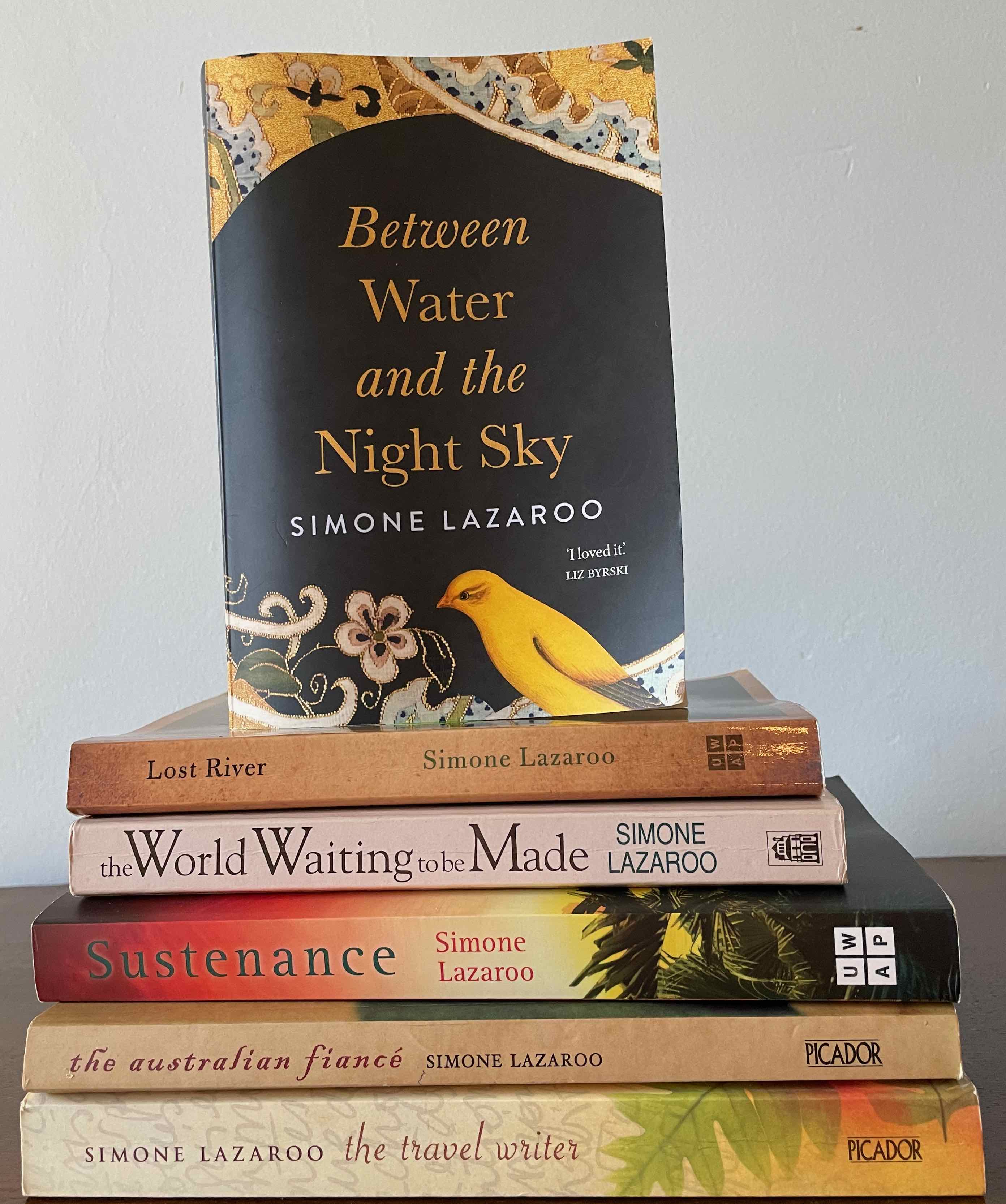
The Julia Lawrinson section of my bookcase is huge!

In 1907, the mining town of Bonnie Vale experiences a sudden deluge of rain that floods a gold mine while miners are still at work down the shaft.

Joe’s dad is one of them. And it soon becomes clear that he’s the only one who hasn’t made it back out yet. Where is he? Why didn’t he escape with the others? And more importantly, how will they rescue him?

Inspired by the true story of the trapped miner of Bonnie Vale and told in verse, Julia Lawrinson weaves a tale that will beckon readers down into the gold mine with Joe’s dad to find out how the rescue unfolded.

AC: Julia, we’ve both wandered through the rooms at the wonderful Exhibition Museum at Coolgardie. Was it there that you first heard about the incredible rescue that is at the heart of this new novel? I seem to remember that the museum has one room dedicated to the story.

JL: Yes, it was—I had absolutely no idea of it, and once I’d gone through the story, panel by panel, I couldn’t believe that it wasn’t better known outside the goldfields. At the end of the story, you turn on a light, and there is a life-size reconstruction of the rise, complete with Varischetti in it, which was completely arresting.

AC: Bonnie Vale, where the novel is set, was a mining town about 15 kilometres north of Coolgardie. I say was because it appears on the map today as just the name of a mine site. What was the town like in 1907, when your novel is set?

JL: In the goldfields of 1907, the gold rush was on the wane but was still attracting prospectors from all over the world. Bonnie Vale was gazetted in 1897, and had twelve streets and about as many mining operations, of which the Westralia mine was the biggest. It had about 1,000 official inhabitants, but hundreds more—like Modesto ‘Charlie’ Varischetti—lived in tents, shanties made of flat tin cans and brush shelters. There was a state school with either one or two teachers, a hotel built of iron, a post office, and all the trades you could want in 1907: blacksmiths, carpenters, butchers, a baker, a tinsmith and a plumber. There was Australian Rules football, foot racing and weekend cricket, including a women’s team, and an 11 kilometre cycling track. A Catholic priest visited from Coolgardie once a month.

AC: As someone fascinated by the ghost towns of the Eastern Goldfields, I’m wondering whether you were able to visit the site during your research and, if so, whether there is any remaining physical evidence of the township that once existed there?

JL: I really wanted to go. I applied for two grants but didn’t get them, so had to rely on photographs and descriptions. I had been to Kalgoorlie and Boulder many times, and Coolgardie twice, so I tried to extrapolate a bit. Apparently there is nothing there now, but I would have liked to have stood on the ground and felt it.

AC: Trapped! is told through the eyes of Joe, the eldest son of the trapped miner, Modesto Varischetti. Was there a real Joe?

JL: There was a Joe (Giovanni, not Guiseppe), but he was Modesto’s brother, not his son. Varischetti did have a twelve-year-old at the time he was trapped, but she was a girl, and in Italy with her four younger siblings. The story needed the point of view of a young person involved and invested in the rescue, and so Joe was created.

AC: I’m interested in your decision to write the story in the form of a verse novel, which is, I think, a first for you. Could you talk, please, about why you chose this form and the technical challenges and opportunities it presented?

JL: Initially I wrote the novel alternating between Joe’s point of view and third person. I ended up getting bogged in detail and research—about everything from the mine to the living conditions to the school routine and children’s games. In despair over this unwieldy manuscript, I decided to try and cut it down to the absolute nuts and bolts of the story. Before I knew it, I had a few experimental pages of verse. I sent it to Cate Sutherland at Fremantle Press, and she loved it, so I kept going. I was focusing on what it sounded like, reading it.

AC: The novel’s intended readership is middle readers, defined as age eight and over (although I think it could be read and enjoyed by anyone). Does the verse novel genre have specific appeal for this age group?

JL: I hope so! Kids can sometimes be overwhelmed by blocks of text, especially in this digital age, and I think poetry as a format is much friendlier.

AC: Apart from being a thrilling narrative of a near-impossible rescue, Trapped! is also a very skilfully told story about social divisions: the Italians and the ‘Britishers’, the working men and the bosses. Some people might be surprised to learn that Italian immigration to Western Australia began this early. What were the circumstances that led to the migration of Italians to the other side of the world in these early years of the twentieth century, and what attitudes did they find here?

JL: The agricultural poverty of northern Italy led many Italians to move from working in lead or zinc mining in that area in the late 1800s to the goldfields for work, mostly with the aim of sending money home to their families. But the attitude they found from the labouring ‘Britishers’, or Australians of British descent, was often harsh. One woman who grew up in Bonnie Vale from 1899 and lived there until 1911 said the mines chose to employ the Italians as ‘cheap labour’. She remembered some Italians walking seven miles from the train line to the Westralia mine, but were chased off: her mother, who ran the hotel, hid them wherever she could, in the pantry and under the bed, and told the men chasing them to take it up with the mine managers, not the poor Italians.*

There were Royal Commissions in 1902 and 1904 into foreign contract workers, focusing mostly on Italians. Even though the commissions concluded there was no undercutting of wages, the tension remained. In 1934 there was a riot in Kalgoorlie, aimed at ‘Dingbat Flat’, which housed Italians, Slavs and other southern Europeans.

My step-Nonna came to Western Australia as a child in the 1930s, and for all her days she remembered the terrible treatment she got from the other children, who made fun of her accent and the food she ate. Her stories were the basis of Joe’s treatment in the novel.

I think readers now will be surprised at how acrimonious the relationship was between Italians and Anglo Australians. To me it shows that divisions—even ones that appear stubborn and intractable—can eventually be overcome in the right circumstances.

AC: Given the dramatic nature of the Bonnie Vale mine collapse and the rescue of Varischetti, one might imagine it would be a story known to most Western Australians. It certainly held the attention of the state, the country and even the world while it was happening. But are you finding this is the case?

JL: No, the story is remarkably unknown—hence this book! There is a quote from The West Australian from 29 March 1907 which says: ‘Our educational authorities would do well to find a place in the school reading books for so inspiring a story from real life.’ It’s taken more than a century, but I hope Trapped! is it!

*The woman was interviewed by Tom Austen for his book The Entombed Miner (St George Books, 1986).

Trapped! is published by Fremantle Press
Follow Julia on Substack; contact her via her website or Fremantle Press

Leave a comment

Filed under New books, Talking (new) fiction

Talking (new) fiction: Emily Paull’s The Distance Between Dreams

I love history, and Western Australian history is a particular interest of mine, so I’m delighted to be featuring today a new historical novel that is set in Western Australia and focuses on major world events of the mid-twentieth century.

The Distance Between Dreams (Fremantle Press) is Emily Paull’s first novel, following her short story collection Well-Behaved Women (Margaret River Press, 2019). It was shortlisted for the 2023 Fogarty Literary Award, awarded biennially to a Western Australian author between 18 and 35 for an unpublished work of adult fiction. (*The Fogarty Award is currently open; the deadline for entries is 18 April 2025.)

Emily, a Western Australian writer and librarian, has also been shortlisted for the John Marsden & Hachette Australia Prize for Young Writers and the Stuart and Hadow Award. She is well known in the Perth writing community as an interviewer and reviewer, and her book reviews have been published in The AU Review and Westerly.

Sarah Willis longs to free herself from the expectations of a privileged upbringing, while Winston Keller can’t afford the luxury of a dream. Despite their differences, the pair are drawn together in a whirlwind romance that defies the boundaries of class.

But when a dark family secret pulls the young lovers apart, and the Second World War plunges the world into chaos, it seems impossible that they will ever find their way back to each other—or even hold onto the dream of what might have been.

AC: Emily, I know that The Distance Between Dreams has had a very long gestation. How different is the novel we read today from the one you envisaged when you began?

EP: When I first started writing this book, I was 17 years old. I was studying for my final year of school before university, and one of my favourite subjects was history. I’d also just been on a trip to Japan—all of these things influenced elements of this book.

Initially I remember thinking that it was going to be a mystery of sorts, or a missing persons case set in the 1940s. In the original planning for the book, Winston was going to be trying to work out what had happened to Sarah, who he had met, had a whirlwind romance with, and who had then gone missing. But when I started writing, a completely different story came out!

I think the roots of the story as I envisaged it in 2008 are all still there, reflecting on class and family and secrets, but the layers that have been added since, as I have learned more and read more and got feedback from other writers, as well as working with some incredible editors, have added so much. I’m actually very grateful that it took 17 years to get published if this is the end result. It was worth it. (Though ask me again after I have seen some reviews…)

AC: I love that Western Australian history is front and centre in this novel, intersecting with world history and the history of individuals and families. How did you go about bringing to life Fremantle in the prewar and World War II period?

EP: I know a lot of readers have started to feel like war novels, and in particular World War II novels, are a bit overdone, but as someone who grew up in Western Australia, I felt like our history wasn’t really all that present in the novels that were available. We’ve had a couple of wonderful books published since then, and I’ve enjoyed reading how other writers have approached this period, but I really wanted to write a book that was like the ones I loved reading, but was set in a place that I knew.

Fremantle was the second biggest naval port in the world during WWII and the biggest was Pearl Harbour, so after December 1941, West Australians might have been feeling a little anxious, but the influx of American naval personnel who were stationed in Fremantle after March 1942 also meant that there was a lot of excitement. Australian women really only knew American men from what they saw in the movies, so is it any wonder that quite a few of them got swept off their feet—though not all of them would have had a happy ending to their love stories.

Aside from books, my biggest research tool was Trove, the online newspaper archive. This was really useful for looking at the daily papers, and wherever I mentioned a particular time period in my writing, I could go and look at what the characters might have been seeing in the news that day to give me an idea of what daily life might have been like, what they cared about, what their leisure options were, etc. Sometimes a newspaper article even gave me a new direction to explore and this occasionally turned into a scene.

AC: Part IV of the novel, which evokes the horrifying conditions of prisoners of war forced to clear the jungle for construction of the Thai–Burma Railway, must have been a challenge to write. What sources did you use, and (without getting into spoiler territory) how did your research impact on the story and your writing of it?

EP: This section is another reason why I am glad that the book is being published now, in the version that it is in, rather than in an earlier form. I knew that I wanted Winston to go away to war, but I originally had a time jump, where we didn’t get to see where he ended up or what happened to him, and reading it back, that always felt off to me. A very, very intelligent writer I was friends with was the first person to suggest to me that Winston might have ended up as a prisoner of war and encouraged me to do some research into the Thai–Burma railway. I read a lot of history books, but I also read some memoirs and biographies (a few self-published) about people who had been there or who had a similar experience, and the film The Railway Man came out at exactly the right time for me.

Hilariously, I remember when The Narrow Road to the Deep North came out, I was so upset because I thought that writing about this was going to be something that set me apart and then Richard Flanagan had come along and drawn attention to that part of history again so everyone would write about it. I wanted to hate that book, but I didn’t, I loved it so much, and I am excited to watch the TV show that’s out this year.

It was difficult to write, yes, but I also wanted Winston’s experience to be meaningful, rather than just be a whole section of him suffering and being ill-treated and getting sick for the sake of it. So, while there are some things in there (based on what I found in research) that are really awful, there are also moments of friendship and hope.

AC: Could you talk, please, about the decision to make Winston an artist and Sarah an actor? What does creativity bring to the lives of these young characters?

EP: I can’t draw, so making Winston an artist was maybe a bit of wish fulfillment on my part there. I liked the idea that Winston has a very practical attitude to life, but that he feels almost compelled to create things. When things get too much and he needs to unwind, he can lose himself in drawing. He’s tall and strong but he’s also sensitive and artistic, which makes him a target for a group of young men who have been bullying him since his school days—boys who have discovered that money can’t buy talent.

Sarah’s acting was originally a bit of an affectation. She starts off not wanting to be an actress so much as she just wants to be famous and a lot of this is tied to the idea of her being almost starved for love. Her parents’ love is very superficial. But she finds that she’s good at being dramatic and funny and performing for people, and making her friends laugh, so she thinks, why not make it a career. It’s only when she actually starts working with a proper theatre group that she realises acting isn’t what she thought it was and that she truly does love it.

I used to love drama class at high school so I think I gave her a bit of my own love of acting too.

AC: The plot brings the issues of gender and class to the fore. The word feminism existed in those years, but I doubt it would have been treated seriously, let alone respectfully, in Perth and Fremantle. In Sarah, you’ve constructed an interesting character of her time. Was it difficult to strike a balance between the Sarah who is a product of patriarchal dominance and the Sarah who is alive to an incipient feminism?

EP: That’s always the danger, isn’t it, as a modern woman writing women in earlier times? It’s nearly impossible not to give them too much of your own feminism…They might not have used the word often, but during both World Wars, women found themselves taking on new roles and finding capabilities as they had to keep things running on the home front, or as they became nurses or worked in roles in the military. I imagine it was really hard for them to go back to the way things were when men started to return and wanted their jobs back.

Sarah was a tough character to get right in general, because of how brash she can be and because of the way she puts on a persona to get through the world sometimes—deep down, she’s quite lonely at the beginning of the book. Early readers kept telling me that they didn’t understand why Winston liked her so much and I was really perplexed by that, but I think the contradiction you talk about is a big part of it. Sarah knows that the life her father is giving her is a good one and she is supposed to be grateful, but she also knows that there’s a lot wrong with her situation and she feels like she deserves more, she just doesn’t know how to get it. I had to revise her many, many, many times. But I also feel that any woman who has been told to tone it down, or that she’s too much, too loud, too dramatic etc. will relate to Sarah.

AC: Did you know, from the beginning, that class would play such an integral role in your story? I ask because I’ve sometimes heard, or read, the comment that Australia has always been a ‘classless society’, which to my mind could not be further from the truth.

EP: That came up so often in my history classes, the idea of Australia being an egalitarian society, and it’s just not true. You just have to travel from one suburb to another to see it, even in relation to the older houses, the schools, the churches.

Yes, class was always integral to the tension in my book. Sarah’s father, Robert Willis, is from a farming background but he’s very proud of being a self-made man because he sold the farm and used it to start a business manufacturing and distributing cigarettes. I think part of the reason why Robert is so against the idea of Winston and Sarah being involved is that he sees her association with Winston as a kind of backslide to working-class status, and he thinks of that as shameful.

The difference in their classes also means that Sarah is able to imagine a lot of different possibilities for her future and have an idealised dream life in her head because money makes things more possible, whereas Winston has never even considered doing anything other than working in a factory and doing what he needs to do to make ends meet. It’s only when they meet and see the world through each other’s eyes that things begin to change for them.

AC: I always ask writers about the title of their work because I have had varying experiences with titles myself—ranging from ‘always was’ to ‘the book has to go the printer next week and still doesn’t have a title’! Where do you sit on that continuum with this book?

EP: I am not very good at titles! Originally the book was called The Compound because that is the name of the album that inspired it. Then after a few years I realised that didn’t really tell people much about the book and I workshopped all sorts of different ideas, coming up with Between the Sleepers. The idea of that was that sleepers meant railway sleepers but also the image of people sleeping, dreaming, and referenced Sarah’s feelings that Fremantle sometimes felt like a sleepy little town away from everything exciting. I still really love that title even though so many people have told me they don’t understand it!

When I entered this book in the Fogarty Literary Award in 2023, I knew that it had already been rejected by Fremantle Press I *think* twice by that point, and to give it the best shot I could, I needed to come up with a new title. Finally, I decided to go with The Dreamers.
The team at Fremantle Press came up with The Distance Between Dreams, and I liked the way they had elements of the two previous titles in there, but it did take me a while to warm up to it! Now that I’ve seen it printed on that beautiful cover, however, I can’t imagine it called anything else.
The Distance Between Dreams is published by Fremantle Press
Follow Emily on Facebook, Instagram, Substack and her website

Photo credit: author photograph by Jess Gately

Leave a comment

Filed under New books, Talking (new) fiction

Talking (new) fiction: Katrina Kell’s Chloé

I love creative projects that cross artforms in some way. My own writing has drawn on sculpture, art and dance, and I have been privileged and truly thrilled to have some of my works inspire paintings, a visual arts installation and, most recently, a concert by a symphony orchestra. So I was immediately drawn to Chloé, a newly released novel by Western Australian author Katrina Kell.

Chloé was inspired by the famous painting of the same name that hangs in the main bar of the Melbourne hotel Young and Jackson. It is a once-seen-never-forgotten work by French artist Jules Lefebvre—a large, lush nude that speaks of another time, a distant world. Given the iconic place it has come to have in Melbourne’s history (I’ll let Katrina tell you about that), my only surprise is that it’s taken so long for a writer to take it on.

I think Katrina has done Chloé proud.

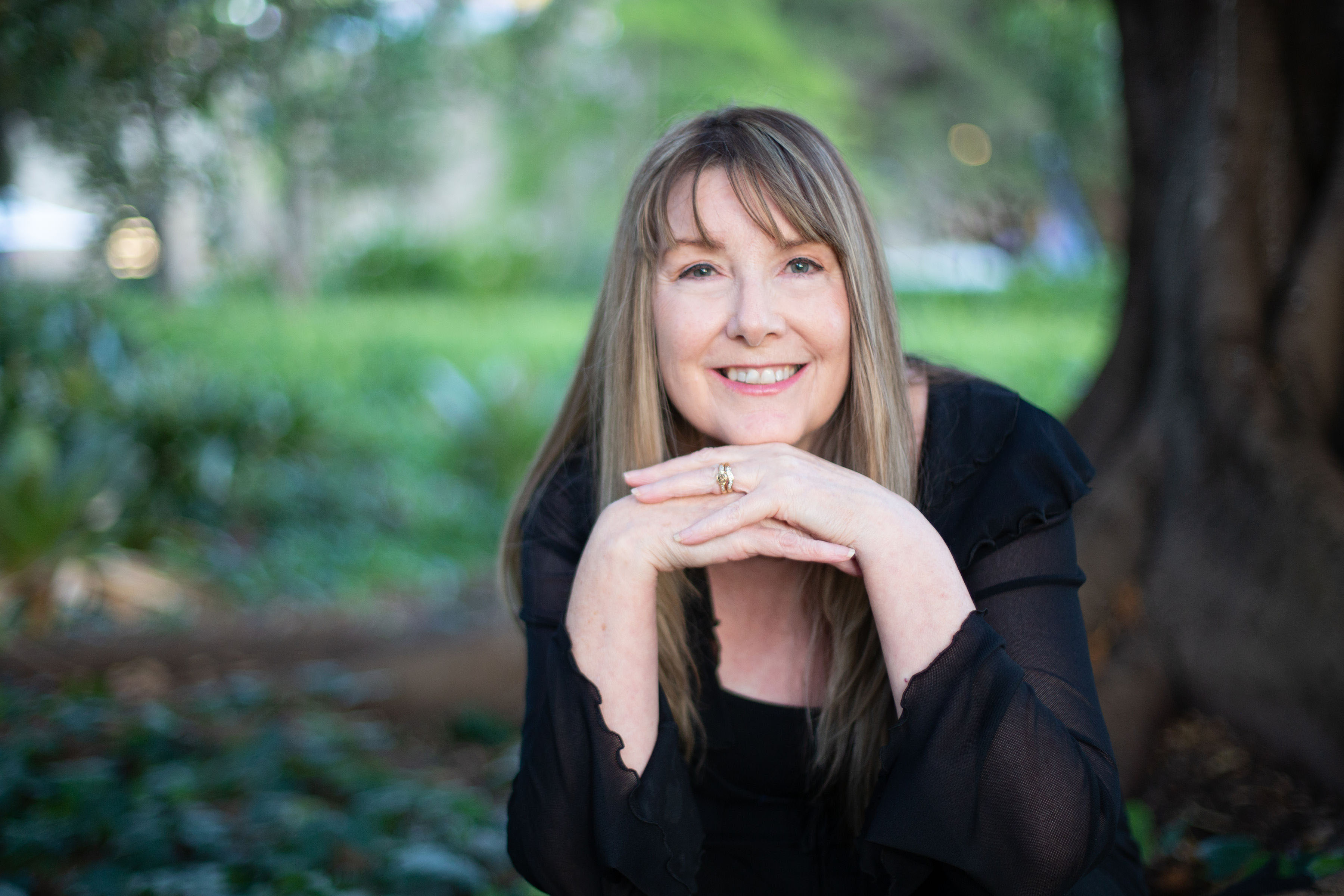
Katrina is also the author of two YA novels, as well as short fiction, poetry and essays, and the unpublished manuscript of Chloé won an Australian Society of Authors Award Mentorship. She lives and works in Boorloo (Perth) and is an Honorary Research Associate at Murdoch University.

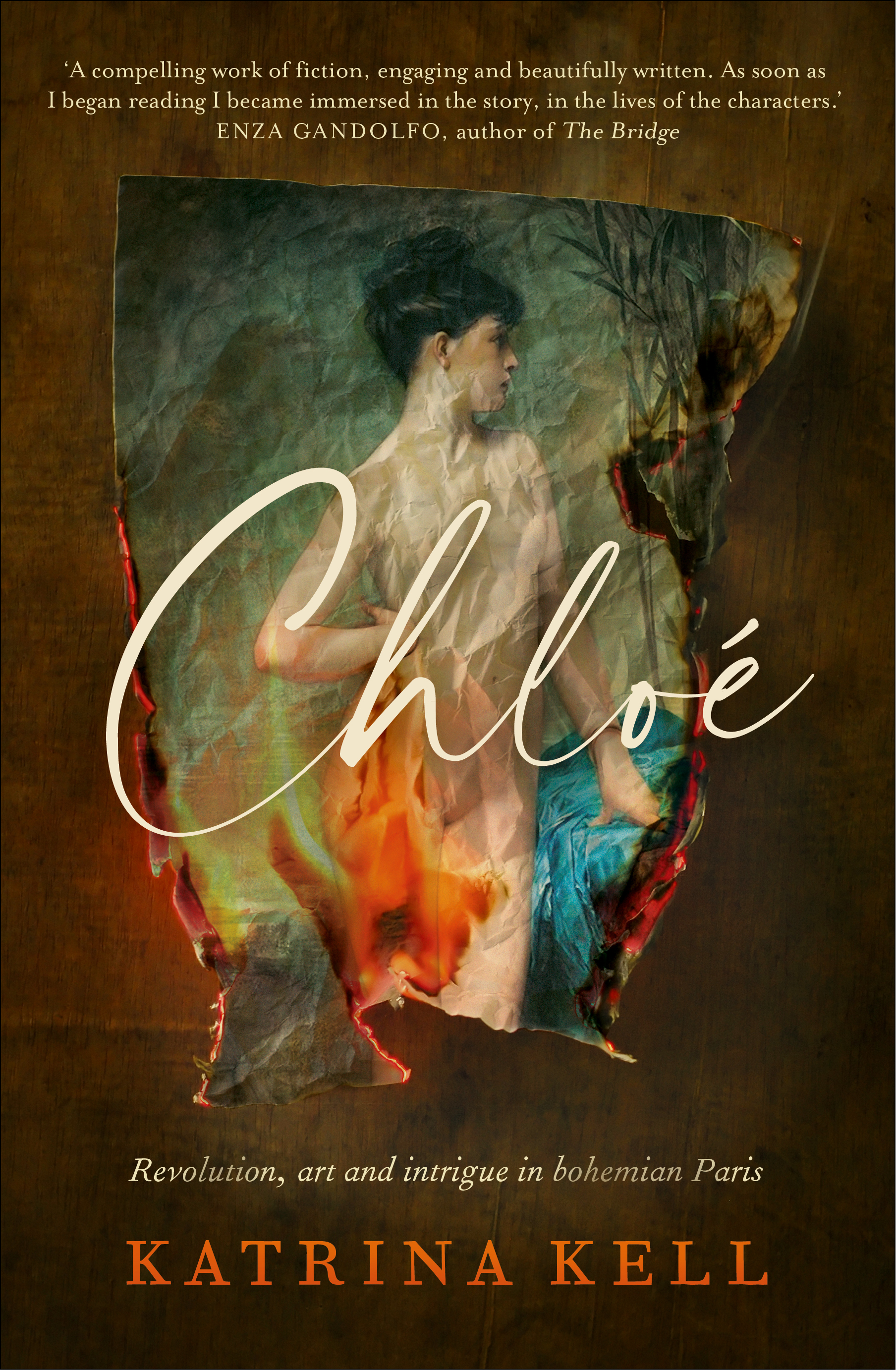
Look at this gorgeous cover!

A riveting novel based on the true story of the brave, enigmatic young woman who modelled for one of Australia’s most famous paintings.

Taking the reader from Victoria’s wild shipwreck coast to the artists’ studios of revolutionary Paris and the bloody battlefields of Flanders, this sweeping novel reimagines the volatile history of the beautiful and enigmatic young woman immortalised in one of Australia’s most iconic paintings. Created in Paris in 1875, Chloé, Jules Lefebvre’s depiction of a naked water nymph, was brought to Melbourne’s Young & Jackson Hotel in 1909, where it has hung ever since.

In this passionate, luminous retelling, Katrina Kell seeks to unlock the riddle behind the girl on the canvas, known to history only as Marie. In doing so, she weaves the compelling story of an incandescent spirit—a woman with the strength to defy the boundaries of class and convention in order to survive, and an enduring power to influence the lives of others across time and distance.

France in an Aussie pub

AC: Katrina, in order to imagine the creation of a painting and the lives of its artist and model, it’s necessary to spend a long time minutely studying its composition, its brushstrokes, its light and shadow, the background, the tone of the model’s skin, the lift of her shoulder, the expression on her half-turned face. Did you have the opportunity to do that in person at the outset of your project, or sometime after you’d been researching the painting, and the story, at a distance? I’m wondering what it felt like for you, seeing the painting for the first time.

KK: I saw Chloé at Young and Jackson Hotel in Melbourne early in my research journey. The nude figure depicted in the artwork appears almost life-size. Her gilt-framed image dominates, some might say rules, the public bar she is displayed in. I was immediately struck by the intensity of the Parisian model’s expression. Her glowing corporeality was palpable, but it was her face, her sombre countenance, that drew me into the picture. There was such sadness in her gaze, overlain by an edge of defiance. She was far more complex and intense than the titular naiad Lefebvre claims he painted.

Separating fact from fiction

AC: I imagine your first imperative as a researcher was to explore the lives of the model Marie Peregrine and the artist Jules Lefebvre. I’m sure the latter was easier than the former! Was there anything at all to find concerning Marie? Were there clues, other than those to be found in the very significant visual image in Chloé, that gave you a way into her character?

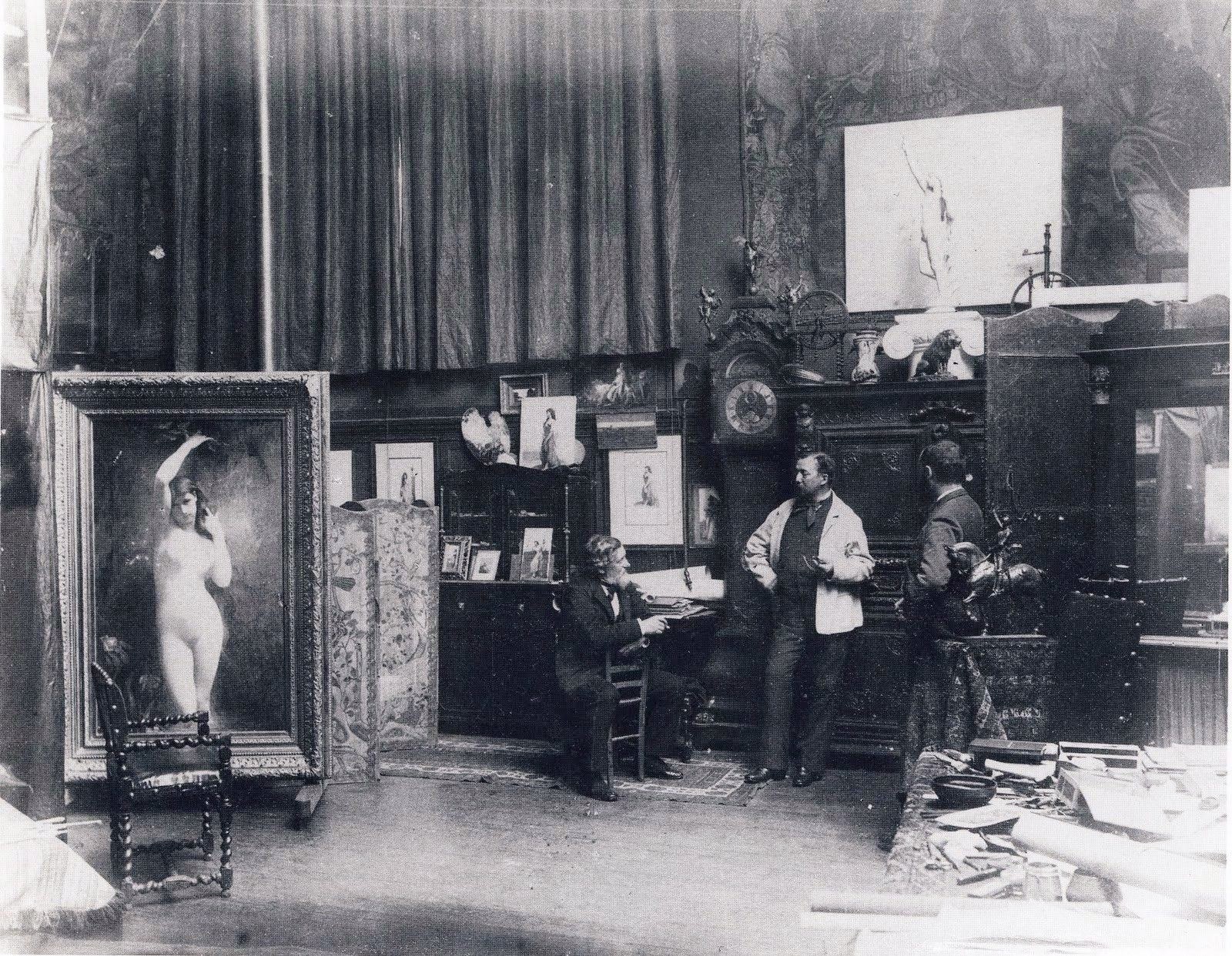
KK: Researching Lefebvre’s artistic career was certainly easier, but learning about his character proved much more challenging. Reliable material was only available in French. Initially, I was helped by a friend, a professional translator, until I grew confident in my translations. In Paris, I researched in several French institutions and gained access to the space where Lefebvre painted Chloé. It was a poignant experience, climbing the marble spiral staircase to his former atelier, and feeling the ambiance in the chamber where Marie had once posed for the artist.

There were a few sketchy clues about Marie, and the challenge was to separate fact from fiction. Chloé has been a beloved cultural icon for over a century. Myths about Marie and Jules Lefebvre are deeply entrenched and often reductive, so I needed to mine the few nuggets of truth to get to the heart of Marie’s story.

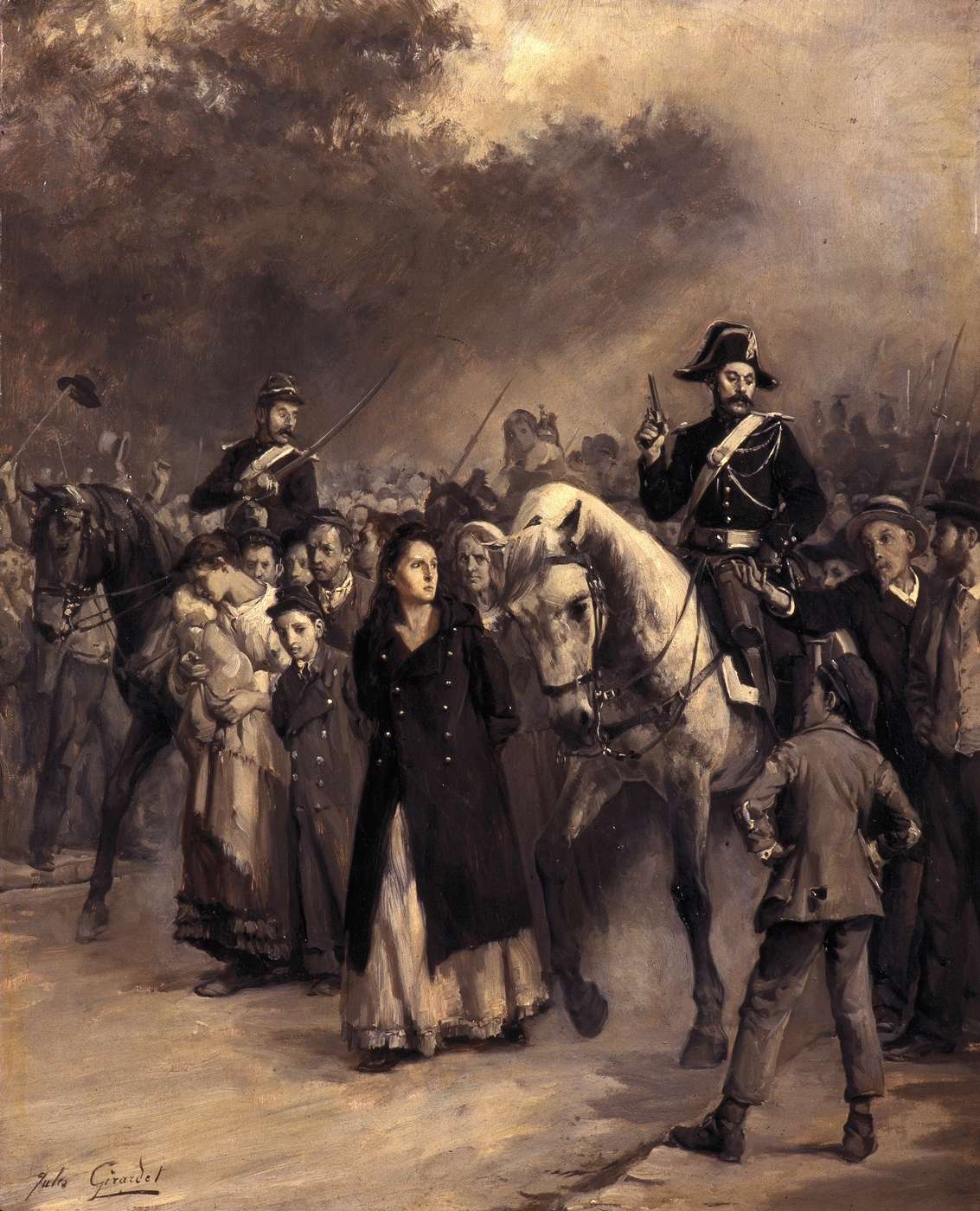
The Anglo-Irish writer George Moore (1852–1933) wrote about a girl named Marie in his memoir Confessions of a Young Man (1888). Moore claimed she was the model for ‘Lefebvre’s Chloé. In his auto-fictional short story ‘The End of Marie Pellegrin’, he wrote again of the Parisian girl I suspect was Chloé’s model. Moore’s accounts of Marie’s turbulent life closely mirror details shared by Lefebvre during a conversation he had with the American journalist Lucy Hamilton Hooper (1835–1893). It was a spine-tingling moment when I read Hooper’s interview in her ‘Paris Letters’ column in the Appletons’ Journal. I was aware of the oppression and threats to proletarian women following the violent crushing of the revolutionary Paris Commune, and it was becoming clear that Marie’s lived experience would have been fraught with trauma and danger.

‘Having a drink with Chloé

AC: A second story is woven through the novel—set in Australia, during the First World War. First, could you tell us about the significance of the painting Chloé to Australian soldiers at that time?

KK: ‘Having a drink with Chloé’ has been a ‘good luck’ ritual for Australian soldiers since the First World War. When Chloé was hung in Young and Jackson’s in 1909, the pub, opposite Flinders Street Railway Station, quickly became a drawcard. During this era, many young men would rarely have seen an unclothed woman. Chloé may have been their first and only chance of viewing a naked female body. Some even wrote love letters to the famous painting, and Chloé’s ‘good luck’ symbolism continued over many decades and military conflicts. As West Australian traveller Peter Graeme wrote, of a soldier he saw downing beers in front of the painting in honour of his fallen mates, Chloé may have been ‘the symbol of the feminine side of his life. That part which he puts away from him, except in his inarticulate dreams’ (see my article in The Conversation).

Ancestral links

AC: And the twin brothers, Rory and Paddy, who enlist in the war: how did their story evolve?

KK: My family heritage is from south-western Victoria, so setting this story thread there felt intuitive. My great-great-great-grandfather was captain of the Thistle, the shipwrecked schooner that lies offshore at Port Fairy beach in Eastern Maar Country. The character Abby, Rory and Paddy’s mother, pays homage to my Irish convict ancestor, Abby Desmond, a young woman who arrived in chains but managed to prevail and raise a family here. It was a joy to spend time researching and establishing settings in and around Port Fairy, and the boys’ story evolved quite naturally. It was also easy to imagine how challenging life would have been for a woman like Abby in this beautiful, rugged region.

Castor and Pollux

AC: There are several links—some surprising—between the French and Australian stories. I especially liked the use of the mythological figures Castor and Pollux, and I’m wondering whether the Paris zoo elephants named after those figures might have inspired that link.

KK: My mother, Zant, is an identical twin, and her star sign is Gemini. Her Irish father, who loved astronomy, shared the story of Castor and Pollux with his twin daughters. Mum shared her father’s stories with us. She loved to point to Orion’s Belt in the night sky and show us the twin stars that meant so much to her. So it felt natural that Rory and Paddy’s father, an ocean fisherman, would share the story of Castor and Pollux, the twin gods who rescued shipwrecked sailors. When I learned of the tragic fate of the Paris Zoo elephants, I was moved by how their story seemed to resonate with the wartime experiences of Rory and Paddy. It was a link between France and Australia that emerged serendipitously.

Researching a paradoxical world

AC: I was distraught on reading the fate of the elephants—so emblematic of Paris’s inequities: obscene excess at a time of desperate hunger. Which is a roundabout way of leading in to a question about the turbulent, paradoxical world Marie and her mother Noemi lived in: on the one hand, war, revolution, starvation, persecution; on the other, the flourishing of French culture. It’s a daunting historical canvas. How did you go about your research?

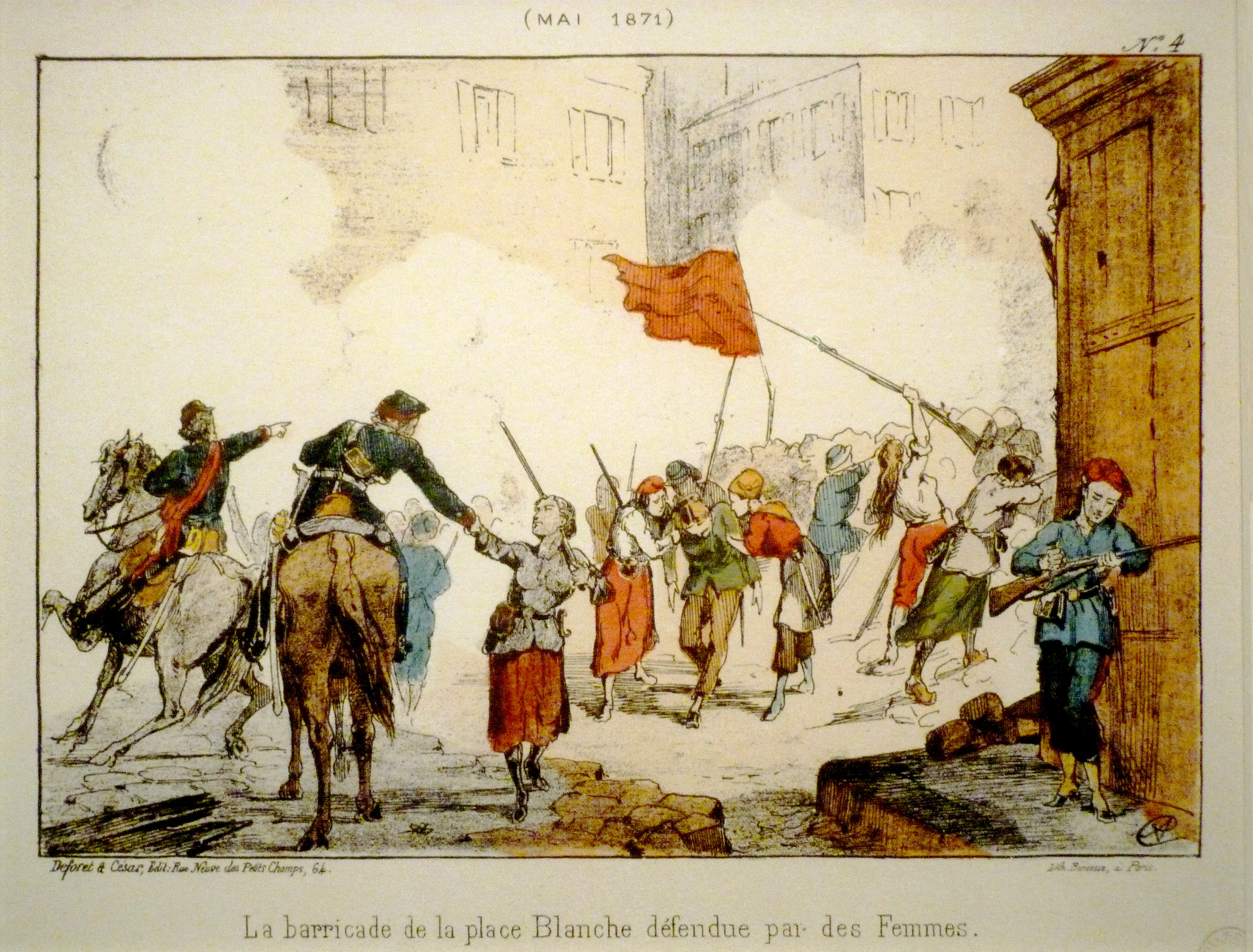
KK: It certainly was a paradoxical world and quite the minefield to research. I read numerous accounts of the Franco-Prussian War and the oppression of the Paris Commune and how the rise of Impressionist art cast a veil of light and colour over a chapter of violence and darkness. Louise Michell, the revolutionary leader, was a rich source of inspiration. Her first-hand accounts of the Siege of Paris and the crushing of the Commune richly informed the novel. I discovered other first-hand accounts written by Parisians at the time and a collection of illuminating letters between Amantine Lucile Aurore Dupin (George Sand) and Gustave Flaubert during the final days of the Commune. Lucy Hooper, an American journalist based in Paris, wrote regular columns on art, culture, and the day-to-day life of Paris in the 1870s. I also read the work of art historians Hollis Clayson, Gabriel P. Weisberg and Jane R. Becker, as well as George Moore’s memoirs of his life as a young art student at the Académie Julian in Paris.

Being there

AC: I know you had the opportunity, during your extensive research, to visit Paris and other places inhabited by your characters. Can you tell us about the experience of ‘being there’ and whether it had an effect on the development of the novel?

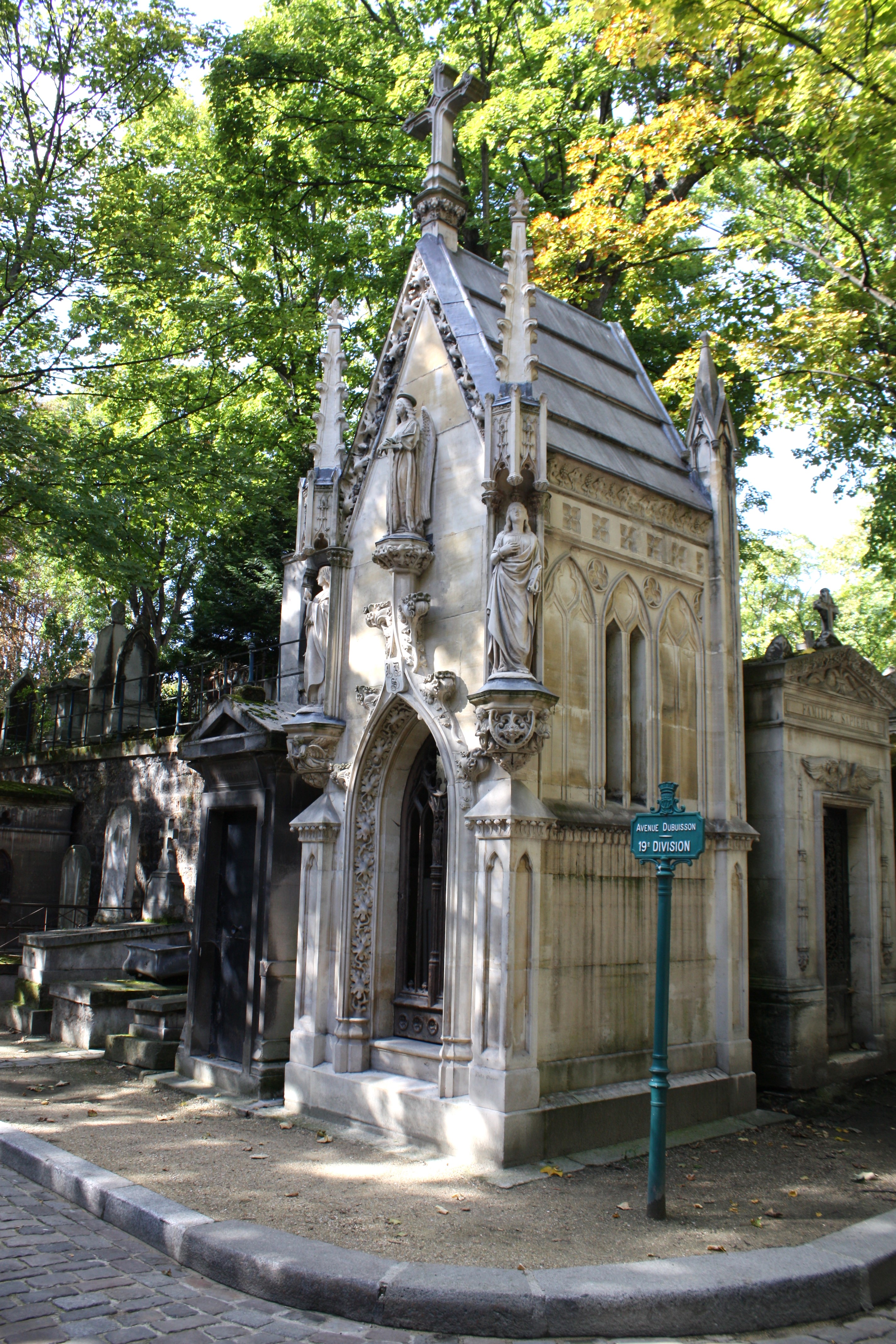
KK: Yes, the experience of ‘being there’ was such a privilege. Walking on the same cobbled streets Marie would have walked on during her lifetime and standing in the space where Chloe was painted. Soaking up the vibrant atmosphere of the Passage de Panoramas, the glorious glass-roofed arcade where the Académie Julian was located. One of the most pivotal and inspiring moments was exploring the paths and sepulchres at Montmartre cemetery. The black charring on tombstones evoked the fighting that once took place there, and I was awestruck by the voluminous mausoleums, the realisation that a fugitive could easily have made a home in one. Visiting the Somme region was equally important, especially experiencing, albeit vicariously, the terrible claustrophobia and the sounds and sights of First World War trench warfare at the Musée Somme 1916 in Albert. And, of course, seeing Chloé in all her glory at Young and Jackson’s was an extraordinary moment.

Recuperating the past

AC: Katrina, this is your first novel for adult readers, and your first foray into historical fiction. Do you see yourself continuing to pursue stories of the past?

KK: Yes, I do, absolutely. I am passionate about recuperating women’s stories, especially stories of creative women who have been ignored in the annals of history. It’s exciting to be researching and laying down the bones of my next novel. This story will explore another fascinating and surprising link between Australian and French art history.

Chloé is published by Echo Publishing
Follow Katrina on Facebook or visit her website

Photo credits: author photo J.J. Gately Photography; Katrina and Chloé photo Dave Kell; Jules Joseph Lefebvre photo public domain; Jules Lefebvre in his studio (1882) photo by Émile Bénard, public domain; Barricade de la place Blanche, défendue par des femmes pendant la semaine sanglante (Barricade at place Blanche, defended by women during the bloody week), lithographie, Musée Carnavalet, public domain; soldiers climbing onto the roof of Young and Jackson Hotel, World War 2, photo Robert Bruce Irving, Australian War Memorial Collection AWM065557, public domain; Arrest of Louise Michel in May 1871, Musée d’Art et Histoire du Saint-Denis, public domain; Montmartre Cemetery sepulchre photo by author

5 Comments

Filed under Favourite books, Talking (new) fiction

Talking (new) fiction: Angela O’Keeffe’s The Sitter

I was blown away by Angela O’Keeffe’s Night Blue when I read it last year, and not at all surprised when it went on to be shortlisted for the 2022 Prime Minister’s Literary Award for Fiction.

Angela and I met at Varuna last July, where I was working on my current novel and, in the next room, she was finishing the manuscript of her second novel.

And that manuscript has just been published. I loved The Sitter as much as I did Night Blue and was thrilled when Angela agreed to take part in this interview series.

Angela O’Keeffe grew up with nine siblings on a farm in the Lockyer Valley, Queensland. She completed a Master of Arts in Writing at UTS, and her first novel, Night Blue, was shortlisted for the UTS Glenda Adams Award for New Writing, as well as the Prime Minister’s Award. She was the recipient of the 2023 Varuna Eleanor Dark Fellowship, and the 2023 UQP Quentin Bryce Award for The Sitter.

Paris, 2020. A writer is confined to her hotel room during the early days of the pandemic, struggling to finish a novel about Hortense Cezanne, wife and sometime muse of the famous painter. Dead for more than a century, Hortense has been reawakened by this creative endeavour, and now shadows the writer through the locked-down city. But Hortense, always subject to the gaze of others, is increasingly intrigued by the woman before her. Who is she and what event hides in her past?

Heartbreaking and perfectly formed, The Sitter explores the tension between artist and subject, and between the stories told about us and the stories we choose to tell.

AC: Angela, this is your second novel and the second involving art. Where does this fascination for art come from? Are you an artist yourself? An art historian?

AO: I am neither! But I am asked this a lot. The attraction had to do with the artworks, of course, but also, and perhaps more so, at least initially, it came from the stories that surrounded them. So it was narrative that drew me in. Blue Poles was hated by so many Australians. Why? Hortense Cezanne looks so unhappy in the portraits, and she was disliked by Cezanne’s family and friends. How did she feel about that? But the stories never felt to me to be separated from the artworks. As I wrote, the artworks were an insistent presence.

AC: In the present of the narrative, there are only two characters, both of them compelling even though one of them is dead. A writer—at first unnamed—is in a hotel room in Paris, where she is writing a novel about Hortense Cezanne (1850–1922), the wife of French artist Paul Cezanne (1839–1906). Hortense is the other character—ghost, spirit, presence, shadow, figment of the writer’s writerly consciousness? She seems, during the course of the novel, to inhabit some of these nuances, or an indescribable other. I have two questions concerning Hortense. First, could you please talk about the creation of this unique character—what it was that drew you to this woman from history, and your decision to have her enter a contemporary story.

AO: I knew I wanted to write about Hortense when I saw some of the portraits in Paris in 2017. As already mentioned, it was the story surrounding her that drew me in. She was from a working-class family. Cezanne hid her and their son away from his family for many years out of fear of losing his stipend (on which all three survived) from his banker father. Their friends found her shallow. She sat for 29 portraits, and he was a painstakingly slow painter. In the portraits she looks dejected. I knew I wanted to write from her point of view, to explore how she might have seen all this. Bringing her into the present was an attempt to trace, or make visible, the invisibility of art travelling and speaking through time, how art latches onto the present and becomes something it wasn’t before. So I put Hortense and a contemporary writer in a room together in Paris. Could I conjure a situation in which their individual stories might somehow collide? And what might come of such a collision, what new thing might be born? These are the kinds of questions I was asking as I worked. I couldn’t articulate them then as I can now. But on some level I was aware of them through feelings of curiosity and fascination.

AC: And my second question about Hortense: I imagine there were many writerly challenges in bringing Hortense to the page so convincingly. I am thinking, for example, of the issue of corporeality and how she manifests her presence in the contemporary character’s world; and also the question of desire—the needs and wants of the departed. Could you please talk about the challenges you faced and how you handled them?

AO: I have this memory of Hortense being really present from the start, that she was such a strong force that she landed quite easily on the page and I didn’t have to think about it. However, that can’t be true, because I also know that I wrote a full draft of the manuscript that I then discarded. Hortense was somehow wrong, or false in it, and I couldn’t use any of it. Then the pandemic came, and it shifted the book’s orientation, and suddenly Hortense came alive. She was just so present, and all I had to do was sort of feel my way along with her. I realised that she was not going to refute the terrible things that had been said about her. She would not defend herself. Instead, she would inhabit those things, and I would see what came of it. I remember feeling huge excitement at this.

AC: I love the way Hortense, in life always the observed (the model for 29 paintings by Cezanne), becomes the observer in death. Was it your intention to give agency to this woman who appears to have had so little?

AO: Yes, that was one of my intentions, for sure. But I realised quite quickly that I couldn’t—and didn’t want to—make her whole. There are blanks in the canvases and blanks in her history, and I came to see that it was more interesting—for me, for the book—to honour those blanks, to see what an ‘unwhole’ character might do in this situation. The writer, too, is ‘unwhole’ in the story about her own past.

AC: You have devised a graceful way of telling the stories of the two women. The point of view is essentially Hortense’s—as both observer of the writer’s present and the teller of her own memories—but the writer’s point of view is also given voice when, in Part II, a new narrative is introduced, in the form of a letter from the writer to her daughter. Given that the two women are brought together by the writer’s narrative intention to write Hortense’s story, I wondered whether you were ever tempted to include also that developing narrative (aside from the one brief passage in Part I).

AO: Yes, I considered that. In the first attempt I mentioned earlier, there were some of those passages from the book. But there was something off about it. I can’t say what, really. It just didn’t work. And so when I came to write it again, that book is talked about rather than shown. It’s one more thing that is hidden in a novel about hidden things.

AC: The narrative in the present is set in a significant time, March 2020: one year on from the Notre Dame fire in Paris, just after the catastrophic bushfire season in Australia, and the first month of a global pandemic that changed the lives of us all. All of these events are woven into the novel, and Covid plays a major part, in ways I can’t raise because they involve spoilers. But may I ask at what stage of the writing you were in March 2020? That is, did you set the novel then because of what happened and the opportunities it presented, or did you have to rethink a novel already in progress?

AO: As mentioned, I was at the stage where I was starting from scratch again. I had the two characters in a hotel room in Paris. I wanted them to be there for a while, but I couldn’t find a good reason. Was it jet lag? Probably not. And then the pandemic came and not only did I have the reason but the characters, both of them, came alive in new ways. It was such a wonderful thing to discover in that uncertain and terrible time.

AC: Did you write some or all of the novel in Paris?

AO: I couldn’t get to Paris because of the closed border. I had been there a couple of times, and I decided that that would be enough. It added to the sense of urgency, in a way. It was a sort of mirroring of the writer’s difficulty in returning home.

The Sitter is published by University of Queensland Press
Follow Angela on X/Twitter, Instagram, Threads (@angelaokeeffewriter)
There are many online reviews; this one by Lisa (ANZLitLovers)

8 Comments

Filed under Favourite books, New books, Talking (new) fiction

Talking (new) fiction: Robyn Cadwallader’s The Fire and the Rose

I’ve been a great admirer of Robyn Cadwallader’s writing ever since her bestselling first novel, The Anchoress, was published in 2015. The Anchoress tells the story of a seventeen-year-old girl who chooses to renounce the world and become enclosed as a holy woman of prayer (my review here). Robyn’s second novel, Book of Colours, paints a vibrant, compelling portrait of medieval life and the lives behind the illuminated manuscript pages of that time (Robyn talks about Book of Colours here). Both novels were award winners and gained a huge following in Australia and beyond.

Robyn is a novelist and poet who lives in the country on Ngunnawal land outside Canberra. Prior to working as a researcher, academic and writer, she describes an eclectic early career: ’as a teenager, in retail, selling jewellery, women’s underwear and records (when they were popular the first time round); as a petrol station driveway attendant; and, during uni break, in the Kiwi factory, filling and packaging shoe polish, bleach and fragrant toilet blocks’. Sounds to me like a solid background for studying human life!

Robyn’s new novel, The Fire and the Rose, has been described as ’a heartbreakingly timeless tale, richly imagined and wondrously alive’ (Nigel Featherstone) and ’a beautifully written, thought-provoking exploration of prejudice towards minorities‘ (Canberra Times). I was thrilled to have the opportunity to ask her about it…

England, 1276: Forced to leave her home village, Eleanor moves to Lincoln to work as a housemaid. She’s prickly, independent and stubborn, her prospects blighted by a port-wine birthmark across her face. Unusually for a woman, she has fine skills with ink and quill, and harbours a secret ambition to work as a scribe, a profession closed to women.

Eleanor discovers that Lincoln is a dangerous place, divided by religious prejudice, the Jews frequently the focus of violence and forced to wear a yellow badge. Eleanor falls in love with Asher, a Jewish spicer, who shares her love of books and words, but their relationship is forbidden by law. When Eleanor is pulled into the dark depths of the church’s machinations against Jews and the king issues an edict expelling all Jews from England, Eleanor and Asher are faced with an impossible choice.

Vivid, rich, deep and sensual, The Fire and the Rose is a tender and moving novel about how language, words and books have the power to change and shape lives. Most powerfully, it is also a novel about what it is to be made ‘other’, to be exiled from home and family. But it is also a call to recognise how much we need the other, the one we do not understand, making it a strikingly resonant and powerfully hopeful novel for our times.

AC: Robyn, where did The Fire and the Rose come from? What was the moment when you felt: This is a story I have to explore in fiction?

RC: While I was doing research for Book of Colours I came across a reference to the Jews being expelled from England in 1290. I read the sentence again; I was horrified. I’d never heard of this expulsion, so I read a little more. How could a group of people who were part of the fabric of a country be so summarily expelled? That question stayed with me, even when I dismissed the idea of writing a novel about it because it seemed too hard. Each of the three novels I’ve written has begun with an insistent question.

AC: You are well known for your re-creation of vivid, authentic worlds from a distant past—far more distant than I have ever attempted with my historical fiction. Has your background as a medieval scholar given you that strong sense of time and place, or do you use research methods that would be familiar to any writer of historical fiction?

RC: Both, I think. I consider research as a way of educating myself about a time and place, not simply gathering information to add into the story.

As an academic I studied medieval literature, and that necessarily involved understanding the history of the period. But the literature also gives a more intimate sense of the people: what they believed, what made them laugh, what gave their lives meaning, how they spoke about love or pain or desire. I think I soaked that in and became more familiar with people in the Middle Ages as a result.

When I begin a novel in a particular setting or period, I need to do more focused research. I read everything I can about the historical context, of course, but I’m also very interested in the material culture: physical location and topography, housing, food, etc. But I try to go a bit deeper still and ask myself the implications of whatever I learn. This might involve aspects that we take for granted; for example, I read and think about how people engaged with the senses; how they understood art, or beauty; how they understood their place in the world.

AC: While your three novels do not form a series, there are crossovers from The Anchoress to Book of Colours and also to The Fire and the Rose. I think the protagonist of The Fire and the Rose, Eleanor, plays a role in all three, although she is only referred to in Book of Colours. What is it about this character that has had such a pull on your imagination?

RC: Oh, Eleanor was such a curious, clever and determined little girl that she refused to let her story end at The Anchoress; I think she wanted a whole novel of her own!

When I wrote The Anchoress I had no conscious sense of extending Eleanor’s story. In that story the anchoress wants to teach her to write, but because neither of them has access to parchment and ink, she shapes letters in Eleanor’s palm.

Even after the novel was finished, I thought about the implications for Eleanor of such a profound experience, discovering a whole world of words in such a sensual way, through the skin. I wondered how she would manage in a small village where so few people could read or write. Would the village become too limiting for her? Would she become restless? Would those around her resent her skills? Those questions were the seeds of her story in The Fire and the Rose.

AC: There are aspects of the human subject that are commonly considered universal, but people from the past did not necessarily think as we do today, and I imagine the further back in time we go, the more different those world-views would be. Is it a challenge to negotiate such differences when you create a character from the thirteenth century, or do they present an opportunity?

RC: I think the remarkable thing about investigating people from the past is just how similar they are to us, and at the same time, just how different they are. When I write, I try to hold those two ideas together.

Through the process of writing these three novels, I’ve slowly discovered that limitations or differences are a challenge, but often a good one that pushes me to take a story further. Of course, it means more research in order to understand the beliefs and thinking of the time. My primary interest in writing stories set in the Middle Ages is trying to understand how the people then made sense of the world they found themselves in, and I think that’s true of anything I write in a contemporary setting as well.

We do people from the past a great disservice if we simplify their thoughts and motivations and experiences. For example, when I began writing The Anchoress, the challenge was to write meaningfully about a woman who chooses to be enclosed in a stone cell for life, there to pray and read and ‘suffer with Christ’—something I would never do. As I grew to understand Sarah more closely, I recognised that my initial assumption that she was a very committed and holy woman was much too simplistic. Our motivations are never so simple. Once I began to consider Sarah as a full person, I could begin to explore the fears, desires and dreams that led her to choose enclosure.

AC: The brutal treatment of Jews by the English drives The Fire and the Rose, and in your Author’s Note you describe your position as a Gentile writer writing of this painful history as coming to the work ‘with a bowed head’ (after Colum McCann). More than once you have Jewish characters telling Eleanor, a Gentile, that her own experiences of marginalisation do not give her the right to think she understands theirs. Does this impossible gap between empathy and understanding reflect, in some way, the challenge for a novelist trying to write of the other?

RC: This is a very interesting and somewhat tricky area.

Even though Eleanor is, at times, rebuffed by Jewish people, I’m not suggesting that there is an impossible gap between empathy and understanding. I think Eleanor grows into a profound understanding of the situation of the Jews and their struggle, but I was exploring some of the implications of extreme prejudice.

In the novel, the Jews have been attacked again and again, forced to retreat, relying only on one another for support and comfort. The times that Eleanor is rebuffed are most often moments of grief and stress for the Jews, and their rejection of her attempts to understand their suffering is a product of their marginalisation and the attacks. When they are treated as ‘other’, the divisions are enforced, and in the emotion of the moment, Eleanor is on the other side. However, the relationship between Eleanor and Asher demonstrates how love—the commitment to another through hardship and struggle and delight—can overcome such divisions. The deep bond between Eleanor, Hannah and Marchota is another example.

I recognised that the profound impact of prejudice on Jews and their culture could have implications for my writing, and I spent some time debating and investigating whether I should write this novel, or not. I was warned by a First Nations Australian woman that I shouldn’t attempt to write about a group of people if I didn’t have ‘skin in the game’ because if I made mistakes in my portrayal, it is they, not me, who would suffer as a result. However, a Jewish woman commented in response that if I didn’t tell the story, others would never know it. I knew there was a risk of offending others, but I made several strong commitments: to research as deeply as possible, to seek help and opinions from Jews (I had three sensitivity readers, and another three Jewish readers), and to write only from the point of view of a Gentile character; I would not assume to write from the Jewish point of view.

I think that a writer always seeks to get inside the experience of another person, so in theory, it should be possible to write about others who have a very different experience and outlook from the writer. However, I don’t think that means a writer should just assume that they can write anything. There are areas of sensitivity and marginalisation that need to be carefully considered, but I am heartened by the Jewish woman’s encouragement to write the story so that others would learn of it.

AC: The walls of the city of Lincoln are given a voice in the novel. These poetic sections, headed ‘The Walls Speak’, provide a chorus of Lincoln’s history, the physical embodiment of its memory, and a brief, eloquent commentary on the timelessness of persecution. It occurred to me that the personification of the inanimate in this novel and also in Book of Colours (the gargoyle) might spring from the same intense experience I have felt during site research—feeling the past in brick and stone. Could you please talk about this aspect of the novel?

RC: Yes, you’re right. I have always loved stone, with its long, long formation in the depths of the earth, its endurance, and the huge range of ways we transform it: into protection, memorial, worship, beauty, foundation and so on. It’s everywhere in Old Lincoln: castle, cathedral, street paving, houses, walls. I knew that the stone would need to speak in some way. I imagined the city walls that completely surrounded the city in the Middle Ages would have stood guard, silent witnesses to all of life in Lincoln, from the joys and celebrations to the suffering, struggle and death. That would include the persecution of the Jews. It’s also ageless, and I found it easy to imagine it as an eternal witness. Even the Bible, in both Old and New Testaments, describes the stones or the walls crying out when people remain silent.

AC: I always find book titles interesting—I think because I’ve had the experience of being wholly certain of what a title should be, as well as the opposite. And when it comes to publication, settling on a title can sometimes be a battleground! Was The Fire and the Rose the first and only title of this novel?

RC: Oh, I’m no good at finding a title at all. I had several. The first one was ‘Not less than everything’, taken from T.S. Eliot’s line in ‘Little Gidding’: ‘A condition of complete simplicity / Costing not less than everything’, because I felt that Eleanor and Asher’s love would, in some ways, cost them everything. However, my agent and my publisher both said it was too vague to communicate well—though it’s interesting that there are quite a few novels now with titles that are phrases. We didn’t battle, because I trust their experience, but I struggled to find another title. My agent suggested The Fire and the Rose, and I discovered that it did suit the story.

Perhaps I’ll call on you for the title of my next novel, whatever it is! [Best not, I think!]

AC: Might we anticipate meeting Eleanor on the page again?

RC: Never say never, but I suspect not. She is someone I would love to meet; wherever her life goes, she will be fascinating and never dull.

The Fire and the Rose is published by Fourth Estate (Harper Collins)
Follow Robyn on Facebook or via her website
Read a review by Lisa (ANZ LitLovers)

12 Comments

Filed under New books, Talking (new) fiction

Talking (new) fiction: Simone Lazaroo’s Between Water and the Night Sky

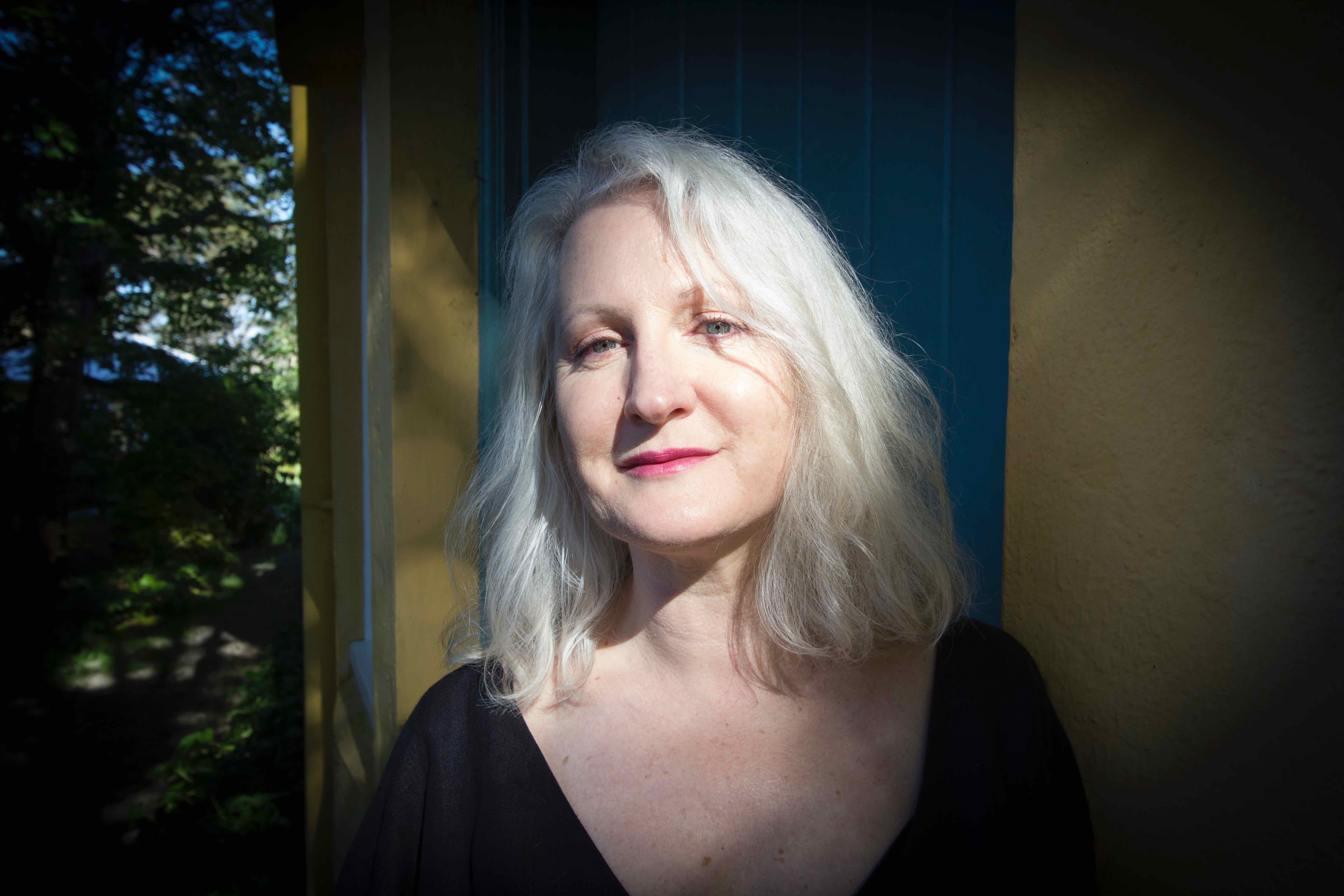
The work of three writers most influenced me in the years when I was studying literature and writing, all the while daring to hope I might one day be able to write, myself. Those three writers were Gail Jones, Joan London and my guest today, Simone Lazaroo. You can imagine, then, how delighted I am to have the opportunity to interview Simone here.

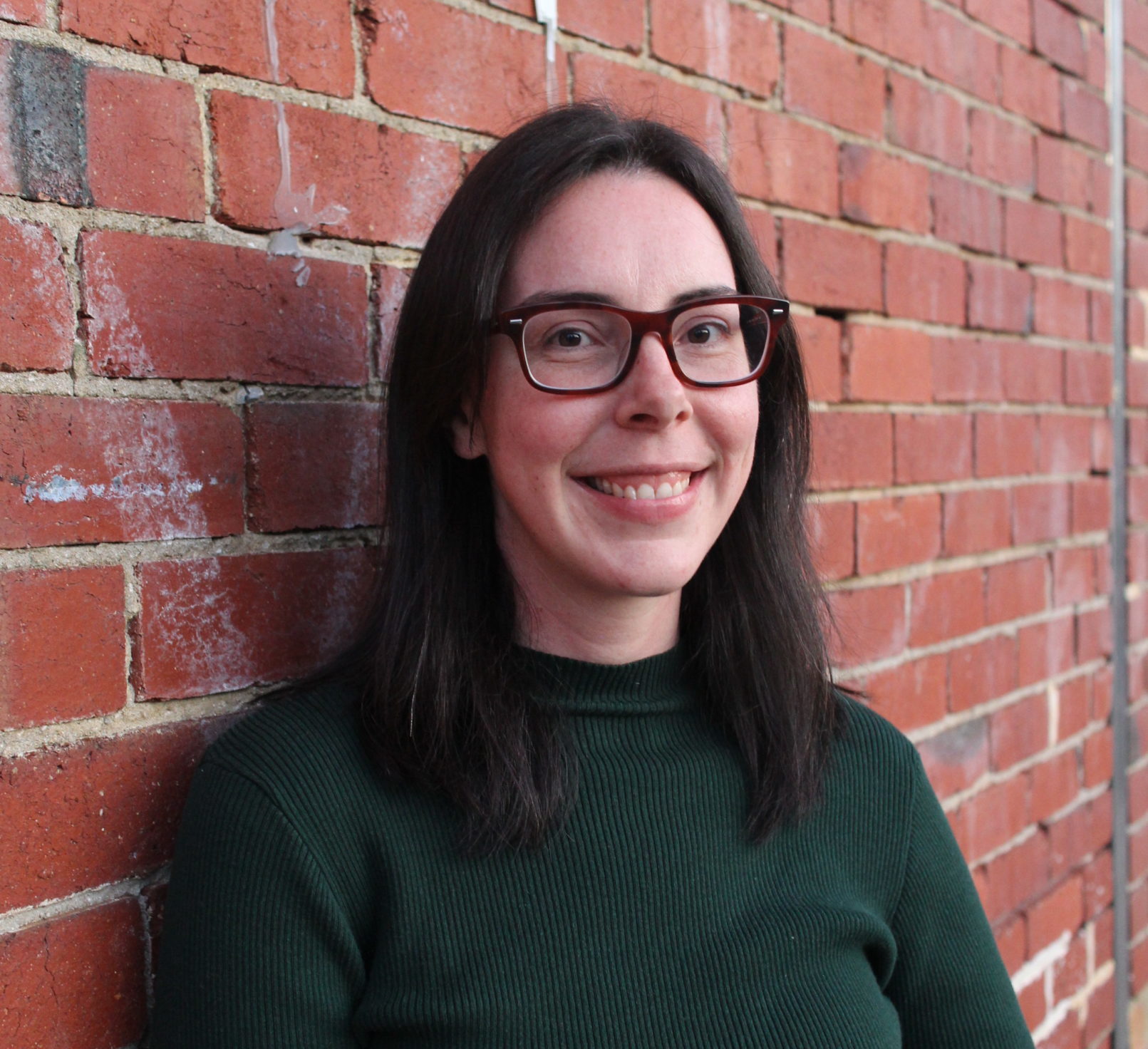
Simone migrated to Western Australia from Singapore as a young child. She is an honorary research fellow at Murdoch University, where she taught creative writing for many years, and is part of a Spanish-funded research group.

Since winning the T.A.G. Hungerford Award in 1993, Simone has published six novels, as well as numerous short stories and essays, and has won the WA Premier’s Book Award for Fiction three times. She has also been shortlisted for the prestigious Kiriyama Prize and the Nita B. Kibble Award.

If you are not acquainted with Simone’s work, please do hunt down the brilliant novels that form her backlist: The World Waiting to Be Made, The Australian Fiancé (optioned for film), The Travel Writer, Sustenance and Lost River: Four Albums.

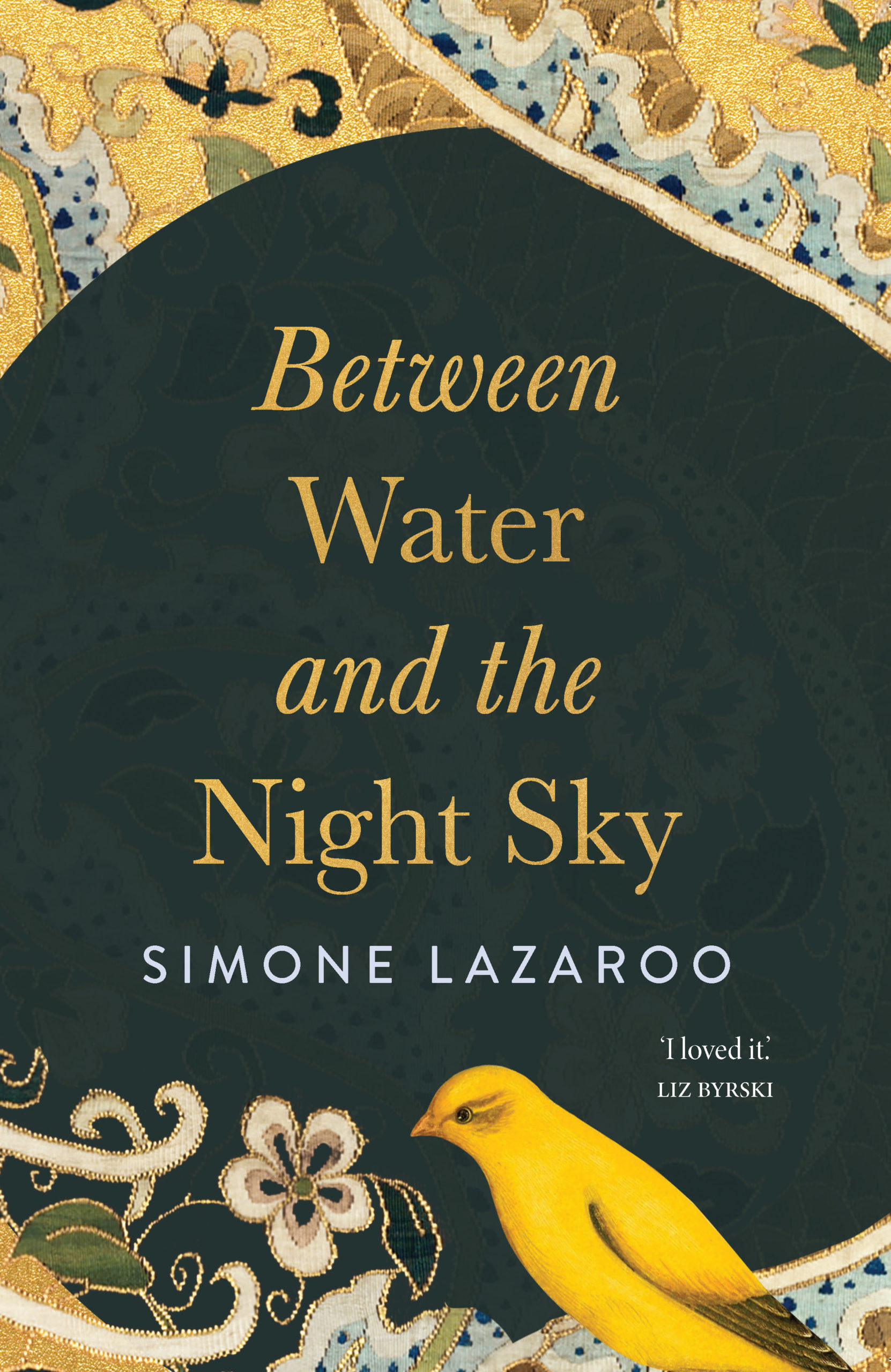
But before you do that, there’s the sixth, her new release, Between Water and the Night Sky

Elspeth is full of inexpressible longings: to leave behind life in Perth and her beginnings in a small wheatbelt town, and a secret she scarcely comprehends.

Francis wants to fit in—to make a life for himself after migrating from Singapore that is not determined by the colour of his skin or the judgement of others.

Told by their only child, Eva, this is a novel about falling in love, and falling apart—the beautiful, sad story of a shared history that never ends.

Memorialising courage

AC: Simone, Between Water and the Night Sky has been described as auto-fiction, a hybrid genre blending elements of fiction and autobiography. There are many ways a novelist can weave real events and characters, and themselves, into a work of fiction; Donald Stuart, for example, whose novel Shuggie Bain is often classified as auto-fiction, said that it was not autobiographical but inspired by his own experiences. Could you please talk about your choice to write this novel in the way you have, and some of the challenges it posed?

SL: Between Water and the Night Sky began as a couple of short stories that drew on incidents from my parents’ lives, but fictionalised aspects of these (including some elements of plot, setting, characterisation, imagery). But a few years after my mother died, I felt compelled to incorporate extracts from these short stories into a longer story that memorialised aspects of my mother in particular, including her relationship with my father. I focused particularly on my mother’s courage and creativity in the face of considerable struggles she’d experienced. I’d always felt that the way she lived her life showed a kind of heroism often unacknowledged by society. Doubtless many of us know individuals who have shown unacknowledged courage in dealing with the after-effects in their daily lives of traumas they’ve endured, although we sometimes don’t know the precise nature of those traumas.

I also tried in this book to convey many of the social and historical circumstances of my parents’ lives, to give a sense of the era and some of the social and geographical settings in which they lived. For example, partly due to aspects of the White Australia Policy still operating then, marriage between Anglo-Australians and Asians was unusual in the late 1950s, when my parents married, as was migration of Asians into Australia. However, partly because I simply didn’t know certain details of my parents’ lives before and after their marriage, imagination was all I had to fill in the gaps. Also, as the writing of the story progressed, it took on a life of its own. I used various fictional techniques (some of which I’ve alluded to above) to make the story more engaging, and because of issues of privacy.

At the intersection of cultures

AC: Throughout your body of work, you have explored characters at the intersection of cultures. Could you discuss how this plays out in Between Water and the Night Sky?

SL: The marriage of Elspeth and Francis might be considered an embodiment of the intersection of cultures—in this case, Francis’s Singaporean Eurasian culture and Elspeth’s Anglo-Australian culture. And of course, they each experience the upheavals, difficulties and joys of migrating and living in cultures and nations they are unfamiliar with. These kinds of experience can make unusual demands on the individuals involved, and on their relationship with each other. Some of the effects of such experiences upon a bicultural (or perhaps it would be more apt to say multicultural) marriage and family are reflected in this book.

Ways of seeing

AC: A photo’s just a memento of how a person looks at a particular moment…but a person’s life floats across countless moments. Elspeth, p. 164

I love the use of photography as an elemental motif in the narrative. The younger Francis is a keen hobbyist photographer, an interest gifted to daughter Eva, who studies photography at university. It recurs again and again as a metaphor for light and shadow, positive and negative, truth and illusion. I wondered, too, about the relationship between photographs and words in telling the story of a life—whether each complements the other, compensating for the other’s limitations. Was photography always a fundamental part of the story of Francis, Elspeth and Eva?

SL: Yes—photography is in a sense emblematic of how Francis and Eva develop their ways of ‘seeing’ other individuals, particularly during Francis’s courtship of Elspeth and later as Eva sees Elspeth aging. Many of us are familiar with the ways in which family photographs help trigger narratives and understandings about family members.

An enduring kind of love

AC: The relationship between Elspeth and Francis is both incredibly strong and heartbreakingly fragile, and ultimately does not survive—or at least not in the way we expect of a love story. But (and I’m trying not to wander into spoiler territory here) long after finishing the novel I was left thinking about the nature of love, and what endures between people. Did you conceive this work as a love story?

SL: Not while I was in the early stages of writing it. But as the writing progressed, I reflected on some aspects of Elspeth’s and Francis’s relationship with each other in the light of some of the wisdom I believe my parents acquired about their relationship as they aged, and saw that a nonetheless enduring kind of love had developed between my parents, despite the breakup of their marriage. Although my parents didn’t have the conversation that Elspeth and Francis have just before he dies, I wanted to convey something of the growing respect they had for one another as they aged.

Indirect trauma

AC: The great trauma of Elspeth’s infancy, painfully, shockingly, revealed to her late in life, in some ways drives the narrative. Again, I don’t want to give too much of that away. But I have always been interested in the idea that trauma can be passed from one generation to those that follow, and I sense that in this novel. Could you talk about that aspect of the work?

SL: I’m certainly not an expert in these matters. But I’d suggest that while the offspring of a person who has suffered trauma may experience it much less ‘directly’ than that parent, they nonetheless are affected by their parent’s long-term psychological responses to the trauma, which can continue to play out in their daily life decades after the traumatic event—in ways such as depression, anxiety, perhaps difficulty with some kinds of social engagement—even if the parent hasn’t told them about the traumatic event. And it’s possible that offspring who know more directly about their parent’s trauma may feel a heightened sense of responsibility towards their parent, sometimes resulting in the offspring taking on a carer’s role towards the parent at a young age; this can in turn lead to depression and anxiety in the offspring, particularly if they feel powerless to ‘cure’ or make their parent feel ‘better’.

Narrative immediacy

AC: I’ve noticed that while you don’t use it exclusively, you often seem drawn to writing in the first person. What does first-person narration bring to a novel such as this?

SL: As one of my hopes for this novel was that it might help people who’ve suffered similar kinds of trauma feel less alone, I used first person to try and build a sense of more ‘direct’ communication between the writer and reader.

More broadly speaking, I sometimes use first person in my fiction to give a sense of immediacy and direct revelation of the narrator’s thoughts, feelings and experiences—although attentive readers and writers know this isn’t impossible to achieve with third person point of view, too.

When you have to let a title go

AC: Between Water and the Night Sky is a beautiful, evocative title. Was it an ‘always-was’ title or one that took time to emerge?

SL: It took a long time to emerge—partly because I discovered around the middle of last year, while I was working and travelling in Europe, that the title I’d originally chosen for the manuscript-in-progress (almost three years ago) was very similar to the title of someone else’s novel published about two years ago. So en route to various work destinations in Europe, and just as the cover design was being finalised, I had a frantic email correspondence with the exceedingly helpful and patient Georgia Richter of Fremantle Press, in an effort to find another suitable title. Both titles included water, which is central to the novel’s preoccupations with the Indian Ocean and with states of merging, flux, separation and release, in the relationship between Elspeth and Francis, and in her life generally.

Between Water and the Night Sky is published by Fremantle Press
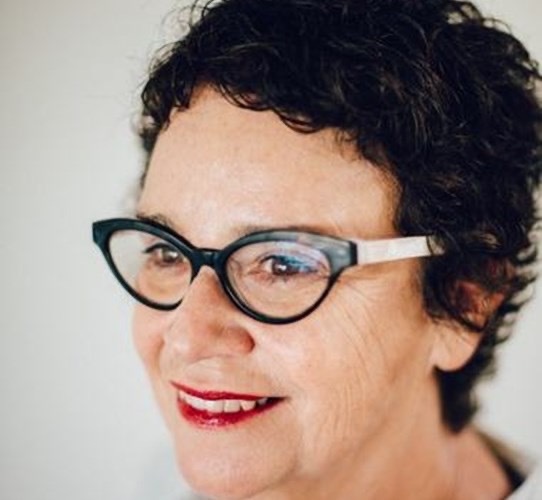
Simone Lazaroo is on Facebook

1 Comment

Filed under Favourite books, New books, Talking (new) fiction

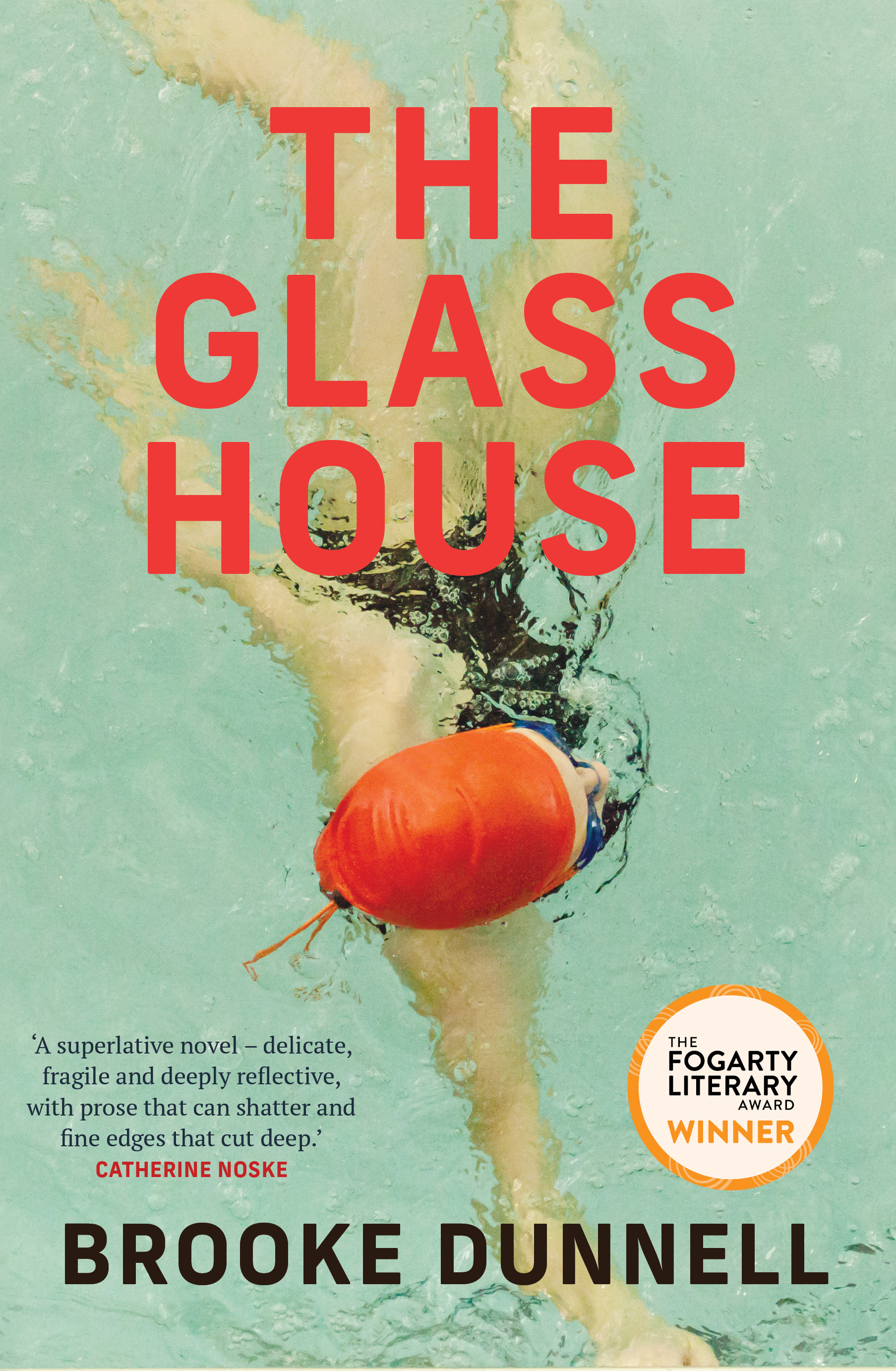
Talking (new) fiction: Brooke Dunnell’s The Glass House

Unpublished manuscript awards such as the City of Fremantle Hungerford Award and the Fogarty Literary Award have brought into the light many new writers with impressive manuscripts. It’s my great pleasure to introduce Brooke Dunnell and her debut novel, The Glass House, which won the 2021 Fogarty Literary Award for an unpublished manuscript by a WA writer aged 18 to 35.

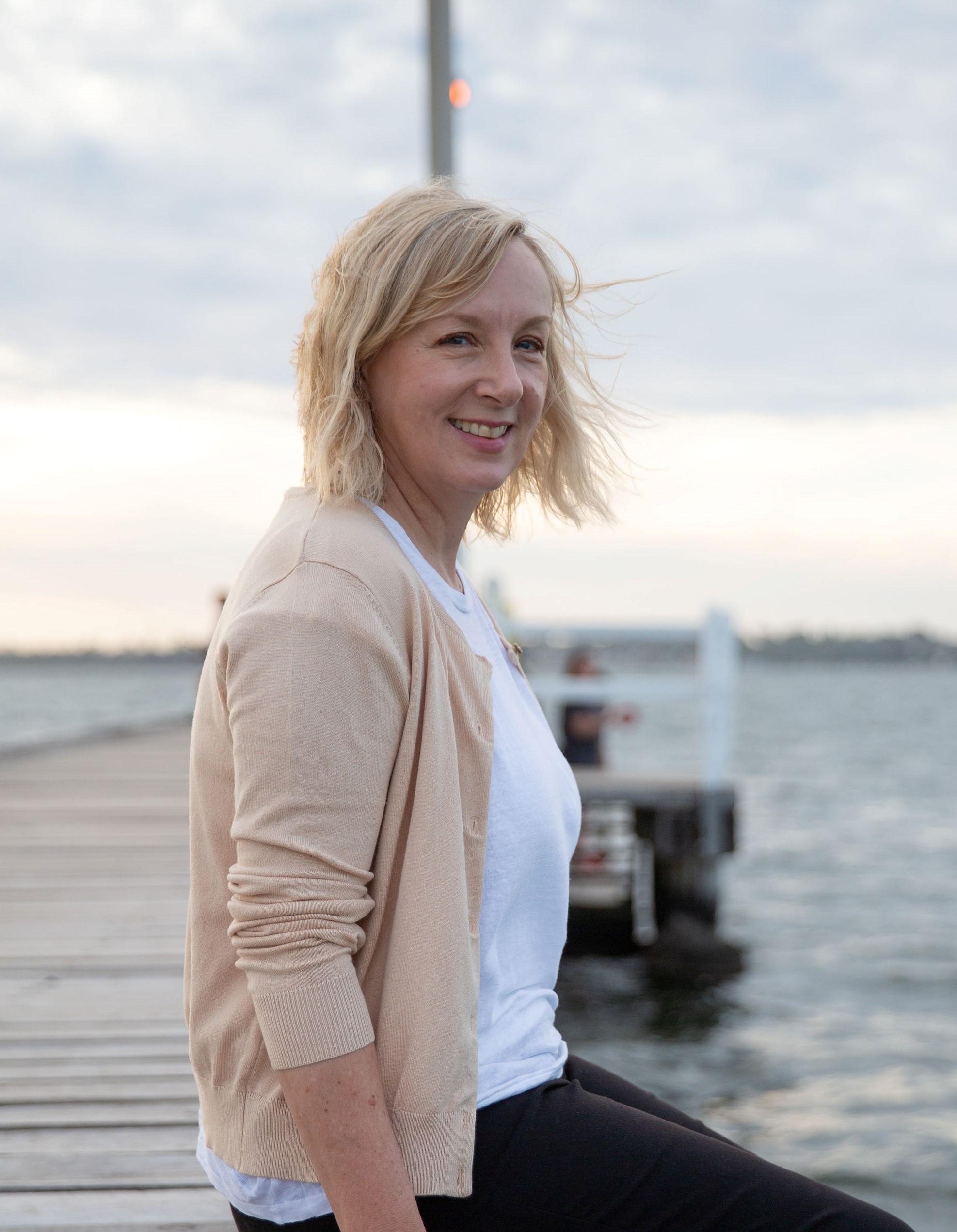
Brooke’s short fiction has been widely published (I remember choosing one of her stories for the journal Westerly when I was fiction editor), and her collection Female(s and) Dogs was a finalist for the 2020 Carmel Bird Digital Literary Award. She is well known in Western Australia as a creative writing teacher, mentor and workshop presenter.

Julia Lambett heads across the country to her hometown where she’s been given the job of moving her recalcitrant father out of his home and into care. But when Julia arrives at the 1970s suburban palace of her childhood, she finds her father has adopted a mysterious dog and refuses to leave.

Frustrated and alone, when a childhood friend crosses her path, Julia turns to Davina for comfort and support. But quite soon Julia begins to doubt Davina’s motivations. Why is Davina taking a determined interest in all the things that Julia hoped she had left behind? Soon Julia starts having troubling dreams, and with four decades of possessions to be managed and dispersed, she uncovers long-forgotten, deeply unsettling memories.

Gaining momentum

AC: Brooke, The Glass House dives deep and wide into contemporary life, giving us a story about parenting, marriage, childhood and ageing, among other things. Can you tell us about the genesis and development of the novel?

BD: It’s often really hard to know exactly where a novel originated, especially when it was so long ago!

For a while, I’d been exploring the idea of a character who is trying to decide whether to have children when they’re put in a position of responsibility for their own parent. Seeing the parent ageing and looking back on the decisions they made in their life would be a way of giving the character a different perspective on their desire for children of their own.

The concept by itself ended up being a bit too navel-gazey, with a lot of looking back at the past and not so much in the present. There wasn’t much momentum until I thought about adding the third generation—a child. I was interested in that moment of early teenagerhood and the issues and vulnerabilities that can come along with it. Once I hit on the idea of the main character not only putting herself in the position of being a parent, but also of being a child, then things got moving in a much more promising way.

A house, a suburb

AC: The Glass House is set mostly in Perth, where Julia travels from Melbourne to care for her elderly father and to help him pack up his house and his life. The house and the suburb, which play a major role in characterisation and plot, feel entirely authentic, and I wondered whether you adapted something familiar to your own childhood in creating them.

BD: Thank you so much, that’s wonderful to hear! I definitely mined elements from my childhood, though I haven’t identified it as taking place anywhere too specific because I wanted to be able to fictionalise places like the river and shopping centre in order to suit my own purposes.

I grew up in Willetton and our house was a late nineteen-seventies build on a big block, with a front yard, backyard, pool, Hills Hoist—the whole shebang. All my friends’ houses were similar. They don’t have the same charm as other architectural styles (apologies to anyone who particularly likes brown-brick bungalows with cathedral ceilings and sunken lounges!), but to me they have a lot of personality.

Wherever you grow up, I think most kids just see their house and area as ‘the norm’ and it’s hard to get an outside perspective until you have more experience. For Julia, the contrast of living in a flat in Melbourne and coming back to this really big house with a big yard in a quiet family suburb allows her to see the home, her father and her childhood in a new way.

Mothering Evie

AC: The relationship between your main character, Julia, and her stepdaughter Evie is such a tender portrait of mothering, avoiding the common trope of the child damaged by parental separation. Evie is beautifully mothered by both Julia and her biological mother, Samara, in ways that are supportive and complementary. Could you talk about your development of this aspect of the novel?

BD: It was important to me that Evie have a good relationship with her parents and with Julia, and for Julia and Samara to have a fairly good relationship as well, because I was interested in the fact that things can go wrong even when you’re trying really hard to do everything right. Evie is a very strong young woman, and this is in part due to her parents and Julia putting her best interests first. I gave Evie that personality to contrast with how Julia saw herself at a similar age, which was much less assertive and more desperate for approval.

Julia remains a fairly passive person as an adult and so it’s natural that she defers to Samara, not only because Samara is Evie’s mother but because she’s also a strong person. Samara could have used this influence negatively, but I wanted her to be kind and caring so that Julia slowly realises what friendships between adult women should be like.

When a friend might not be

AC: The sinister tone that gradually enters this suburban domestic scenario is subtly realised, which of course makes it all the more sinister! One of the sources of Julia’s (and the reader’s) unease is the character Davina. Please tell us about her.

BD: Davina was Julia’s friend when they were little, and she’s there when Julia returns to Perth and wants to be best friends again. Because Julia’s feeling exhausted, frustrated and vulnerable, having left her marriage in Melbourne on uncertain terms and facing the difficulty of moving her father and all his stuff, she’s flattered by Davina’s attention and confides in her a lot. After a while, she starts to realise that she’s not getting much back from Davina, who’s opaque about her own life and cagey when it comes to the past. Over the course of the novel, as she goes through the family belongings, Julia begins to work out just why she stopped being friends with Davina in the first place.

Sinister dreams

AC: The main narrative is interspersed with fragments from Julia’s dreams, which escalate tension and that sinister tone. If it’s possible to do so without introducing spoilers, could you tell us how these work in the story?

BD: Julia’s understandably stressed while she’s back in Perth. She’s put a pause on a marriage that’s having problems, and part of that is telling her husband Rowan that they shouldn’t contact one another for a while, so they can see what it’s like to be apart. She starts having bad dreams about her stepdaughter Evie being pursued by a sinister male figure, and because she can’t contact Rowan and ask what’s going on, the situation just exacerbates. Julia’s not the type who believes in prophetic dreams or anything like that, but the nightmares are so realistic, she wonders if she’s losing her mind.

Starring role for Biscuit

AC: Biscuit, the dog, must take a bow as one of the most important canine characters I’ve ever met—oddly so, since he ambles through the narrative in typical old-dog fashion! What do animal characters allow a writer to bring to a narrative?

BD: I love Biscuit! I love all dogs, obviously—even the fictional ones.

I think animals, in fiction as well as in life, can be good intermediaries between people. Biscuit forms a bit of a buffer between Julia and her father, and it’s good, because if he wasn’t there, the interactions between the two of them might be even more fraught. The dog is a symbol of Don’s independence; a way he can show Julia that he can still make his own decisions and be in control. For Julia, the dog is just a manifestation of Don’s stubbornness and denial.

I think animals also become carriers of the personalities and stories we assign to them. Both Don and Julia put a lot of meaning into Biscuit. For Don, the dog needs to be protected and kept stable, not subjected to anything that might unsettle him. For Julia, the dog is at risk just being in Don’s company, because Don doesn’t have the capacity to walk him or give him mental stimulation. Living with Don, the dog has food, shelter and company, which Julia doesn’t think is enough. But Biscuit ends up having a side to him that even Don and Julia didn’t realise.

Genre hopping

AC: How did you find the leap from writing short fiction to writing a novel?

BD: I didn’t find it too arduous, because I’ve been trying to write novels for a long time. It’s definitely a different process—a novel gives you much more space to go off in different directions, have elements evolve at a slower pace, and introduce a wider range of themes. One of the pleasures of writing a short story is that you can keep the whole thing in your head at once, and that’s far more difficult with a novel! I plan to keep writing in both genres, because that gives me the scope to explore a wider range of ideas.

Towards publication

AC: What has been the most surprising thing about your journey towards the publication of The Glass House?

BD: In practical terms, I’ve been surprised in various ways at how the book publishing process works—the lead time needed, how interest gets drummed up, that type of thing. It’s been fascinating to see the different aspects come together, and it’s made me admire people who work in publishing and bookselling even more. They put so much hard work and passion into producing and promoting books they didn’t even write! Thank God for them.

More generally, I’ve been surprised and moved by the number of people who genuinely care about the fact that I’ve written a novel and are interested in it! I knew the WA writing community was close and supportive, but it’s been to a greater extent than I ever expected. Readers and even people I meet in passing can be really enthusiastic, too. I’ve been in a perpetual state of the warm fuzzies for a while now!

The Glass House is published by Fremantle Press
You can follow Brooke via Instagram, Twitter or her website

2 Comments

Filed under Talking (new) fiction

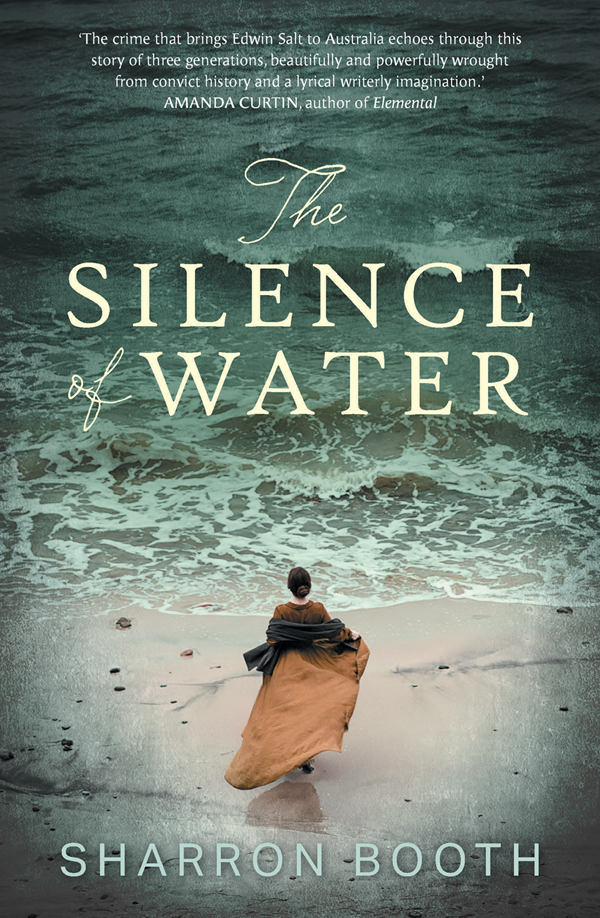
Talking (new) fiction: Sharron Booth’s The Silence of Water

Sharron Booth’s debut novel, The Silence of Water, is a beautiful work of historical fiction. I admire it immensely—as you can see from my endorsement on the cover.

In constructing questions to pose to Sharron, I think I was influenced by memories of my own exploration of Western Australian convict history for The Sinkings, and the ever widening circles of research that help a writer to understand the people, places and social worlds of the past. It’s evident from her responses that, like me, Sharron formed deep emotional attachments to those she researched, and to artefacts of the past—sometimes to be found beneath one’s feet.

Sharron emigrated from the UK (Yorkshire) to Western Australia as a child, and works as a professional writer. Her creative work has been published in literary journals and newspapers and broadcast on ABC Radio. The Silence of Water was shortlisted for the 2020 City of Fremantle Hungerford Award—once again proving what a wonderful source of new talent this award represents.

It’s the turn of the century when Fan’s mother, Agnes, announces the family is moving to Western Australia to take care of Agnes’s father—a man they’ve never spoken of before now. Fan finds herself a stranger in a new town living in a home whose currents and tensions she cannot read or understand.

Resentful of her mother’s decision to move, Fan forms an alliance with her grandfather, Edwin Salt, a convict transported to Australia in 1861. As she listens to memories of his former life in England, Fan starts snooping around the house, riffling through Edwin’s belongings in an attempt to fill the gaps in his stories. But the secrets Fan uncovers will test the family’s fragile bonds forever, and force Edwin into a final reckoning with the brutality of his past

When you witness a different crime

AC: Sharron, The Silence of Water is a work of fiction, but it is partly based on people and events drawn from convict history. Was there something in your research into that history that immediately presented itself to you as being a subject for fiction or did you arrive at that point gradually, through the process of accumulating facts and impressions? What was it that lit the spark?

SB: I knew that I needed to write about these events and people, particularly the women, immediately after I read the medical reports and newspaper accounts of the crime that Edwin Salt committed. They upset me so much. I felt as if I had witnessed a very different crime to the one being reported. In the early days, I’d imagined I might write a fairly straightforward account of the life of a Western Australian convict. Those documents reminded me there was no such thing as a straightforward account and that archives always reveal the biases of their times. I didn’t have a clue how I would do it but I knew I wanted to write about the women I had read about, in addition to the convict.

Fragments, glimpses and whispers

AC: The novel is told from the alternating points of view of three characters: Edwin Salt, his daughter Agnes and his granddaughter Fan. Fan’s narrative anchors the present of the novel—the events of 1906—while Edwin’s and Agnes’s range between 1906 and earlier times. There are always challenges in using a non-linear approach, but could you talk about the opportunities such a structure gives a writer in telling the story of three generations?

SB: Before I did much research, my original intention had been to write a past/present dual narrative. Then I discovered that Agnes had left Western Australia at around eighteen years old and started a new life in South Australia. Based on the records, she didn’t seem in a hurry to return. Creatively, I liked the idea of the family conflict that could arise from a decision to move back to Western Australia after a long absence. Plus, moving states at a young age in the late 19th century seemed like a gutsy move for a woman. It made me want to give her a bigger role in the story.

The interwoven structure allows the reader to watch Edwin, Agnes and Fan as they grow up, struggle, make decisions, lie, behave badly. The structure lets the reader know parts of each character that not even other characters know about. It makes for a richer experience of the story.

It also allows the reader to go on the journey with Fan as she uncovers long-buried family secrets. I think it more realistically reflects the way we tend to find things out about our families: in fragments, glimpses and whispers, and almost never in an ordered, linear way.

Bad wives and mothers?

AC: The adolescent Fan is my favourite character—imaginative, independent, witty, and endearing in her fascination with the past and its secrets; a strong girl in the process of becoming a strong woman. But many of your female characters—Eliza, Mary Ann, Cath, Agnes—are strong women, albeit within the context of their times and socio-economic constraints. Were you conscious of foregrounding women’s stories in a novel that is to some extent shaped by the life of one man?

SB: When I read the archival material about Mary Ann and Cath (two of Edwin’s three wives), my emotions ranged from anger to compassion. Mary Ann was decried publicly as a bad wife and bad mother and yet contemporary understanding might suggest she was suffering from post-natal depression. Cath was arrested for using offensive language, an offence that was used almost exclusively against women. I wanted to bring both women out from under the weight of the records. I consciously looked for moments of resistance; they were hard to find but they were there. I used those fragments as starting points for thinking about character. For example, one of the most enduring features about fictional Cath is her voice. She isn’t afraid to speak her mind. People pay attention when she talks. Agnes remembers the sound of Cath’s voice long after her mother has died. I did this to ‘write back’ to the fact that Cath had been criminalised for using her voice.

Flowers on an unmarked grave

AC: Your research for the novel was wide-ranging, taking you from Western Australia to South Australia to various places in the United Kingdom, and from archives and libraries to the kind of experiential research that involves communing with the past through the physical remains to be found in houses and churches, streets and landscapes. Where did you find your greatest inspiration?

SB: I loved the archival research, but visiting the places where my characters had lived got me properly under the skin of this story. Two moments stand out: one in Semaphore and one in Edinburgh. I was walking along Semaphore beach, minding my own business, when in my imagination I saw a girl running over the dunes towards the ocean, her hair trailing behind her. She seemed to fly into the ocean. It was one of those between-two-worlds moments that writers sometimes talk about but I secretly didn’t believe in, until it happened to me. I knew this girl was Fan and that she was here to shake things up.

The second was in Edinburgh in a small church graveyard on a quiet, sunny afternoon. I laid some flowers on the unmarked grave of a woman to whom I had no connection except the privilege of having time and resources to pursue my interest in her life. I told her that I had no idea why this story had chosen me, but no matter what, I would try to do justice to her. The novel did not really come together for me until that afternoon.

Lucky charms

AC: As someone powerfully influenced by physical objects, I’m wondering whether you also acquired anything of this kind during your research, something that helped you to make emotional connections with your material. Was there a talisman sitting on your desk while you wrote?

SB: I also find physical objects inspiring. They ground me to the truth of my characters, and to place, through the fog of the writing process.

My desk was crowded with lucky charms while I wrote The Silence of Water. I collected shells and rocks from Semaphore beach. I pinned all my train tickets from the UK research trip on a cork board. When I visited York, Western Australia, via the old convict route from Greenmount, I dug up a stone from part of the original convict-laid road.

I cut my hands and broke fingernails liberating that rock from the ground. I could only imagine the effort it had taken to put it there more than 150 years ago. It inspired a scene in the novel where Edwin and his fellow convicts work on a road gang.

Watery places

AC: Could you talk about the symbolism of water in the novel?

SB: The ocean is a place of duality. It both separates and connects places. I read somewhere that the ocean symbolises ‘the terrifying sublime’: it’s spiritually uplifting but it can also kill you. In the novel, some characters find great solace in watery places and others meet their end there.

The ocean is essential to my spiritual wellbeing and so it was perhaps unsurprising that it found its way into my fiction. I can’t say I intended to write about water but that’s what happened! I’ve given my love of the ocean to Fan, although she is much braver than I am. For Fan it is a place of calm, compared to the soup of unspoken tension in her Fremantle house.

For Agnes, too, the water is important: she associates the sounds and smells of the river with her mother and the precious times they spent together. Agnes’s relationship to water symbolises her grief and how she deals with significant losses.

I found it interesting that Edwin, Agnes and Fan all made long journeys across water to start new lives. I wanted to explore how people respond to unfamiliar places by asking the question: is it ever possible to truly escape the past?

Silences and the forgotten

AC: Are you naturally drawn to the past, and to historical fiction? Do you see yourself continuing to work in this genre? Which I suppose is another way of asking if you are currently at work on something new!

SB: I’m particularly drawn to stories about how actions of the past, particularly in families, influence the present. While The Silence of Water is historical fiction, I see it primarily as a family story that just happens to be set in the past.

At a broader level I’m also fascinated by the role that secrets and silences play in narratives of Western Australia’s identity. Reading the archives is eye-opening, but so is the daily news.

I’m working on a non-fiction project inspired by some now-forgotten Western Australian women writers, as well as a novel that is set in the more recent past. It’s wonderful to be writing something new, now that the characters from The Silence of Water are making their own way in the world.

The Silence of Water is published by Fremantle Press
You can follow Sharron on Facebook, Instagram, or via her website

Photo credits: author photo by Jess Gately; photo of artefacts by author

4 Comments

Filed under Talking (new) fiction

Talking (new) fiction: David Whish-Wilson’s The Sawdust House

I’d have thought you’d be hard pressed to find a reader less likely than me to fall in love with a novel about a boxer. But it’s 2022—unpredictable to the marrow—and here am I, smitten, and urging everyone who appreciates superb literary-historical fiction to read David Whish-Wilson’s captivating new release, The Sawdust House.

Mind, this novel is ‘about a boxer’ as much as Oliver Twist is about a greedy boy—something that will become abundantly clear when you read David’s generous responses to the questions I’ve put to him.

David is one of Western Australia’s most prolific and versatile authors, having published six crime novels, four in the Frank Swann series, which explores the seedier aspects of 20th-century Perth; three works of non-fiction, including a stellar contribution to the NewSouth Books City series, Perth; and a historical novel, The Coves, that traverses some of the ground covered in his new novel. A much valued teacher and mentor, he coordinates the Creative Writing program at Curtin University, and lives and writes in Fremantle.

San Francisco, 1856. Irish-born James ‘Yankee’ Sullivan is being held in jail by the Committee of Vigilance, which aims to rout the Australian criminals from the town. As Sullivan’s mistress seeks his release, and as his fellow prisoners are taken away to be hanged, the convict tells a story of triumph and tragedy: of his daring escape from penal servitude in Australia; how he became America’s most celebrated boxer; and how he met the true love of his life.

Hard citizens

AC: David, the present of the narrative is San Francisco, 1856, at the time when citizens had formed a Committee of Vigilance to deal with Australian gangs of criminals who had dominated the city—the setting also for The Coves. Was it during the course of your research for that novel that you happened upon the story of James ‘Yankee’ Sullivan?

DW-W: Yes, I came across his name several times while doing archival work in San Francisco on the story of the wild Australian men and women who so rapidly established themselves in that city, and whose reputation as ‘hard citizens’, formed in the crucible of the Australian convict system, gave them such a bad reputation. One such citizen was Yankee Sullivan, as he was known, considered a leader and something of a celebrity due to his once status as the US boxing champ, but also his ability to roguishly engage with the local media. He was caught up in the second great purge of Australians from San Francisco in 1856, arrested for being a ‘shoulder-striker’ for the Democrat party, which led to him being locked up in a makeshift vigilante prison while others arrested in the same purge were being lynched.

Contemplating an extraordinary life

AC: What was it about Sullivan’s story that caught your interest initially?

DW-W: The fact that Yankee Sullivan was a colourful figure and a boxer, strangely enough, didn’t initially draw me toward him as a subject. I was curious as to why this man, considered by some to be the father of American boxing (which is now of course a multi-billion dollar industry), wasn’t better known in Australia, but that wasn’t enough for me to consider dedicating researching and writing about him for a couple of years. I did a bit of digging and learned about his time as a convict in Australia, where he was a serial escapee and was sent to Moreton Bay as a sixteen-year-old (then the worst prison in Australia, under the notorious Commandant Logan—the subject of the terrific Drones song ‘Sixteen Straws’). It interested me that he’d been able to escape Australia, and reinvent himself so thoroughly (and quickly) in the milieu made famous by the Scorcese film Gangs of New York, where he became a significant figure, but it wasn’t until I found some words written by his wife following his death in San Francisco that I really felt like I wanted to explore the parts of his life absent in the historical record. She’d noted his vulnerability, and his melancholy, and his fears, which is the starting place of the novel—the human story of a man who’s lived an extraordinary life but is now facing an imminent and humiliating death, using storytelling as a way to distract himself from his situation but also to communicate the things most important to him.

‘Letting the language wash through me’

AC: As someone deeply interested in structure and point of view, I am in awe of The Sawdust House as a masterpiece of both, with two main characters—Sullivan and the reporter Thomas Crane—in conversation with each other while Sullivan waits, in a cell, for his fate at the hands of the Vigilance Committee. Were there challenges in using this device?

DW-W: I felt like I needed someone for Yankee Sullivan to communicate with in his prison cell, someone who Yankee not only trusts, but can see himself in, had his life been different—had he been blessed with some of the opportunities that we take for granted now. But I also wanted Thomas Crane to see something in Yankee that he himself lacked, as an introvert, a certain flamboyance and courage, so that they reflect one another on an emotional level. So the novel proceeds by way of this conversation, and by way of internal monologue that reflects Yankee’s gradual fracturing self as a product of his distress, melancholia, and lack of food and sleep, and Crane’s observations of Yankee and thoughts about his own situation. I haven’t told a story this way before, and so it proceeded slowly, and in fragments, and in a non-linear fashion, moving backwards and forwards in time, with abrupt switches from the present to the past. As a process, I found it intriguing, surprising, and pretty enjoyable, in that because both characters were keen to speak to one another (and to me), I was able to proceed intuitively, with minimal anxiety about where the narrative might be going, instead just letting the language wash through me.

Archival discoveries

AC: Your research for the novel, as outlined in your Author’s Note at the back of the book, was wide-ranging, including archives, informal sources and site research. Is there one that stands out for you now as the most valuable of these—a photograph, a document, a feature of the landscape?

DW-W: I think the two most important research moments involved the discovery, in the archives, of details about Yankee’s transportation to Moreton Bay as a sixteen-year-old, which was a bland record providing dates only, plus a small note to say that he’d also escaped from Moreton Bay before being recaptured. Knowing how harsh that penal colony was in turn linked to the second most important research discovery, which was a portrait of him as a young man in New York, where he looks so calm and healthy. Knowing how many times he’d been flogged in Australia, how scourged his back must have been, made the portrait (which was used to advertise a tobacco brand) extra poignant to me, and helped with his characterisation, and the development of his voice.

Truths of fiction

AC: You speak, in your Author’s Note, of having ‘changed names and dates and amalgamated characters for dramatic purposes and to better suit the truths of fiction’. Could you talk about the ‘truths of fiction’ as they apply to The Sawdust House?

DW-W: Yankee Sullivan was a much-mythologised character in the US, and some of that reputation was the product of self-mythologisation. This is natural, to a certain extent, for an escaped convict whose worst fear (according to his wife) was to be returned to the chain in Australia. It looks like not a single person in the US, including possibly his Australian wife, knew his real name, for example, or that he’d begun his boxing career in the dusty streets of Sydney, New South Wales. I explore some of that concealed history in the novel, working with the main features of his life that were known (and including some of the newspaper reports written about him, verbatim, as well), but where appropriate I also felt like I needed to streamline some aspects of the narrative by designing devices (such as Yankee’s being chained to Leggo on the transport ship) and by changing dates while keeping to the emotional truths of the events as they played out, and as they affected Yankee’s reputation. This reputation was cemented, for example, when he cheekily sailed back to England and challenged the British middleweight boxing champion, Hammer Lane, to a bout, which Yankee won, despite the risk of his arrest and potential execution before sailing back to the US. In revolutionary America, this was a big deal, and I explore this in the novel while having slightly changed the focus of the return trip, to one where he’s in fact there searching for what remains of his family.

When a character begins to speak

AC: Is the fictional newspaperman Crane (I’m assuming he’s fictional) based on a real journalist of that time, or is he perhaps one of those ‘amalgamated characters’?

DW-W: Thomas Crane is an entirely fictional character. In fact, I met him for the first time just as the reader first finds him, as a disembodied voice addressing Yankee in his prison cell, before he proceeds to colour himself in, so to speak. Without the benefit of much planning or foresight, all of his personal aspects appear to the reader as they appeared to me, too, as Crane becomes a key figure in drawing out Yankee’s story, but also in exploring some of the aspects of Mormonism that so interested me in researching The Coves, such as how violent and chaotic the early history of that religion was.

‘The way he sees the world…’

AC: Sullivan’s narrative, though it carries stylistic characteristics of an untutored 19th-century voice, is frequently poetic. To give one example of many:

…I barely have recollection of what I have said from one utterance to the next. Since my incarceration here I am like a taper whose wick is my voice and the flame has been lit but the wick consumed as it goes—

Did the Walt Whitman connection—which came as a surprise—give you opportunities for developing Sullivan’s voice in this way?

DW-W: The link to Whitman developed later, when I was excited to read that he was a contemporary of Yankee’s in New York City, and when I came across some fascinating anecdotes about him in different texts. The development of Yankee Sullivan’s voice, on the other hand, which of course is an approximation, or a hybrid version of a 19th-century voice shaped by a life in several different countries, was one of the great joys of writing The Sawdust House. As an aspect of this hybridity, perhaps, and of the need to let him speak freely, I was fortunate that right from the beginning, Yankee expressed himself in imagery and metaphor, which is something I hadn’t anticipated, but which is important, because without it I don’t know if I would have been able to sustain the narrative. I was frequently surprised and delighted by the way he sees the world, and while I wasn’t doing any contextual reading at that point, not wanting to complicate the language with another’s voice, it seems to me in retrospect that Whitman’s expansive and enthusiastic style might be an unrecognised influence.

The power of white space

AC: I found the physical layout of the novel fascinating, with each question and each answer of the interview beginning on a new page, even if they occupy only one or two lines. White space speaks eloquently in The Sawdust House, and it contributes to the way you control the pace. But, as white space also = page extent = money, I’m wondering whether there was any discussion surrounding this aspect between you and your publisher.

DW-W: Fortunately, because it’s quite a short novel, the white space, which like you say is there to control pace but also to serve as an absence/presence, or a silence/voice, wasn’t mentioned as a significant issue. Essentially, I think I’m very blessed to have a publisher willing to take a risk with a non-traditional kind of narrative, and an editor who was able to see the merit in this kind of approach. I don’t know if the two things are related, but perhaps it’s significant that Fremantle Press is one of the last publishers around who still publishes terrific poetry.

Title as talisman

AC: The title is immediately intriguing, but I also found it to be one of those titles that was even more resonant after I’d finished the novel. Was it always your working title, or one that came to you in the writing process, or later?

DW-W: It was always my working title, acting while I wrote as a kind of talismanic aspect of Yankee’s yearning, both during his difficult years of captivity, and then, after he’d achieved his parents’ dream of owning a public house/saloon with that name, as an aspect of his recognition that the very things he’d done to achieve that dream had diminished him and his ability to value this achievement—something which becomes significant toward the ending of the novel.

The Sawdust House is published by Fremantle Press
You can follow David on Twitter and Instagram, and contact him via his website

Photo credits: boxing image—James S. Baillie, 1849, black and white lithograph of Thomas Hyer, American Heavyweight Boxing Champion of 1841, fighting Thomas Sullivan on a snowy day in Baltimore; Yankee Sullivan image—Lorilliard’s Mechanics Delight Boxing Card

3 Comments

Filed under Talking (new) fiction

Talking (new) fiction: Sue Orr’s Loop Tracks

It’s a pleasure to introduce my first international guest in the Talking (new) fiction series. Sue Orr’s second novel, Loop Tracks, has been a bestseller in her home country, New Zealand, since its release last year, and has just been released in Australia, to acclaim, by Terri-ann White’s Upswell Publishing.

Loop Tracks was recently longlisted for New Zealand’s premier literary honours, the Ockham New Zealand Book Awards.

Sue Orr is also the award-winning author of two books of short stories, Etiquette for a Dinner Party and From Under the Overcoat, and the novel The Party Line. She teaches creative writing at Victoria University in Wellington, and has for some years been involved with programs teaching creative writing in prisons and women’s refuges in Auckland and Wellington.

Sue took time out from Adelaide Writers’ Week to answer a few questions…

It’s 1978: the Auckland abortion clinic has been forced to close and sixteen-year-old Charlie has to fly to Sydney, but the plane is delayed on the tarmac. It’s 2019: Charlie’s tightly contained Wellington life with her grandson Tommy is interrupted by the unexpected intrusions of Tommy’s first girlfriend, Jenna, and the father he has never known, Jim. The year turns, and everything changes again.

Loop Tracks is a major New Zealand novel, written in real time against the progress of the Covid-19 pandemic and the New Zealand General Election and euthanasia referendum.

Voices from sisters past

AC: Sue, you’ve spoken about Loop Tracks having been inspired by a conversation some years ago—a moment you’ve described as ‘a tingle, like shorting electrics desperate to earth’ when a friend spoke about ‘a plane delayed on the tarmac at Auckland Airport for hours, with anxious pregnant girls and women on board’. The plane’s destination was Sydney, where the women and girls could go to have a safe, legal abortion, something they could not do in New Zealand at that time (1978).

The first question I want to ask about this concerns the issue of teenage pregnancies in the late 1970s. As you show in Loop Tracks, the choices available to young pregnant girls were limited—abortion or adoption—both involving a great degree of secrecy and hypocrisy. And those so-called ‘choices’ were often made by others. What floored me was the cruelty meted out to so many young girls in the name of ‘respectability’. Were you able to access formal, as well as anecdotal, research into the long-term effects of these practices in developing your story?

SO: Yes. As an ex-journalist, it was really important to me that the backdrop to the fictional narrative of Loop Tracks was factually correct. I obsessed over the accuracy, to be honest, and now on reflection I think it was also because I didn’t want to give anti-choice lobbyists any grounds to challenge me on sloppy research, diverting the conversation away from the issues at the heart of the book.

Dame Margaret Sparrow, with others, set up Sisters Overseas Service, the clandestine network that enabled women from the far reaches of New Zealand to travel to Australia for abortions during 1978. Margaret went on to establish Family Planning in New Zealand.

She has written three texts on the history of abortion law in New Zealand. One of them, Abortion Then and Now: New Zealand Abortion Stories from 1940 to 1980, was my key formal resource for the researching of Loop Tracks. It contains many reflective accounts of the long-term effects of the practices you mention.

Margaret launched the New Zealand edition of Loop Tracks. The novel is dedicated to her, and to my friend who was on the delayed flight at the beginning of the story. Loop Tracks could not have been written without the generosity of these two women.

Someone else’s story

AC: I’m also wondering about the process of developing a narrative from that initiating conversation into the rich terrain covered by the novel. Was it difficult to transform the experience of a friend into fiction? Were you conscious, for example, of the need to de-identify your friend? I imagine this might affect all manner of creative choices—characters, settings, motivations…

SO: Unlike Charlie, my friend who was on the flight stayed on the flight. So it was never a question of transforming her specific experience into fiction. But she was able to gift to me the essential details of what it was like to be a very young woman pregnant in 1978, not wanting to have the baby. What it was like to have to find a doctor (and they were rare) who would help her navigate the system that had been established by the Sisters Overseas Service. What it was like to raise the small fortune needed for the flight and procedure. What it was like to turn up at the airport and be shepherded on to a commercial flight with others in her situation. The condescending air hostesses. The dash to Sydney, or Melbourne, and the return home two days later to take up her old life, pretending none of it had ever happened. And, of course, the delay that occurred on her particular flight. That delay was the genesis of this book.

I have always protected the identity of this friend. It was the promise I made to her, when she agreed to talk about all of those things I just mentioned. I’ve written an essay about this here.

‘The girl that was me’

AC: I love the way you play with tense and point of view with your protagonist, Charlie. Although the novel is essentially a first-person narrative, the world through Charlie’s eyes, you also give us third-person sequences that tell the story of ‘the girl that was me’, and which slide between past and present. What advantages did this narrative sleight of hand give you in conveying Charlie’s story?

SO: It felt as though I had no choice but to offer Charlie the sleight of hand as a way to confront her traumatic past. Charlie has never dealt with the shocking circumstances surrounding her pregnancy, the father of the baby, or the birth of her child. Rather, she has developed mechanisms for shutting down that period of her life; shutting down any conversation that looks as though it might be drifting towards these traumas. As a result, she’s disassociated herself from ‘the girl she was’.

The disassociation starts to crumble when two things happen—her grandson Tommy gets an inquisitive girlfriend, and the pair of them summon Tommy’s father into all their lives. Charlie’s forced to confront those events, all those years ago. She is so far emotionally and mentally estranged from them, the only way she can cope with revisiting them is via a third-person perspective. The distance she creates between her adult self and the girl she was enables her to face the past, fearfully crack it open, and eventually create the possibility of moving on from it.

Joys and challenges

AC: Charlie’s grandson, Tommy, is a wonderfully drawn character, and I found my response to him vacillating between protectiveness and exasperation, affection and outright horror. Can you please tell us a little about Tommy and how you developed this character?

SO: Tommy came into Charlie’s life at the age of four—dropped off at the gate when his father became unable (or unwilling) to cope with him. Tommy needed Charlie, and Charlie needed him. She needed someone to care for, a purpose in her life.

As I grew this character—as he grew into a teenager—I realised that his relationship with his grandmother had to become more mutually reliant rather than less, as would normally happen. I also needed a character who would interpret the world in a very literal way; someone who would be vulnerable to the conspiracy theories in 2020 New Zealand.

I have friends with sons on the spectrum—I have watched these boys grow up, watched how they interpret the world around them, watched how their loving families have accommodated their views and celebrated their difference. One such friend read an early version of the manuscript, and pointed out that I had painted too rosy a picture of life with a child on the spectrum. Where’s the anger? she asked me. Where are the unreasonable, vicious, hurtful outbursts towards the people that love them and care for them the most? The next draft was more honest. It captured the challenges, as well as the joys, of raising a child on a spectrum.

Another crack at reckless joy’

AC: Loop Tracks could be thought of as a multiple coming of age story. Tommy’s passage from adolescence into new adulthood is one thread; Charlie’s earlier, very different experience of that journey is another. Is the older Charlie also undergoing another kind of ‘coming of age’ in the narrative present of the novel?

SO: She absolutely is.

As Tommy gains independence, Charlie recognises that she’s becoming irrelevant to him. (There’s no feigning denial of this on Tommy’s part—he says it like it is!) So where does this leave Charlie? Who is she, if she’s not Tommy’s provider and protector?

Her second coming of age—her opportunity to reset her life, bump the looping patterns off track—occurs against the backdrop of the extreme lockdown conditions of the first wave of Covid-19 to hit New Zealand in March 2020. For Charlie, already cast adrift from the responsibilities of the last 20 years, this weird new world presents opportunity for another crack at reckless joy, this time tempered with wisdom.

Characters first

AC: Loop Tracks is a novel that foregrounds the political. Issues such as abortion, euthanasia and the rights of individuals are woven into the story in ways that make it clear that rationalisations and doctrines don’t hold: the political is personal, it affects lives, it has consequences. Is this an abiding concern in your work or did the original inspiration, the experience of your friend, dictate this direction for the novel?

SO: Characters always come first for me. I started with a girl on a delayed flight: she’s pregnant, naïve, and makes a crazy decision that makes sense to her in that moment. That’s all I had to work with. I knew the circumstances of her pregnancy, and little else.

But if you’re willing to inhabit the hearts of your characters—be your characters—then the story unfolds in its own surging, organic way. This feels like the only way to write, to me. This is the source of the joy of writing. The excitement of discovering what happens next, at the same time as your characters. Jumping on their shoulders and experiencing their lives with them.

The issues—the themes, whatever you want to call them—they emerge in a natural way, as a result of the character’s development and decisions. I’m there for the ride, documenting the fallout, the consequences, the joys and despair of human fallibility and resilience.

Loops interrupted

AC: The stunning cover for your Australian edition features an image by Greg Simpson that brings to mind Charlie’s, and then Tommy’s, love of the 1960s design toy, Spirograph. Could you please talk about the way this works as metaphor in Loop Tracks?

SO: I always imagined the cover being a Spirograph image (it was my favourite childhood toy) with a big smudge across the page as the pen was bumped off course. The final cover was so much better—less literal, less obvious, while still clearly referencing a Spirograph design. The geometric loops have gone haywire, just as the rigid routines in Charlie’s life get knocked off course in the novel. The image also alludes to Tommy’s discovery of loop track music and his natural gift for mathematics, and the beautiful loop track bush walks in Wellington city.

The C word

AC: Yours is one of the first wave of novels to draw Covid into the story—and the pandemic atmosphere brings so much to what is happening. What influence, if any, did Covid have on the way the novel ends?

SO: The novel ends in spring 2020—after the General Election which saw Jacinda Ardern’s Labour Government return to power. By early October, Covid had been eliminated in New Zealand for the time being. The return to a normal way of life gave agency to all the characters—they were free, finally, to make decisions about how they would live their lives, for better or for worse.

Loop Tracks is published by Upswell Publishing
You can follow Sue on Twitter and Instagram

3 Comments

Filed under Talking (new) fiction