Tag Archives: writing

Reasons to love a novel: imagery

Sometimes a writer will create a mental picture so compelling that it seems, in its beauty or its depth or its tenderness, or its raw, shocking slap, to open up a neural pathway, connecting me to something never before felt, or seen, or heard. It changes the way I am wired. It writes itself on my memory. It becomes permanently implicated in all of the reasons I love to read and want to write. I always wish I’d written it myself. I always feel—as my friend Marlish Glorie said recently of Annie Proulx—grateful that such writers exist.

Here are three images I love, from books I love:

419MMJTJS6L._SY300_This is what she had seen, earlier that day: An Indian man had been climbing the bamboo scaffolding of one of the high colonial buildings, with a large mirror bound to his body by a piece of cloth. His white dhoti was flapping and his orange turban was atilt, and he hauled himself with confidence from level to precarious level—altogether a fellow who knew what he was doing—when some particular gust or alarum that carried the dimension of fate caused him to misjudge his footing and fall through the air. Because he could not release the mirror, but clutched at it as though it was a magic carpet, he landed in the midst of its utter shattering, and was speared through the chest. The quantity of blood was astounding. It spurted everywhere. But what Lucy noticed most—when she rushed close to offer assistance along with everyone else—was that the mirror continued its shiny business: its jagged shapes still held the world it existed in, and bits and pieces of sliced India still glanced on its surface. Tiny shocked faces lined along the spear, compressed there, contained, assembled as if for a lens. She simply couldn’t help herself: she thought of a photograph.

—Gail Jones, Sixty Lights
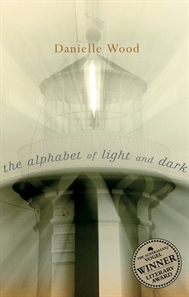
resized_9781741140651_224_297_FitSquareI would not wish for you to think that I was a nice child. I was not. Mother called me a storm child. A foundling, she said, washed up on the beach beneath the lighthouse in a storm, without so much as a scrap on my little body. She looked as if she wished she had left me there. If she cut me, she said, I’d bleed icy-cold sea water all over the floor. Once, she said that she was only waiting for the tide that would come up high enough to wash me back out into the sea where I belonged.

—Danielle Wood, The Alphabet of Light and Dark
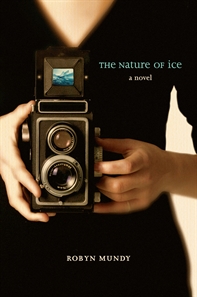
resized_9781741755763_224_297_FitSquare‘The first Swiss to ski in Antarctica,’ Hurley said. ‘He makes it look dead easy.’

Ginger would have bowled X over had her chain been longer. She nuzzled under his arm as he untethered his skis. He scratched her back and she leaned her weight against his leg, her tongue lapping at the air.

Then the dogs pricked their ears in unison; penguins halted in their tracks. Douglas watched X smile with the sweetness of the melody rising from the hut.

Ginger laid her ears flat when X hoisted her up by her front legs and placed her paws on his chest. He stepped from side to side, one hand on his dance partner’s back, the other resting on her paw. Mertz and Ginger swayed to ‘The Shepherd’s Cradle Song’; the lullaby playing on the gramophone spilled across the bay. On each turn Ginger hopped and shuffled; with each step she licked her master’s chin.

Douglas nodded. ‘The first to dance.’

—Robyn Mundy, The Nature of Ice
Serendipitously, these are all Australian women writers, in a year when I’m taking part in the Australian Writers Women Challenge. And today is International Women’s Day.

I’d love to hear about the images that have caught your breath and you know will remain with you forever.
9 Comments

Filed under Reasons to love a novel

Reasons to love a novel: voice

Tomorrow I am going to see a session at the Perth Writers Festival featuring visiting superstar author Margaret Atwood. It reminds me how much I loved her novel The Blind Assassin—and that one of the reasons I loved it was its voice.

The voice of a novel is an elusive thing to define. It takes in things like point of view, psychic distance between writer and reader, syntax and language, imagery, metaphor. I once heard an editor describe it as ‘the author on a plate’—presumably because those choices are an extension of the writer’s own personality. But if that were true, all the novels written by a particular author would have the same voice, and what drives an author to make such decisions may be more to do with the material—what it seems to want, or need—than with the writer her/himself. Still, it’s the writer making that judgment of what is needed, so perhaps there’s something in this.

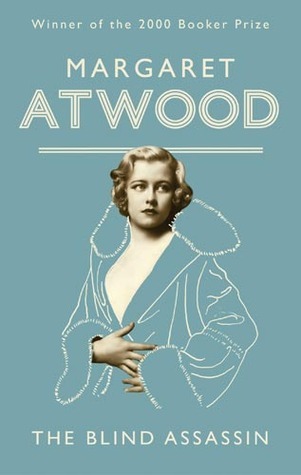
Coincidentally, three of the novels I love for their voice are written in the first person—quashing (for me, anyway) Henry James’s view that use of the first person in a long work of fiction is ‘barbaric’! (Very comforting, too, given three-quarters of my forthcoming novel, Elemental, is a first-person narrative.) Here is the first we hear from the acerbic, enigmatic Iris Chase in The Blind Assassin:

78433Ten days after the war ended, my sister Laura drove a car off a bridge. The bridge was being repaired: she went right through the Danger sign. The car fell a hundred feet into the ravine, smashing through the treetops feathery with new leaves, then burst into flames and rolled down into the shallow creek at the bottom. Chunks of the bridge fell on top of it. Nothing much was left of her but charred smithereens.

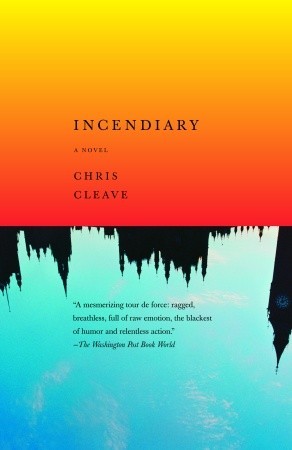
And Chris Cleave’s unnamed grieving mother in Incendiary (subtitled A novel of unbearable devastation and unbounded love):

701738Dear Osama they want you dead or alive so the terror will stop. Well I wouldn’t know about that I mean rock n roll didn’t stop when Elvis died on the khazi it just got worse. Next thing you know there was Sonny & Cher and Dexy’s Midnight Runners. I’ll come to them later. My point is it’s easier to start these things than to finish them. I suppose you thought of that did you?

And the third is the sometimes capricious, sometimes caustic, always unflinching voice of Nora Porteous in Jessica Anderson’s Tirra Lirra by the River:

1236307I arrive at the house wearing a suit—greyish, it doesn’t matter. It is wool because even in these subtropical places spring afternoons can be cold. I am wearing a plain felt hat with a brim, and my bi-focal spectacles with the chain attached. I am not wearing the gloves Fred gave me because I have left them behind in the car, but I don’t know that yet.

Ah, so many reasons to fall in love with a novel… more later. And I’d love to hear yours.

8 Comments

Filed under Reasons to love a novel

(Up and) down time

I read an article today that suggested ‘the best way to get more done may be to spend more time doing less’. A provocative hook but the article’s message was simple: take a break. The writer advocates, among other things, working in 90-minutes intervals, giving yourself breaks for renewal of energy in between:

Human beings aren’t designed to expend energy continuously. Rather, we’re meant to pulse between spending and recovering energy.

Well, yes. I know that. We all know that. But in practice? Perhaps I’ll give the 90-minute work bursts idea a try, with a leisurely pot of Earl Grey and an imaginary walk in between. Why imaginary? Read on …

In my first blog post I wrote the following, an observation by a character-in-progress from a novella-in-progress:

When you reach an age—you’ll know it when it comes—looking forward won’t do. Looking back, if you let it, can consume every breath you take. But looking up, looking down …  it’s here, in these oblique moments, that we truly live, where it’s possible to find joy.

Sitting here in Perth on a scorching February day—34 degrees before 9am—I have to confess that if I was to take my own advice literally, I’d be seeing not much more than the jarrah ceiling beams of my studio and the worn rug on the floor. But I can take the reminder as it was intended—beyond the literal—as 2013 cranks up its pace a few notches. Pause. Feel. Listen. See.

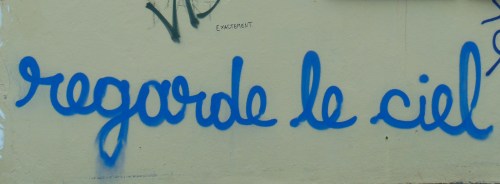
For now, here are a couple of Paris Blues, looking up/looking down images of the literal kind. Stay cool (or warm if you’re in the northern hemisphere)!

DSCN1869DSCN2482

6 Comments

Filed under Writing

The next big thing

Last month Annabel Smith, author of Whisky Charlie Foxtrot (Fremantle Press), tagged me in the latest book meme, immodestly titled ‘The next big thing’, which asks writers to answer ten questions about their forthcoming work. (You can read Annabel’s responses about her exciting work-in-progress, a multimedia novel called The Ark, here.) So here goes.

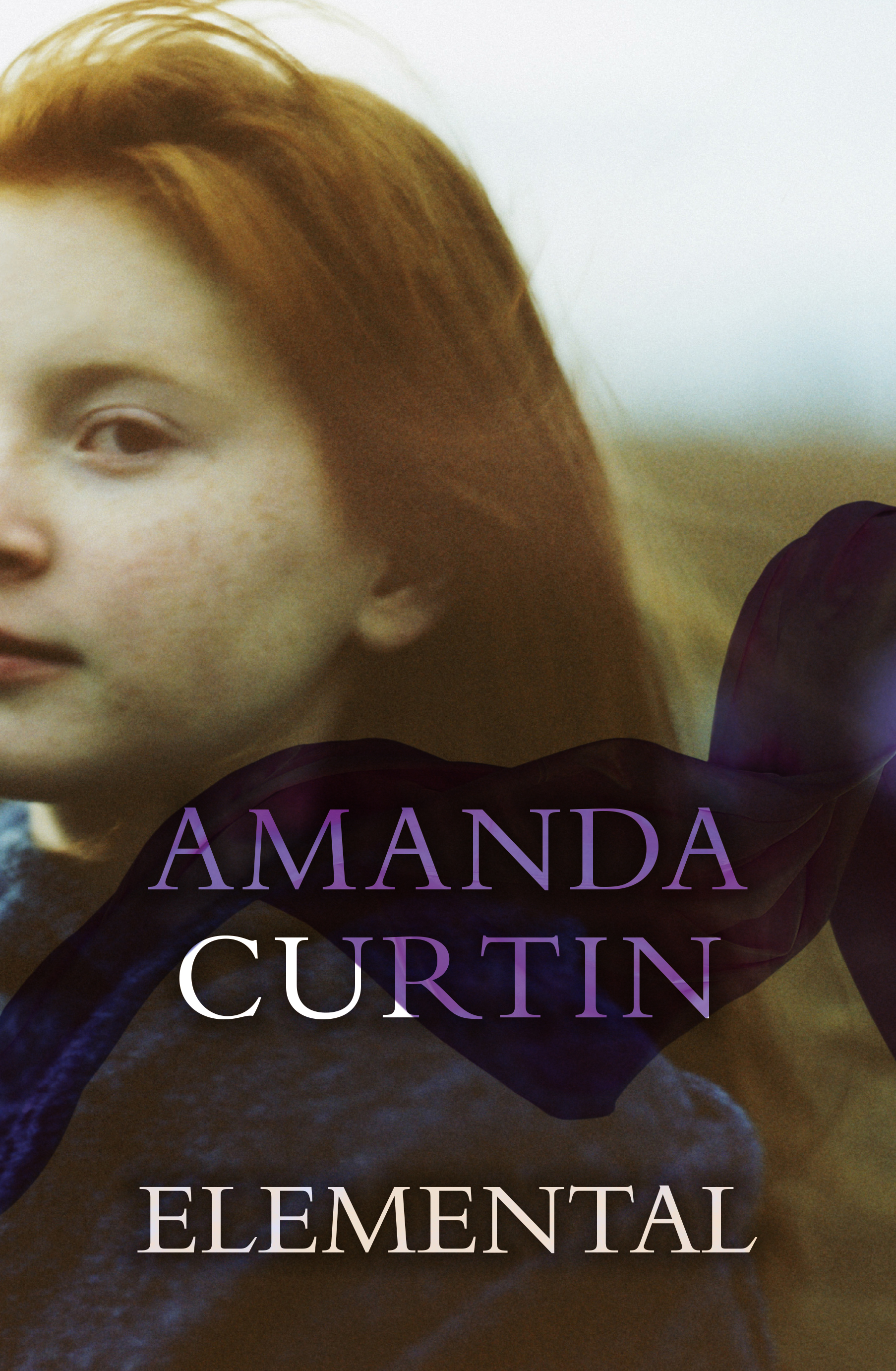
1. What is the working title of your current work-in-progress/next book?elemental_COVER

Elemental

2. Where did the idea come from?

Different sources—some I’d been thinking about for a long time and some that sprang from research. I don’t keep journals but I accumulate ideas, often just words, on scraps of paper in a folder. Elemental came, in a roundabout way, from three of these scrap words—‘fishermen’, ‘consequences’, ‘butterflies’—and from my fascination with things like memory, inheritance, generativity, history, ethics, families.

3. What genre does your book fall into?

Literary fiction—three parts historical and one part contemporary.

4. What actors would you choose to play the part of your characters in a movie rendition?

Well, the lead role of Meggie would need several actors as we see her from childhood through to her forties, and then as an elderly woman. And the actor would need to manage a Doric accent (the rich dialect of north-east Scotland), with flourishes of Shetland and Australian thrown in. I don’t want much, do I! Maybe Cate Blanchett or Miranda Otto? (I can dream!)  I don’t see either of them as ‘my’ Meggie, the one in my head, the one I think I’ve written, but that would not matter as long as the actor caught the heart of the character. Film is its own art.

5. What is the one-sentence synopsis of your book?

Meggie Tulloch is writing to her granddaughter—a story of a tiny fishing village in north-east Scotland at the turn of the twentieth century, of the wild, witchy sea that gives and takes, of the herring girls who escaped the lives mapped out for them from birth, of women’s work and women’s friendship, of a love that carries Meggie across the world to Australia, of the secrets she has spent a lifetime trying to forget.

6. Will your book be self-published or represented by an agency?

It will be published by UWA Publishing in May 2013.

7. How long did it take you to write the first draft?

I began the research in 2007 and finished the first draft just after midnight on 22 May 2011, at the Tyrone Guthrie Centre, Ireland. I was so elated that I crept down to the kitchen to celebrate with leftover cake, accidentally scaring the hell out of German artist Maria Maier. When Maria recovered, she and I shared the cake and toasted the draft with tea.

8. What other books would you compare this story to within your genre?

I don’t think writers are always the best people to judge these things—I know I’m not—so this is more a wish list on my part: The Shipping News by Annie Proulx; ‘In the Machine’, part 1 of Specimen Days by Michael Cunningham; Possession by A. S. Byatt.

9. Who or what inspired you to write this book?

Mostly covered in #2. But I have an enduring interest in exploring the past and how it affects the present.

10. What else about the book might pique the reader’s interest?

Part of the story highlights the history of the herring girls—gutters—who were contracted by curing companies to travel in teams around the north-western islands of Scotland, up to the Shetlands, then down the north-east Scottish coast to East Anglia, following the shoals for nine months of the year. The more I read about the phenomenal skill and speed of these women, the more I admired them and wanted to know more. It’s reported—in so many disparate sources that it’s hard to doubt the veracity of the accounts—that many of them could gut and grade fifty, sixty, up to seventy herring a minute!

And now I’m tagging four other writers in the hope that they will tell us about their next big thing: Dianne Touchell, Magdalena Ball, Meg McKinlay, Denise Deegan.

7 Comments

Filed under Elemental

December fragments #31

DSCN2136_2

Last December fragment, last daily post (back to occasional now), last day of the year—conventionally, a time for resolutions. I’m still working on mine, but I’m going to avoid the impossible ones this year. The painful ones. The ones involving denial and doom. You know, things like giving up chocolate. Taking more time for watching the world, for looking up, looking down—maybe I can manage that. I hope yours, whatever they may be, will bring you as much pleasure.

Have a happy, transcendent New Year. See you in 2013!

There are many ways to be free. One of them is to transcend reality by imagination…

—Anaïs Nin

DSCN0380

6 Comments

Filed under December fragments 2012

December fragments #19

From one of my favourite books on the craft of writing…

Mastery [of the art of writing] is not something that strikes in an instant, like a thunderbolt, but a gathering power that moves steadily through time, like weather.

—John Gardner, The Art of Fiction

DSCN1342

3 Comments

Filed under December fragments 2012

December fragments #17

… life would be terrible … without death to give it gravitas and shape.

—Jennifer Egan, A Visit from the Good Squad

But it’s a shape that Western society generally prefers not to acknowledge.

DSCN2728

2 Comments

Filed under December fragments 2012

December fragments #15

I’m not sure where I saw this quote from the wonderful Tillie Olsen, but it lodged in my memory:

Any woman who writes is a survivor.

—Tillie Olsen

Or perhaps is trying to be? Is writing always an act of survival?

DSCN1358_2

7 Comments

Filed under December fragments 2012

December fragments #14

An editing colleague put me on to Karen Elizabeth Gordon’s quirky book years ago, and I often dip into it. Grammar with drama and a touch of goth…

The verb is the heartthrob of a sentence. Without a verb, a subject would be abandoned, stranded in a sentence, incapable of sensing the void. There would be nothing between words but meaningless space or a clutter of adjectives, phrases, and pronouns, and maybe something to eat, but no way to reach for it or bite it, since action and feeling are missing.

—Karen Elizabeth Gordon. The Deluxe Transitive Vampire: the ultimate handbook of grammar for the innocent, the eager, and the doomed

DSCN1515

6 Comments

Filed under December fragments 2012

December fragments #10

Words to write by…

I think that nearly all good writing is suggestion, and all bad writing is statement. Statement kills off the reader’s imagination. With suggestion, the reader takes up from where the writer leaves off.

—John McGahern, Memoir

100_4978

4 Comments

Filed under December fragments 2012