Tag Archives: books

And that was 2024…

Another year ends, and I can’t say it’s been the best I’ve had. But there are always highlights, and those are what I hope I’ll remember of 2024.

Ireland

Ireland has been a big part of my year. I finally made it to a many-times-delayed residency at the Tyrone Guthrie Centre in County Monaghan, which was hugely productive creatively and pure joy personally. I also spent some time in the county town of Monaghan, where part of my work-in-progress is set, and driving around the Killeevan area with some wonderfully knowledgeable local taxi drivers. Along the way, I met several local historians who were generous with their time and knowledge.

I’ve read a lot of Irish fiction during the year, and it’s no surprise that Claire Keegan is once again among my favourites of the year. How good is So Late in the Day! An online residency run jointly by Varuna here and the Irish Writers Centre in Dublin introduced me to seven novelists, Irish and Australian, who are producing exciting new work and whose published work has blown me away.

Revered Irish novelist Edna O’Brien died this year, and I realised that, apart from a short story studied at university, I was unfamiliar with her work. So I embarked on the ‘Country Girls’ trilogy, novels that have also been categorised as memoirs: The Country Girls (1960), The Lonely Girl (1962) and Girls in their Married Bliss (1964) (this last title deeply ironic). I loved O’Brien’s portraits of ‘ordinary’ girls and young women and the city and rural social worlds of mid-twentieth century Ireland. O’Brien broke new ground in writing about matters of sex and the oppression of women, and these novels were considered so scandalous at the time that they were banned by clergy and the Irish Censorship Board.

And, finally, I’ve spent the year dwelling in the heart and mind of an Irish character whose voice I hope might find its way into print someday.

Vale Brenda Walker

I was deeply shocked and saddened by the recent death of WA novelist Brenda Walker—a terrible loss not only to her family, friends and colleagues but to the writing and reading community.

Brenda Walker’s many achievements as a writer included the historical novel The Wing of Night, one I have always admired for its focus on the women left behind when their men went to the Great War. Her other novels were Crush (debut, and winner of the TAG Hungerford Award), Poe’s Cat and One More River, and many writers are familiar with The Writer’s Reader: A Guide to Writing Fiction and Poetry, which she edited. Her memoir of a journey of recovery from breast cancer, Reading by Moonlight: How Books Saved a Life, won many awards.

For me, she was one of a group of women writers I looked up to from my earliest days as a reader of Western Australian literature, and whose work taught me much about writing and that there was value in women’s stories. Vale Brenda Walker.

Online…

One of the literary news stories of the year was Richard Flanagan winning, and declining, the $97,000 Baillie Gifford Prize for his non-fiction book Question 7: story here.

I was delighted to read that Gail Jones, one of my favourite authors, was granted the Creative Australia Award for Lifetime Achievement in Literature: story here.

I also listened to this excellent interview with Gail Jones, in which she talks about her award-winning novel Salonika Burning and imagining the past: link here.

A fabulous initiative by Australian authors, headed by Paddy O’Reilly, saw every Australian federal MP and senator gifted a ‘Summer Reading’ pack of five books that shed light on the complex history of the Israel–Gaza region. I’m planning to use the list of titles myself to help me understand the issues: story here.

And finally, I have been unable to do much in the way of blog posts this year, but I’m pleased to have featured an interview with WA author Katrina Kell on her fascinating historical novel Chloe, and the announcement of the winner of this year’s City of Fremantle Hungerford Award, Yirga Gelaw Woldeyes, whose bilingual hybrid-genre manuscript የተስፋ ፈተና / Trials of Hope will be published by Fremantle Press in 2025.

Happy New Year, everyone!

Leave a comment

Filed under Favourite books

2024 Winner, City of Fremantle Hungerford Award

Warm congratulations to Yirga Gelaw Woldeyes, winner of the prestigious City of Fremantle Hungerford Award for 2024. Yirga’s memoir, የተስፋ ፈተና / Trials of Hope, is told in both poetry and prose, in English and Amharic (using Ethiopia’s indigenous script, Ge’ez Fidel), and follows his journey from boy shepherd in Ethiopia to human rights academic at Curtin University in Perth.

Yirga is a writer, researcher and poet from Lalibela, Ethiopia, who now lives in suburban Perth with his wife, writer Rebecca Higgie (award-winning author of the astoundingly imaginative The History of Mischief).

Yirga said:

The Hungerford Award means an opening of hope, a realisation that stories and languages like mine could have places in a world where they are rarely heard. People who live carrying multiple worlds shouldn’t have to hide or sacrifice one world to exist in the other world. This too is our home; our stories can be heard.

The City of Fremantle Hungerford Award is presented biennially for an unpublished manuscript by a Western Australian author, with a cash prize of $15,000, a publishing contract with Fremantle Press and, new this year, a residency fellowship with the Centre for Stories in Perth. In its thirty-three year history, the award has introduced many new writers who have gone on to establish stellar careers—among them, two of my all-time favourite writers, Gail Jones and Simone Lazaroo.

Congratulations must also go to the three other shortlisted authors for this year’s award: Howard McKenzie-Murray, Jodie Tes and Fiona Wilkes. Being shortlisted from a field of eighty manuscripts is no small achievement!

The award was judged by writers Richard Rossiter, Marcella Polain and Seth Malacari, and Fremantle Press publishers Georgia Richter and Cate Sutherland.

1 Comment

Filed under Publishing news

On this last day of the year…

I’ve read a lot of books this year past—more than in previous years—and if I was into ratings, I’d be scoring nearly all of them very highly indeed. I abandoned only one (and I won’t be naming it or its author here).

It was my great pleasure to interview three authors with new releases on the blog this year—three standout novels that I highly recommend. If you missed them, do please take the time to read these interviews, and I’m sure, as a result, you’ll be adding the books to your list:

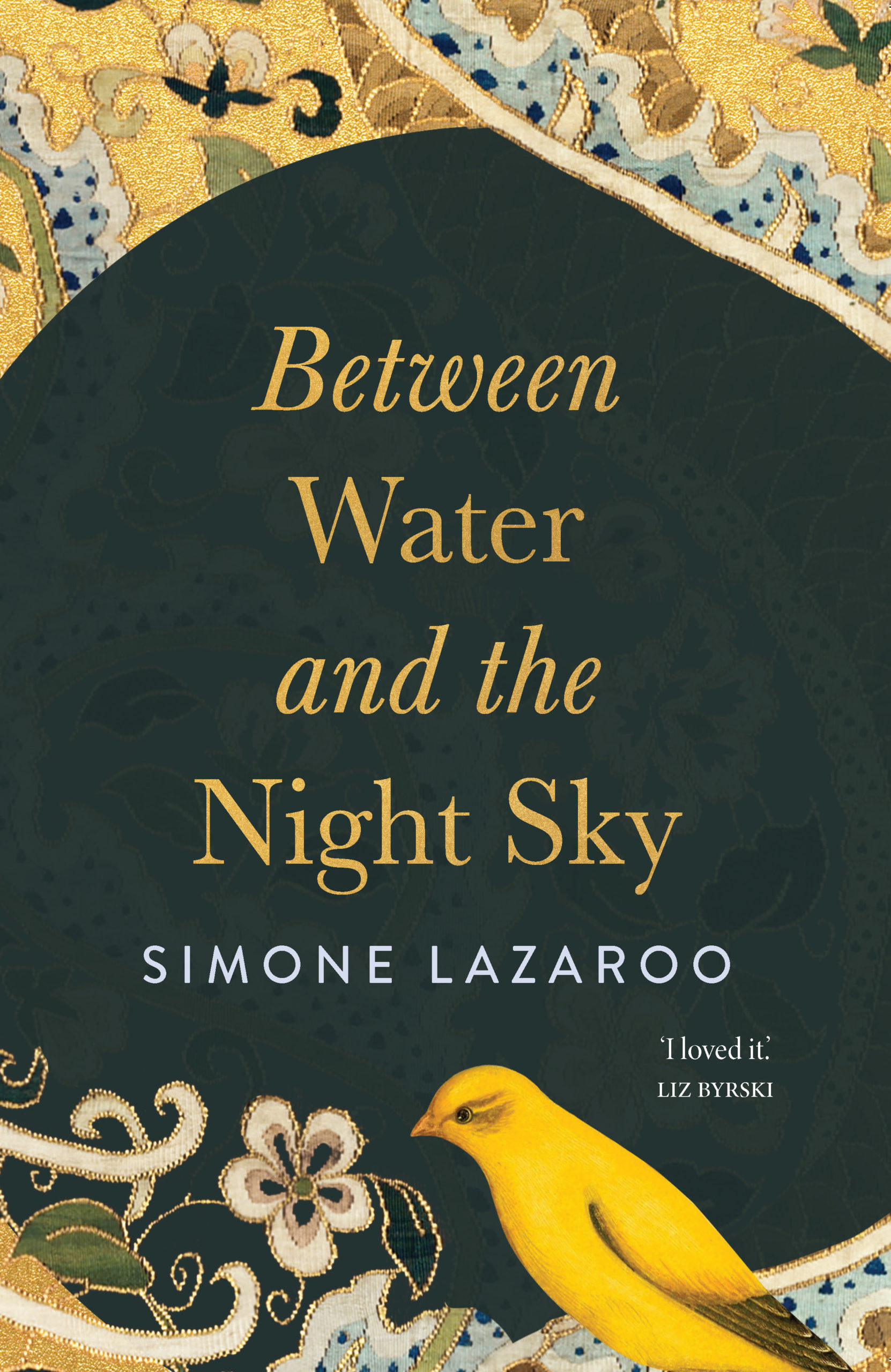
Simone Lazaroo, Between Water and the Night Sky

Robyn Cadwallader, The Fire and the Rose

Angela O’Keeffe, The Sitter

I hope to be bringing an interview with a debut WA author in the first months of the new year!

In my last newsletter, I wrote about some of the other fine Australian books I’ve read:

Fiction: Mirandi Riwoe, Sunbirds; Eliza Henry Jones, Salt and Skin; Molly Schmidt, Salt River Road; Jackie Bailey, The Eulogy; Michael Fitzgerald, Late; and Shankari Chadran, Chai Time at Cinnamon Gardens

Non-fiction: Gemma Nisbet, The Things We Live With (how I loved this beautiful book!); and Laurie Steed, Love, Dad

YA: A.J. Betts, One Song; and Graham Akhurst, Borderland

To which I will add, from my reading earlier in the year, Gail Jones’s award-winning Salonika Burning—one of my favourites for the year and a war novel unlike most others I’ve read.

I took another foray into Irish fiction during the year, with four fabulous novels that gave me much to think about: Louise Kennedy, Trespasses; Jan Carson, The Firestarters; Olivia Fitzsimons, The Quiet Whispers Never Stop; and Nuala O’Connor, Nora.

Other international titles I admired, as a reader and a writer, were Barbara Kingsolver’s epic Demon Copperhead, and the latest from the brilliant Donald Stuart, Young Mungo. Although so culturally and geographically different, I couldn’t help but see parallels between these two grim stories of boyhood/early adolescence and the kind of rough and careless upbringing that is more a matter of surviving than growing up. Something that amazes me about these two novels—testament to the skill of the authors—is that what I remember most about them are the threads of love that wind through the squalor.

I finished the year with two of Australia’s biggest names in fiction—deservedly so—Charlotte Wood and her quiet, contemplative Stone Yard Devotional and Melissa Lucashenko with her broad historical sweep across what is now called Brisbane, Edenglassie. Both are destined for shortlists throughout 2024. Both touched my heart.

∞∞∞

Looking back at my last New Year’s blog, I see I wrote hopefully that 2023 might be a better year than 2022. Unfortunately, that wasn’t to be, for me, but I do remain hopeful for 2024.

And wherever you are, I wish you…

6 Comments

Filed under Favourite books

December fragments #27

I love this comment from Chad W. Post, of Open Letter Books, a US publisher specialising in works in translation. I was to have taken part (with fellow Ledig House residents Saskya Jain, India; Andrés Felipe Solano, Colombia; and F.G. Haghenbeck, Mexico) in a reading sponsored by Open Letter Books at the University of Rochester in November 2012—until Cyclone Sandy came along!

We [at Open Letter Books] believe books are most interesting when they embody the power to change and open minds—and that this is worth valuing over sales potential.

Chad W. Post, Publishing Perspectives, June 2012

DSCN1158

2 Comments

Filed under December fragments 2012